The Disputed Legacy of the Santa Maria
The search for Christopher Columbus’s flagship, the Santa Maria, remains one of the most contentious sagas in maritime archaeology. According to historical records, the vessel ran aground on a coral reef off the northern coast of Haiti on Christmas Eve, 1492. Chroniclers of the period, including Columbus himself, attributed the disaster to the negligence of an inexperienced cabin boy left at the helm while the Admiral of the Ocean Sea retired for the night.
In May 2014, underwater investigator Barry Clifford generated international headlines by claiming he had identified the wreckage of the Santa Maria near the coast of Haiti. The assertion prompted a surge of interest from the global scientific community and the Haitian government. However, subsequent investigations by UNESCO experts dismantled the claim. Their report concluded that the structural features and the fasteners found at the site indicated the vessel was from a period much later than the 15th century. This episode serves as a cautionary tale for modern maritime research: historical location data is rarely a substitute for rigorous, empirical archaeological evidence, and the Santa Maria remains, officially, lost to history.
The $2.6 Billion Mystery: Flor de la Mar
In the annals of naval history, few vessels command as much intrigue as the Flor de la Mar, a Portuguese carrack that served as a central instrument of 16th-century colonial expansion. Constructed in Lisbon in 1502, the ship was a behemoth of its time, measuring 118 feet in length and 111 feet in height. Despite its prestige, the ship was notoriously difficult to maneuver.
In 1511, while returning from the conquest of Malacca—the center of the spice trade—the ship encountered a violent storm off the coast of Sumatra, Indonesia. The vessel broke apart, claiming the lives of most of the crew and, significantly, the entire personal fortune of the Portuguese governor, Afonso de Albuquerque. Modern estimates value this lost treasure at approximately $2.6 billion. Despite numerous private salvage expeditions, the wreck has yet to be definitively identified. The Flor de la Mar represents a significant economic casualty of the Age of Discovery, illustrating how the immense wealth extracted from colonies was frequently reclaimed by the sea.
Australia’s Titanic: The SS Waratah
The 1909 disappearance of the SS Waratah remains one of the most enduring maritime enigmas of the 20th century. A passenger-cargo liner designed for the route between Europe and Australia, the Waratah was considered a marvel of its era. On July 27, 1909, the vessel departed from Durban, South Africa, and vanished into the Indian Ocean without a distress signal.
The loss of all 211 passengers and crew, coupled with the ship’s advanced design, led the press to dub it “Australia’s Titanic.” Over the following century, various search efforts—most notably those led by the late author and explorer Clive Cussler—attempted to locate the hull. Each attempt has thus far proved fruitless. The failure to locate the Waratah highlights the limitations of search technology in deep, turbulent waters and emphasizes that even in the age of steam and telegraphy, vessels could still be swallowed by the ocean without leaving a trace.
The USS Indianapolis and the Dawn of the Nuclear Age
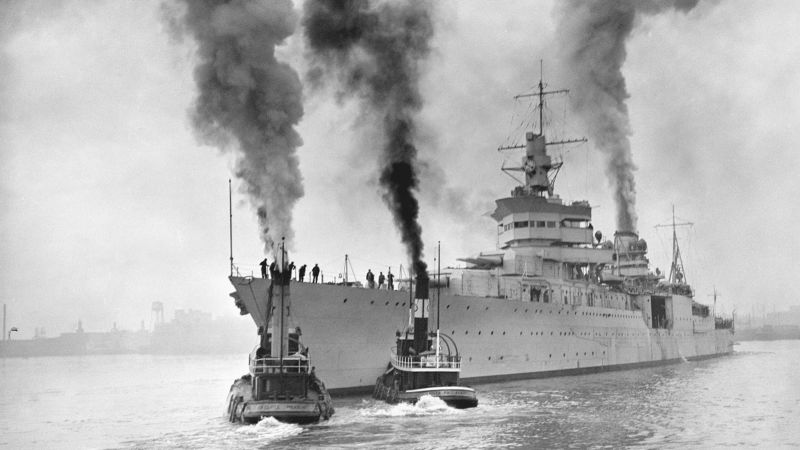
The wreck of the USS Indianapolis, located in 2017 at a depth of 18,000 feet in the Pacific, provides a stark connection between maritime tragedy and global geopolitical shifts. The heavy cruiser had just completed a top-secret mission to deliver the uranium components for the "Little Boy" atomic bomb to Tinian Island.

On July 30, 1945, while sailing toward the Philippines, the ship was torpedoed by a Japanese submarine. The sinking resulted in one of the greatest catastrophes in U.S. naval history. Due to a failure in communication protocols, the ship was not reported missing for days. Of the approximately 1,195 crew members, only 316 survived the ordeal, which included exposure, dehydration, and a series of relentless shark attacks. The eventual discovery of the wreck by a team funded by the late Paul Allen was a significant milestone in military archaeology, providing closure to the families of the fallen and preserving the final resting place of a ship that fundamentally altered the course of human history.
The Slave Trade and the Ethics of Excavation
The search for vessels involved in the Transatlantic Slave Trade presents a profound ethical challenge for maritime archaeologists. It is estimated that approximately 1,000 ships were involved in the forced migration of 12 to 13 million Africans. Projects such as those led by “Diving With a Purpose” (DWP) have sought to locate and document these sites, such as the São José, which sank off South Africa in 1794.
Unlike gold-laden galleons, the primary objective in identifying these wrecks is not financial gain but historical reckoning. The retrieval of artifacts—rusted manacles, iron ballasts, and cargo remains—is treated with solemnity. These items are not merely nautical curiosities; they are evidence of systemic human suffering. The implications of these discoveries are significant: they force a public confrontation with the realities of slavery and provide a tangible, educational link to a history that many institutions have historically ignored or minimized.
Ancient Trade and Modern Preservation
The Uluburun shipwreck, discovered off the coast of Turkey in 1982, offers a window into the complex trade networks of the late Bronze Age. Dating back approximately 3,300 years, the vessel contained a massive cargo: 10 tons of copper ingots, 70,000 glass beads, and various luxury goods from across the Mediterranean.

The recovery of these items transformed the academic understanding of ancient economic systems, demonstrating that international trade was far more sophisticated and interconnected than previously hypothesized. Today, the Bodrum Museum of Underwater Archaeology houses these artifacts, providing a rare opportunity for the public to engage with the material culture of a civilization that predates the written record of most modern maritime powers.
Preservation Through Public Display: The Vasa
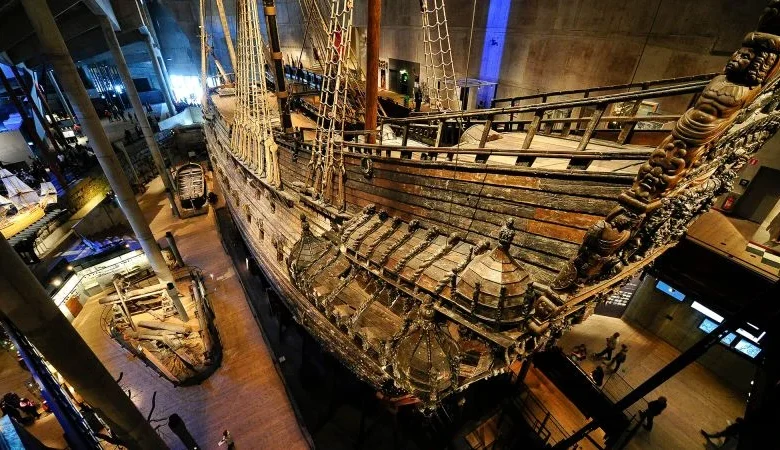
The 17th-century Swedish warship Vasa stands as the gold standard for maritime preservation. The ship sank in Stockholm harbor in 1628, only minutes into its maiden voyage, due to instability caused by a top-heavy design and insufficient ballast. It remained on the seabed for 333 years until it was salvaged in 1961.
The preservation of the ship, which features over 700 intricate sculptures and decorations, provides a detailed view of the artistic and political propaganda of the era. The Vasa Museum, which opened in 1990, has welcomed over 25 million visitors, proving that the public appetite for maritime history is immense when the artifacts are conserved and displayed with context.
Maritime Sites as Living Museums
Not all shipwrecks are relegated to the deep; some remain visible as reminders of human error or maritime casualty. The MV Captayannis, which ran aground in Scotland in 1974, and the MS World Discoverer in the Solomon Islands, are examples of wrecks that have become fixtures of the local geography. These sites often transition from active disaster zones to sites of ecological and tourism interest. However, they also serve as persistent reminders of the sea’s volatility.

Implications for the Future of Maritime Archaeology
The study of shipwrecks is an evolving discipline that bridges the gap between science and history. Technological advancements—specifically autonomous underwater vehicles (AUVs) and high-resolution sonar—have revolutionized the ability to map the ocean floor. Yet, as deep-sea mining interests and climate-related ocean changes increase, these underwater sites face unprecedented threats.
The preservation of these sites is not merely about recovering artifacts; it is about protecting the collective memory of humanity. Whether it is the tragic history of the slave trade or the military impact of the USS Indianapolis, each shipwreck offers a unique contribution to the historical record. As exploration continues, the focus must remain on the ethical treatment of these sites and the dissemination of the stories they hold, ensuring that these sunken vessels continue to educate future generations about the perils and the progress of human endeavor.