Michigan Senate Candidate Abdul El-Sayed Faces Scrutiny After High-Profile Appearance at ISNA Conference Amid Contentious 2026 Cycle

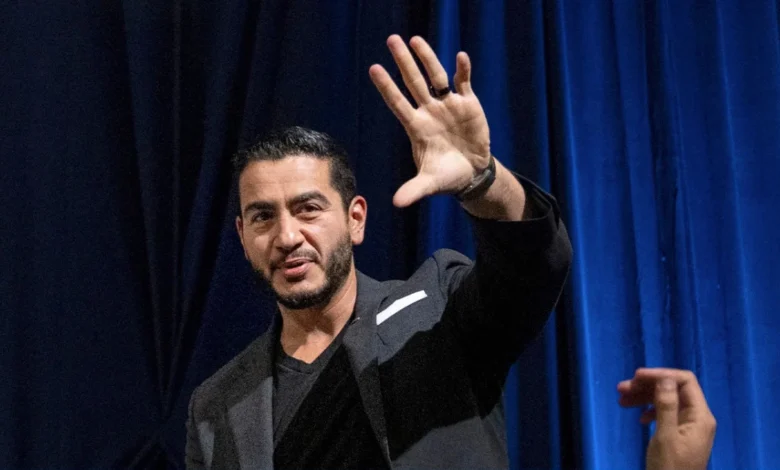
Detroit, Michigan — The intersection of faith, progressive politics, and foreign policy took center stage over Labor Day weekend in Detroit, where Michigan Democratic Senate candidate Abdul El-Sayed delivered a headline address at the annual convention of the Islamic Society of North America (ISNA). The event, which drew thousands of attendees and prominent Muslim civic leaders, occurred against the backdrop of one of the most closely watched and intensely contested U.S. Senate races of the 2026 midterm cycle—an election that could ultimately tip the balance of power in the upper chamber of Congress.
While El-Sayed’s speech leaned heavily into themes of civic inclusion, unity, and the compatibility of Muslim and American identities, the broader conference featured panel discussions, academic lectures, and vendor displays that frequently adopted sharply critical postures toward the United States, Western foreign policy, and traditional geopolitical alliances. The dissonance between the candidate’s moderate rhetoric and the radical undertones present at the wider summit has injected foreign policy disputes, domestic culture-war controversies, and questions of ideological alignment directly into Michigan’s high-stakes Senate contest.
Background and Context of the ISNA Conference
Established in 1981, the Islamic Society of North America has grown into one of the largest and most prominent umbrella organizations for Muslim communities across the United States and Canada. Its annual gathering serves as a major forum for religious scholarship, community networking, youth programming, and civic engagement. Geographically, holding the event in the Detroit metropolitan area—home to one of the nation’s highest concentrations of Arab American and Muslim residents, particularly in municipalities such as Dearborn and Hamtramck—added significant local political weight to the proceedings.

Throughout the multi-day convention, participants engaged in a wide array of workshops touching on civil rights, Islamophobia, domestic political participation, and the ongoing geopolitical conflicts in the Middle East, particularly the war between Israel and Hamas. However, several breakout sessions and plenary events featured commentary that observers characterized as expressing fringe or deeply anti-Western views.
Contentious Panel Discussions and Audience Reactions
Reporting from the conference floor revealed a series of moments that quickly drew national scrutiny. During a well-attended panel titled "Rising Islamophobia in the U.S.," discussions turned toward federal legislative measures targeting institutions that participate in commercial boycotts of Israel. One speaker sharply criticized a newly passed bipartisan bill—introduced by Representative Virginia Foxx, R-N.C., and co-sponsored by Representative Josh Gottheimer, D-N.J.—that conditions certain federal higher-education funds on institutional compliance with anti-boycott provisions, labeling the measure as "an anti-Muslim bill."
The rhetoric escalated when a member of the audience wearing a Pakistani flag pin stood up and publicly called for a fatwa—a formal religious ruling or legal opinion issued by an Islamic scholar—to be levied against the bipartisan group of lawmakers who voted in favor of the legislation. In Islamic jurisprudence, fatwas can range from non-binding legal clarifications to severe condemnations or, historically, incitements to violence. The call for a religious ruling against sitting members of the U.S. Congress was met with explicit applause from sections of the audience and at least one panelist on the stage.
Another panel centered on the political fallout surrounding congressional censures of progressive lawmakers, specifically Representatives Ilhan Omar, D-Minn., and Rashida Tlaib, D-Mich. Panelists defended the lawmakers’ controversial public statements, minimizing criticisms of phrases such as "from the river to the sea, Palestine will be free." Critics of the slogan argue it constitutes a call for the eradication of Israel, while defenders maintain it is an aspirational call for equality and peaceful coexistence.

Other sessions took aim at domestic tech leadership and historical narratives surrounding the September 11 terrorist attacks. Panelists accused billionaire Elon Musk of financially supporting a global white supremacist anti-Muslim movement, while speakers in separate breakout rooms asserted that standard educational narratives regarding the 2001 attacks had been discredited. As the upcoming 25th anniversary of 9/11 approaches, speakers repeatedly framed the post-9/11 War on Terror—which resulted in the deaths of over 7,000 U.S. service members—as an aggressive, Islamophobic crusade, with one speaker referring to the military campaign as the "War of Terror."
Academic Critique of the West and Economic Discontent
Throughout the conference, academic speakers frequently conceptualized global politics through a framework of Western imperialism in terminal decline. During a session examining the Israel-Hamas conflict, an academic panelist told the audience, "The world has become multipolar and we see almost like the fear and insecurity that the empire has at this moment. If we think through the lens of the U.S. So I like to think that we are on the very end of an ending empire. I’m very positive about it."
The same speaker later argued that referring to the river adjacent to Detroit simply as the "Detroit River" represented an act of ongoing colonialism because indigenous populations had historically used alternative nomenclature.
In another presentation exploring the intersection of religion and economics, a cleric praised early Islamic conquests and explicitly linked them to socialist principles, telling attendees that Islam historically spread not merely through peaceful proselytization (Dawah), but through early forms of socialist organization. The exhibition hall similarly reflected alternative economic systems, featuring prominent advertisements for Sharia-compliant financial products, mortgages, and investment portfolios.

Exhibition Hall Controversies and Security Incidents
The on-site bazaar and book vendor displays also generated controversy. Independent monitoring of books available for purchase revealed texts that defended historical Islamic warfare while harshly condemning Western institutions. One widely distributed volume asserted that church Christianity possessed a uniquely sanguinary and violent historical record compared to other religious traditions. Another text argued that all historical Islamic warfare was inherently defensive in nature, defended the imposition of the jizya (a traditional tax on non-Muslim citizens under Islamic rule), and attributed hundreds of millions of deaths to Christian civilization by incorporating conflicts without religious motivations—such as the French Revolution and the Korean War—into its aggregate casualty counts.
The operational management of the event drew parallel criticisms regarding free expression and open dialogue. Three Christian evangelists stationed outside the conference venue told reporters they had been summarily removed by private security without warning. The evangelists stated they were merely engaged in calm, voluntary conversations with conference attendees who approached them. Although ISNA promoted the convention as open to individuals of all faiths and hosted a public interfaith banquet, the swift removal of outside religious proselytizers highlighted underlying tensions at the venue.
Abdul El-Sayed’s Political Tightrope
For Abdul El-Sayed, the convention represented both a major political opportunity and a significant public relations challenge. El-Sayed, a former Detroit health official and progressive gubernatorial candidate who has built a broad coalition among socialist and left-leaning activists, enjoyed near-celebrity status at the event. His campaign merchandise was ubiquitous, and his campaign booth in the main convention hall served as one of the busiest hubs of the weekend.
When El-Sayed took the main stage, he was greeted with a prolonged standing ovation and enthusiastic chants from supporters. His address, however, contrasted sharply with the more radical statements delivered by other conference speakers. Adopting a measured, deliberate cadence, El-Sayed focused his remarks on community resilience, political representation, and the fundamental compatibility of Muslim and American identities.

"As we leave here tonight, I’ve got a challenge for each and every one of you," El-Sayed told the crowd. "It’s the question of how you show up in the spaces in which you show up everyday, as wholly and 100% yourself. Because we are a community as Muslim Americans who believe in the rhyming of our Muslim ideals and our American ideals. That those two things are not mutually exclusive, in fact, that at their best being Muslim makes us better Americans and being Muslim enables us to be better Americans."
Ahead of the conference, El-Sayed’s campaign sought to preempt potential criticism by publicly distancing the candidate from other scheduled speakers. A campaign spokeswoman released a statement emphasizing that "Abdul is not affiliated with and does not endorse any other participant of the conference." The distancing efforts followed media reports that El-Sayed was originally scheduled to appear alongside clerics with histories of defending child marriage or expressing rhetorical support for groups designated as terrorist organizations by the United States Department of State. Following public scrutiny, organizers ultimately disinvited at least one of the controversial speakers.
ISNA similarly sought to insulate itself from individual rhetoric, posting large physical placards in the main convention hallways stating that the organization "does not endorse the actions of convention participants and explicitly disclaims any responsibility for the views expressed, information provided, or materials displayed, sold or distributed by convention speakers, performers, exhibitors, vendors, or attendees."
Broader Political Implications for the 2026 Senate Race
The controversy surrounding El-Sayed’s appearance at the ISNA conference underscores the delicate and polarizing nature of identity politics and foreign policy debates in Michigan’s 2026 U.S. Senate race. As the Democratic candidate attempts to moderate his public persona to appeal to a broader statewide electorate, Republican opponents and independent critics have repeatedly highlighted his association with progressive activists, socialist organizations, and controversial religious figures.

Conversely, El-Sayed’s campaign has pushed back against these attacks by pointing to the controversial associations and past statements of his Republican opponent, former U.S. Representative and intelligence official Mike Rogers, noting that Rogers has faced scrutiny over connections to individuals promoting 2020 election conspiracy theories and opposing same-sex marriage.
As the general election approaches, analysts suggest that the ability of candidates to navigate polarizing cultural and geopolitical fault lines will heavily influence turnout among key demographic groups, including Arab American voters in southeastern Michigan and suburban moderates across the state. Neither the ISNA nor El-Sayed’s campaign responded to immediate requests for further comment following the conclusion of the weekend event, leaving the controversy to reverberate across the broader landscape of the Michigan Senate campaign.
Related posts: