Navigating the Fault Lines: Inside the Strategic Shifts Reshaping the Global Travel Industry Ahead of Skift Global Forum 2026

The global travel and tourism sector stands at a complex economic and technological crossroads, forcing industry executives, investors, and policymakers to aggressively recalibrate their long-term strategies. As travel demand patterns, distribution channels, and underlying technology stacks undergo seismic shifts, foundational assumptions that have reliably guided executives for the past decade are rapidly losing relevance. According to recent industry analyses, the modern travel economy is defined by two primary tensions: the overall market continues to expand in scale, yet its structural shape is constantly mutating, while technological innovations are accelerating at a pace that far outstrips consumer and corporate trust.
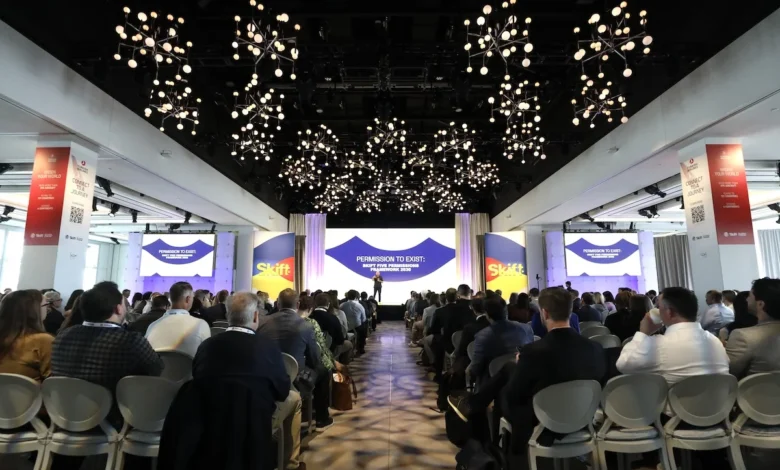
These competing pressures form the operational backdrop for the upcoming Skift Global Forum, scheduled to take place from September 22 to 24. As leaders from across the international travel ecosystem prepare to gather, the central question facing every executive is no longer how to recover from past disruptions, but whether their current strategic pivots are adequately designed for the realities of the decade ahead. Industry analysts note that while historical playbooks focused on incremental efficiencies, today’s landscape demands fundamental structural overhauls spanning all four layers of the modern travel stack: consumers, commerce, operations, and experiences.
The Incumbency Dilemma: Following the Establishment Versus Betting on the Challenger
At the heart of the current industry debate is a fundamental divergence in philosophy between established legacy incumbents and agile market challengers. For traditional travel giants, artificial intelligence is primarily being deployed to drive internal operational efficiencies and reduce overhead costs. For example, industry reports indicate that companies like Airbnb have successfully leveraged AI tools to trim customer support costs per booking by approximately 16% year-over-year.

However, when it comes to top-line booking demand generated directly by AI agents, the immediate return on investment for legacy players remains surprisingly modest. Referral traffic originating from autonomous AI agents currently accounts for fewer than 1% of total room nights at major distribution platforms like Booking.com. Despite this low initial conversion rate, venture capital markets are placing aggressive bets on an AI-first future. By mid-2025, venture funding flowing into AI-enabled travel startups surged to 45% of total sector investments, a dramatic increase from just 10% in 2023.
Caught between these competing realities, industry leaders are forced to make high-stakes decisions regarding distribution infrastructure. Because very few travel brands maintain direct control over their entire distribution ecosystem, executives must determine whether to rely on incremental scaling through legacy systems or follow disruptors like Airbnb, which is actively rebuilding its core architecture as an AI-native company while its traditional operations continue to generate steady revenue. The overarching dilemma for travel executives is clear: Will retrofitting legacy systems suffice, or will nimble, AI-native startups ultimately capture the next generation of travelers?
The Evolution of Discovery: Funnel Control Versus AI Agent Visibility
The mechanics of travel discovery are undergoing a profound transformation. Traditional consumer behavior—characterized by a linear search, scroll, and compare methodology—is rapidly giving way to an intent-driven model based on asking, shortlisting, and deciding. Skift Research data indicates that nearly 30% of global travelers reported extensive use of AI for trip planning, marking a staggering 17-percentage-point increase that more than doubled usage rates within a single year.
Despite this rapid adoption in trip planning, consumer trust in actually transacting through autonomous AI platforms lags significantly behind. Traditional direct channels and Online Travel Agencies (OTAs) remain the most trusted mediums for financial transactions, while overall consumer sentiment regarding direct AI booking remains net negative. This hesitation creates a strategic paradox for travel brands. AI systems construct shortlists based exclusively on data they can easily read and parse. Brands that fail to structure their digital data for machine readability risk becoming entirely invisible unless a consumer explicitly searches for them by name.

However, optimizing data architectures for AI visibility often requires ceding a degree of control over how a brand is represented to the consumer. Conversely, rigidly protecting the traditional direct funnel allows companies to maintain brand control, but runs the severe risk of total irrelevance as discovery shifts away from conventional search engines. Current market penetration data underscores this friction: only 6% of hotels currently appear in AI-generated search results, and a mere 2% of leisure travelers express willingness to allow an AI system to complete a booking on their behalf.
Balancing Premium Yields with Volume Risks in an Unequal Economic Landscape
Financial performance across the travel sector has increasingly relied on the resilience of affluent consumers, exposing a widening gap between premium and budget travelers. Major airlines have aggressively restructured their aircraft cabins and revenue models to capitalize on this trend. Delta Air Lines reported a 7% increase in premium revenue while experiencing a simultaneous decline in main cabin ticket sales. For the first time in the carrier’s history, premium cabin revenue surpassed economy revenue in the fourth quarter of 2025, prompting airline leadership to allocate nearly all seat growth for 2026 toward premium offerings. Competitors such as American Airlines and United Airlines are pursuing similar strategies, aiming for premium seating to account for roughly half of their future cabin layouts to capture materially higher profit margins.
This heavy reliance on premiumization, however, introduces long-term structural risks. While building for the affluent consumer establishes a robust financial floor during economic downturns, it simultaneously alienates price-sensitive travelers. Recent market data shows that 62% of global travelers intend to adjust or outright cancel travel plans due to persistent cost pressures. If mid-market and budget segments continue to trade down or exit the market entirely, travel providers risk thinning the critical customer volume required to maintain high asset utilization and aircraft occupancy rates when profit margins inevitably tighten. Consequently, the industry’s aggressive pivot toward premiumization functions simultaneously as its most reliable short-term revenue strategy and a speculative bet on the persistence of widening income inequality.
Human Touch Versus Automation: Managing Labor Shortages and Service Expectations

As travel providers race to implement automation across their operations, hospitality executives face a delicate balancing act between aggressive cost reduction and the preservation of essential human touchpoints. The prevailing corporate instinct is to treat labor optimization strictly as a cost-cutting measure, utilizing AI-driven service desks and automated check-ins to reduce front-line headcount.
However, industry analysts warn against applying uniform workforce reductions across all market segments. While affluent travelers are increasingly willing to pay premium prices for guaranteed human service—thereby justifying the labor overhead—mid-market and economy brands face a more complex challenge. If personalized human service becomes an exclusive luxury item accessible only at the highest tier of the market, mid-market brands risk sacrificing a vital brand differentiator. Once front-line operational headcount is dismantled, rebuilding those service capabilities becomes exceptionally difficult. This strategic tension is further compounded by broader labor market dynamics, where venture capital and technology spending heavily favor backend reservation efficiencies, even as the industry faces persistent labor shortages precisely where the human touch is most critical to guest satisfaction.
Navigating Uncertainty: The Trade-off Between Strategic Certainty and Operational Speed
Operating within the contemporary macroeconomic and geopolitical environment requires travel leaders to act decisively amidst profound uncertainty. Travel demand patterns have exhibited extreme volatility; in the United States, domestic travel volume has held steady at 2019 real-dollar levels, while international inbound volume has experienced a contraction of 5.5%. This domestic-international divergence moved at a pace that outstripped the strategic planning cycles of many major hospitality and aviation brands.
Concurrently, multinational travel corporations operating across complex international markets have seen their quarterly projections repeatedly upended by shifting geopolitical landscapes. Waiting for absolute market certainty often means delaying action until strategic windows of opportunity have closed. Conversely, acting early requires committing substantial capital based on macroeconomic indicators that can fundamentally shift within a single quarter. This tension was starkly illustrated when economic forecasters abruptly pushed back the projected timeline for full inbound U.S. travel recovery from 2025 to 2029 in a single revision. For executives navigating this landscape, the central operational challenge remains determining whether to commit capital immediately based on imperfect predictive models or delay investments until market conditions stabilize.

Broader Industry Implications and the Road Ahead
As the global travel sector converges for the Skift Global Forum 2026, the cumulative impact of these systemic shifts highlights an undeniable reality: the industry has permanently recalibrated. Demand vectors have shifted decisively—migrating from international to domestic corridors, from traditional Western markets toward emerging regions in South America and Asia, from economy cabins to premium offerings, and from manual search mechanisms to autonomous AI discovery.
While many travel companies have successfully re-forecast their budgets to account for past disruptions, far fewer have built resilient organizational structures capable of navigating the transformations still on the horizon. By examining how market leaders defend operational scale, how challengers attempt to disrupt traditional distribution models, and how global hospitality brands plan through persistent geopolitical volatility, industry participants will be forced to confront whether their current business models are designed to defend the legacy of the past decade or capture the opportunities of the next.
Related posts: