Massachusetts Launches Major Vehicle-to-Grid Pilot Program to Transform Electric Vehicles into Distributed Energy Resources for a Resilient Grid

Massachusetts has officially become a primary testing ground for a revolutionary shift in how the United States manages its aging electrical infrastructure. A coalition of industry leaders, including utilities Eversource and National Grid alongside technology providers EnergyHub, Sunrun, and The Mobility House, has launched an ambitious vehicle-to-grid (V2G) pilot program. This initiative aims to integrate electric vehicles (EVs) directly into the state’s energy ecosystem, allowing car batteries to act as a decentralized reservoir of electricity that can be tapped during periods of peak demand. By transforming EVs from mere consumers of power into active participants in the grid, the program seeks to enhance reliability, lower costs for all ratepayers, and provide a roadmap for the national scaling of bidirectional charging technology.
The Evolution of Vehicle-to-Grid Technology and the Massachusetts Initiative
For years, the concept of vehicle-to-grid technology remained a theoretical promise or a niche experiment. However, as the adoption of electric vehicles accelerates, the collective storage capacity of these mobile batteries has reached a scale that utilities can no longer ignore. The Massachusetts pilot operates through an expansion of the existing "ConnectedSolutions" program, a demand-response framework that previously focused on residential stationary batteries and smart thermostats.
Under the new V2G system, EV owners with compatible hardware can opt-in to allow their utility to draw power from their vehicle’s battery during "demand response" events. These events typically occur during extreme weather, such as summer heatwaves when air conditioning usage surges, or during winter cold snaps when heating systems strain the grid. In exchange for this service, participants receive financial compensation, effectively creating a new revenue stream for EV owners that can offset the total cost of vehicle ownership.
The significance of this launch lies in its collaborative nature. By bringing together major utilities and specialized hardware and software firms, the coalition is addressing the fragmented nature of the current EV charging landscape. The Mobility House provides the necessary charging infrastructure expertise, while EnergyHub and Sunrun manage the software and aggregation of these "virtual power plants."
Chronology of V2G Development: From Concept to Consumer Integration
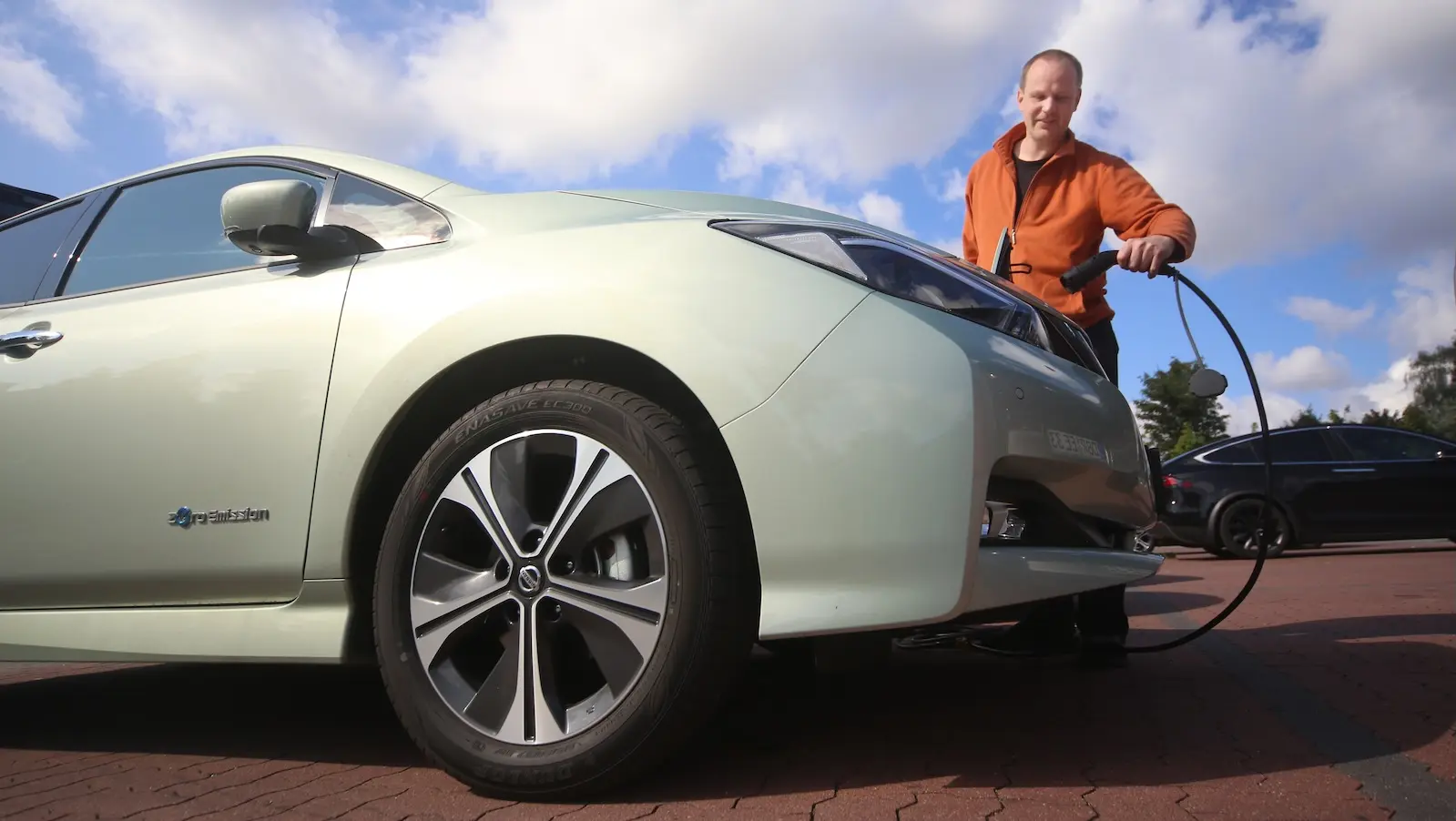
The path to the current Massachusetts pilot has been paved by over a decade of incremental technological and regulatory shifts. In the early 2010s, the Nissan Leaf became one of the first mass-market EVs to support bidirectional charging using the CHAdeMO standard, though infrastructure to support it was virtually non-existent in the U.S.
By 2021, the passage of the Infrastructure Investment and Jobs Act (IIJA) and the subsequent Inflation Reduction Act (IRA) in 2022 provided billions of dollars in federal funding for grid modernization and EV infrastructure. These legislative milestones encouraged utilities to explore distributed energy resources (DERs) more aggressively.
In 2023, several smaller-scale school bus V2G projects in California and New York demonstrated that large-capacity batteries in municipal fleets could successfully stabilize local grids. The 2024 Massachusetts launch represents the next logical step: moving from specialized fleet vehicles to the private passenger vehicle market. This transition is essential for reaching the "critical mass" needed to make V2G a cornerstone of the American energy strategy.
Supporting Data: The Power of the Mobile Battery
The technical potential of V2G is grounded in the sheer capacity of modern EV batteries compared to traditional home storage solutions. A typical residential backup battery, such as the Tesla Powerwall, generally holds between 10 and 14 kilowatt-hours (kWh) of energy. In contrast, even a standard-range electric sedan often carries a 60 kWh battery, while larger SUVs and trucks like the Ford F-150 Lightning can exceed 130 kWh.
This means a single electric truck can hold as much energy as ten dedicated home backup units. If 10% of the vehicles in a state like Massachusetts were converted to EVs and enrolled in V2G programs, they would represent a massive, mobile "virtual power plant" capable of outputting hundreds of megawatts of power—enough to replace several gas-fired "peaker" plants that are currently used to meet surge demand.
Furthermore, data from the Department of Energy suggests that most passenger vehicles remain parked 95% of the time. This idle period provides a massive window for utilities to manage charging and discharging cycles without inconveniencing the driver. The Massachusetts program utilizes apps that allow users to set "ready times," ensuring that the vehicle always has enough charge for the owner’s commute before the grid is allowed to draw any power.
Official Responses and Industry Analysis
Leaders within the coalition emphasize that the Massachusetts pilot is as much about data collection as it is about immediate grid relief. Chip Silverman, Director of Grid Services at Sunrun, noted that the learnings from this early stage are what will allow the technology to scale. He explained that by aggregating thousands of batteries, the burden on each individual vehicle is minimized. "If you have a higher number of batteries out there in a virtual power plant, you can actually use less energy from each individual battery," Silverman said. "But collectively… it comes out to a very large resource."
Russell Vare, Vice President of Vehicle-Grid Integration at The Mobility House North America, highlighted the economic efficiency of this model. He pointed out that V2G is likely the "cheapest cost of flexible energy storage" available to the grid because the batteries are already being purchased by consumers for transportation. The utility does not have to invest in building new, stationary battery farms from scratch; it simply needs to build the interface to access existing ones.
Seth Frader-Thompson, President of EnergyHub, added that as hardware costs for bidirectional chargers decrease and industry standards like ISO 15118-20 mature, V2G will become "dramatically more accessible" to the average consumer.
Challenges and Technical Hurdles
Despite the optimism, the path to mainstream V2G adoption faces several hurdles. The most significant is the requirement for bidirectional charging hardware. Most current EV chargers are "unidirectional," meaning they can only pull power from the grid into the car. Bidirectional chargers are currently more expensive and complex to install.
There are also concerns regarding battery degradation. Some EV owners fear that frequent discharging and charging cycles—known as "cycling"—could shorten the lifespan of their expensive vehicle batteries. However, industry experts argue that the "demand response" events are relatively rare, occurring only a few dozen hours per year. Modern battery management systems are also becoming increasingly sophisticated at minimizing the impact of these shallow discharge cycles.
Regulatory hurdles also remain. Each state has different rules regarding how energy can be sold back to the grid and how utilities are allowed to compensate customers. The Massachusetts pilot will be instrumental in helping regulators draft standardized policies that can be adopted by other states.
Broader Impact: Decarbonization and Grid Stability
The implications of the Massachusetts V2G pilot extend far beyond the borders of the Commonwealth. As the U.S. shifts toward renewable energy sources like wind and solar, the grid faces a "volatility" problem. Solar power peaks in the afternoon, while wind can be intermittent. V2G provides a way to "bank" that green energy when it is abundant and release it back into the system when the sun sets or the wind dies down.
Moreover, the rise of power-hungry data centers—driven by the explosion of artificial intelligence—is putting unprecedented strain on the national grid. By utilizing EVs as a buffer, utilities can manage this new demand without relying on coal or gas-fired power plants, which are the primary drivers of climate change.
In the long term, V2G could lead to a democratization of the energy market. Instead of a one-way relationship where consumers simply pay a monthly bill to a centralized utility, the future grid looks more like an internet of energy, where millions of small producers—homeowners with solar panels and EV drivers—trade power in real-time.
Conclusion: A Turning Point for the American Energy Landscape
The launch of the V2G pilot in Massachusetts marks a definitive turning point in the transition to a modern, electrified economy. By proving that EVs can serve as a reliable and cost-effective grid resource, the coalition of Eversource, National Grid, and their partners is setting a precedent for the rest of the country.
If successful, this program will demonstrate that the transition to electric transportation does not have to be a burden on the electrical grid. Instead, the millions of EVs hitting American roads in the coming decade could be the very thing that saves the grid from collapse, making electricity more affordable and reliable for everyone—regardless of whether they own an electric vehicle or not. The "superpower" of the EV is no longer just its ability to run without gasoline; it is its potential to serve as the backbone of a cleaner, more resilient energy future.