Trump Administration Proposes Rule Change to Limit Public Oversight of Minor Source Pollution Permits to Accelerate AI Data Center Growth

The Trump administration has initiated a significant regulatory shift that could fundamentally alter the landscape of environmental oversight in the United States. By proposing a rule change to the Clean Air Act’s permitting process, the Environmental Protection Agency (EPA) aims to grant state and local governments the unilateral authority to determine the level of public participation required for "minor source" pollution permits. While framed as an effort to streamline infrastructure development and solidify the nation’s standing as the global leader in artificial intelligence (AI), environmental advocates and community organizers warn that the move could leave residents in the dark about new industrial projects in their neighborhoods.
The proposed modification focuses on the permitting of facilities that fall below the threshold of "major" polluters but still emit significant amounts of nitrogen oxides, particulate matter, and other greenhouse gases. These "minor sources" increasingly include the massive gas-powered plants and diesel generators required to sustain the skyrocketing energy demands of AI data centers. By devolving the notification and hearing requirements to the states, the federal government is effectively removing a standardized safety net that ensures citizens have a voice in the industrialization of their local environments.
The Regulatory Framework of the Clean Air Act
To understand the impact of the proposed rule, it is necessary to examine the existing structure of the Clean Air Act (CAA). Since its inception, the CAA has categorized industrial polluters into two primary groups: major sources and minor sources. Major sources, such as large coal-fired power plants or massive chemical refineries, are subject to the Title V permitting process, which requires rigorous federal oversight, multi-stage public comment periods, and mandatory public hearings.
Minor sources, conversely, are facilities whose emissions do not meet the high tonnage thresholds defined for major sources. This category is deceptively broad, encompassing everything from neighborhood dry cleaners and auto body shops to the sophisticated, high-output gas turbines used by technology giants to power data centers "behind the meter." Under current EPA rules, minor source permits still require a baseline level of public participation. This ensures that even if a facility is not a "major" polluter, the surrounding community is notified of its construction and given a window to raise concerns regarding air quality, noise, and health impacts.
The Trump administration’s proposal would remove these federal baseline requirements for minor sources. Instead, state agencies would be "in the driver’s seat," according to EPA spokespeople, allowing them to decide whether to hold public hearings, how long a comment period should last, or whether to provide public notice at all.
The Role of the AI Boom and Data Center Expansion
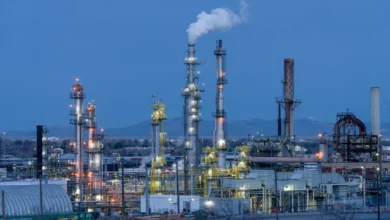
The timing of this regulatory rollback coincides with an unprecedented surge in data center construction. As companies like Meta, Google, and Elon Musk’s xAI race to build the infrastructure necessary for generative artificial intelligence, the demand for immediate, high-capacity power has outpaced the ability of the national electrical grid to provide it. Consequently, data center operators are increasingly turning to "on-site" power generation—often in the form of gas-fired plants or large-scale diesel generator arrays.
Because these on-site power plants are often designed to stay just below the emission thresholds of a "major source," they are frequently permitted through the minor source track. This allows tech companies to bypass the years-long federal review processes associated with major power plants. However, these facilities still represent a significant new source of localized pollution. In areas like Northern Virginia, North Texas, and the "Silicon Slopes" of Utah, the concentration of multiple "minor" data center permits can lead to a cumulative environmental impact that rivals that of heavy industry.
In June 2024, U.S. construction spending on data centers eclipsed $50 billion, surpassing spending on public transportation infrastructure for the first time in history. This economic momentum has created a bottleneck where public opposition and local permitting delays are seen by the administration as threats to national security and economic dominance in the AI sector.
A Patchwork of State Enforcement
The removal of federal standards would likely lead to a fragmented landscape where environmental rights depend entirely on geography. Currently, states like Georgia and Kentucky maintain relatively robust public notification systems for minor source permits. In Georgia, environmental legal groups have successfully used public permit applications to identify construction violations and environmental risks before projects were completed.
"Georgia is an example of a place where I can say I’m concerned," noted Keri Powell, an attorney with the Southern Environmental Law Center. She argued that without the federal mandate, state-level protections are vulnerable to political shifts or industry lobbying. If the EPA removes the requirement, groups that currently monitor these permits might receive no notice until a facility is already operational.
In contrast, states like Texas already utilize more streamlined processes with lower levels of public engagement. The result has been a "surprise" buildout of fossil fuel infrastructure in residential areas. Residents in certain Texas municipalities have reported discovering that large-scale gas plants were being installed adjacent to their homes only after construction crews arrived. Critics argue that the proposed EPA rule would "Texas-ify" the rest of the country, encouraging a race to the bottom where states compete for data center investment by offering the least amount of public interference.
Chronology of the Regulatory Shift
The path toward this proposed rule change has been marked by a series of administrative actions aimed at accelerating the "AI arms race":
- Early 2024: The administration identifies the energy demands of AI as a primary hurdle to technological supremacy.
- May 2024: The EPA begins internal discussions on "permit streamlining" specifically targeted at behind-the-meter power generation for data centers.
- June 2024: Data center construction spending hits record highs, prompting calls from the tech sector for faster permitting cycles.
- July 2024: The EPA officially announces the proposed rule change regarding minor source public participation, citing the need for "local flexibility."
- Late July 2024: Public hearings are held, featuring a sharp divide between industry representatives advocating for speed and community organizers advocating for transparency.
Reactions and Stakeholder Perspectives
The proposal has drawn a clear line between economic hawks and environmental advocates. Vanessa Lynch, an organizer with Moms Clean Air Force, testified at the recent EPA hearing, emphasizing that the technical classification of a polluter as "minor" does not lessen the community’s right to know. "People want to have a say in what is being built next to their schools and homes," Lynch stated. "Removing that right doesn’t make the pollution go away; it just makes the people invisible."
Industry proponents, however, argue that the current permitting process is being "weaponized" by activists to stall projects that are vital to the national economy. An EPA spokesperson defended the proposal, stating that the agency is committed to making the United States "the AI capital of the world." The spokesperson emphasized that the rule change does not alter the actual emissions standards—only the procedural steps for public engagement. From the administration’s perspective, state and local officials are better positioned than federal bureaucrats to balance economic growth with local environmental concerns.
Analysis of Broader Implications
The implications of this rule change extend beyond air quality. It represents a fundamental shift in the philosophy of environmental justice. By reducing the transparency of the permitting process, the administration risks disproportionately impacting low-income communities and communities of color, which have historically been the sites for industrial "minor sources." Without a federal mandate for public notice, these communities may lose their primary tool for legal recourse and environmental advocacy.
Furthermore, the reliance on minor source permits for data center power generation could create a "stealth" expansion of the fossil fuel footprint. While the global tech industry often touts its commitment to renewable energy, the immediate need for 24/7 "baseload" power for AI training models is driving a resurgence in gas and diesel infrastructure. If these facilities are built with minimal public oversight, the cumulative impact on national climate goals could be substantial, even if each individual facility is technically a "minor" source.
As the EPA moves toward finalizing the rule, the debate underscores a central tension in modern governance: the trade-off between the speed of technological innovation and the democratic right to public participation. For the Trump administration, the priority is clear—removing the regulatory "friction" that slows the march of artificial intelligence. For the communities living in the shadow of the data boom, however, that friction is the only thing ensuring their voices are heard.