American Airlines Navigates Fuel Price Volatility with Measured Capacity Strategy as Industry Rivals Implement Aggressive Cuts

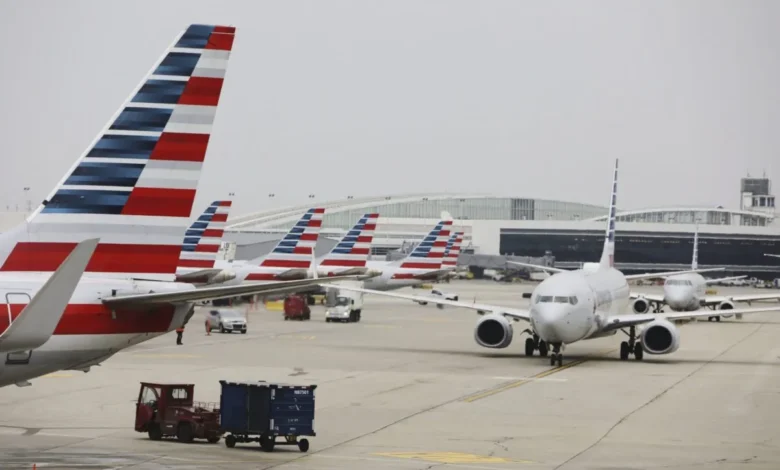
The global aviation industry is currently traversing a period of significant structural recalibration as carriers balance the dual pressures of fluctuating fuel costs and shifting consumer demand. While the broader sector has moved toward aggressive capacity reductions to preserve pricing power, American Airlines has opted for a distinct strategic path, maintaining a more robust flight schedule than its primary competitors, Delta Air Lines and United Airlines. This divergence comes at a critical juncture for the Fort Worth-based carrier, which recently reported second-quarter earnings that, while profitable, underscored a growing financial gap between it and its chief rivals.
In the second quarter of 2024, American Airlines reported a capacity increase of 5.4% compared to the same period in the previous year. Looking ahead to the third quarter, the carrier’s leadership has projected a further capacity expansion of between 3% and 5%. This stands in stark contrast to the tactical retreats seen elsewhere in the industry. For many legacy and low-cost carriers, the prevailing wisdom has been to trim seat counts to tighten supply, thereby driving up yields and load factors to offset the rising cost of jet fuel. However, American’s executive team has defended its decision to keep more aircraft in the skies, citing a more conservative approach to cuts based on the inherent volatility of energy markets and a desire to maintain market share in key domestic hubs.
The Financial Landscape: A Comparative Analysis
The financial results for the second quarter highlight the immediate consequences of these differing strategies. American Airlines posted a net profit of $71 million, a figure that technically exceeded Wall Street’s revised expectations but paled in comparison to the multibillion-dollar performances of its peers. During the same three-month window, Delta Air Lines reported a staggering profit of $1.6 billion, while United Airlines recorded $805 million in net income.
The disparity in profitability is largely attributed to the "pricing power" dynamic. When airlines reduce capacity, they effectively limit the number of available seats on the market. In a high-demand environment, this allows carriers to command higher airfares, which bolsters Passenger Revenue per Available Seat Mile (PRASM). By maintaining higher capacity, American Airlines has effectively increased supply, which can put downward pressure on fares, especially in the domestic market where competition is most fierce.
Despite the lower profit margins, American’s leadership maintains that their volume-heavy approach is a long-term play. The airline’s executives noted during an earnings call that the decision to maintain capacity is rooted in the belief that fuel prices—while currently high—are subject to rapid shifts. By not over-correcting with massive schedule cuts, the airline aims to avoid the operational friction associated with grounding and then reactivating fleet components, ensuring they are positioned to capture demand whenever it peaks.
Fuel Volatility and the Cost of Operations
The central challenge facing the industry in 2024 is the instability of jet fuel prices, which represent one of the largest line-item expenses for any carrier. Global energy markets have been rocked by geopolitical tensions in the Middle East and Eastern Europe, leading to unpredictable fluctuations in Brent crude and West Texas Intermediate (WTI) benchmarks. For airlines, the "crack spread"—the difference between the price of crude oil and the price of refined products like jet fuel—has remained stubbornly high.
Delta and United have responded to this by prioritizing "yield over volume," a strategy that involves cutting less profitable routes and focusing on high-margin international and premium-cabin travel. American Airlines, conversely, has a network heavily weighted toward domestic travel and short-haul international flights to the Caribbean and Latin America. This "Sunbelt" strategy relies on high frequency and connectivity through its major hubs in Dallas-Fort Worth (DFW), Charlotte (CLT), and Miami (MIA).
To sustain this model, American must keep its utilization rates high. However, the cost of doing so is significant. In the second quarter, American’s total operating expenses rose as a direct result of higher fuel outlays and increased labor costs following the ratification of new contracts for pilots and flight attendants. The carrier’s ability to remain profitable, even by a slim margin of $71 million, suggests an efficient operational core, yet the narrowness of that profit margin leaves little room for error if fuel prices spike further or if domestic demand softens in the latter half of the year.
Chronology of Strategic Shifts in 2024
To understand American’s current position, it is necessary to look at the timeline of events that shaped the first half of 2024:
- January – February 2024: Following a strong holiday season, the industry began to see signs of a "normalizing" market. Fuel prices began a steady climb, prompting analysts to warn of a potential squeeze on Q2 and Q3 margins.
- March 2024: Delta and United announced plans to moderate their capacity growth for the summer season, focusing on international expansion where premium demand remained resilient.
- April – May 2024: American Airlines faced internal turmoil and a public cooling of investor confidence following a downward revision of its revenue guidance. The airline admitted that its previous distribution strategy—which moved away from traditional travel agencies toward a direct-to-consumer model—had negatively impacted its capture of high-value corporate bookings.
- June 2024: American Airlines CEO Robert Isom announced a "reset" of the company’s commercial strategy. This included the departure of Chief Commercial Officer Vasu Raja and a commitment to re-engaging with the travel agency community to win back lost market share.
- July 2024: The release of Q2 earnings confirmed that while the capacity-heavy strategy kept planes full (load factors remained high), the financial yields were significantly trailing those of competitors who had focused on "scarcity pricing."
Official Responses and Executive Outlook
During the recent earnings presentation, American Airlines CEO Robert Isom addressed the capacity concerns directly. He emphasized that the airline is focused on "reliability and regional connectivity." Isom argued that American’s unique hub structure requires a certain level of scale to function effectively. "We are playing a different game than some of our peers," Isom noted. "Our focus is on building the most reliable operation in the industry and ensuring that our customers in secondary and tertiary markets have the frequency of service they have come to expect from American."
CFO Devon May reinforced this by highlighting the airline’s debt reduction efforts. Despite the lower net income compared to Delta, American has been aggressive in paying down the massive debt it accumulated during the pandemic. By maintaining a high volume of operations, the airline generates significant cash flow, which it is using to strengthen its balance sheet. "Our goal is to reduce our total debt by $15 billion by the end of 2025," May stated. "The cash generated by our current capacity levels is an essential part of that deleveraging process."
Broader Industry Implications and Market Analysis
The divergent strategies within the "Big Three" U.S. carriers (American, Delta, and United) signal a maturing market where one-size-fits-all solutions are no longer applicable. Delta’s success has been built on its "premiumization" strategy, turning the airline into a luxury brand that can command higher prices regardless of fuel costs. United has leaned into its "United Next" plan, which involves upgauging aircraft to larger models to increase efficiency.
American’s path is more precarious. By betting on volume and domestic frequency, it is more exposed to the "commoditization" of air travel. In this environment, if a low-cost carrier like Southwest or Frontier drops prices, American often has to match them to fill its higher number of seats, further eroding margins.
Furthermore, the industry is watching closely to see if American’s "reset" of its sales and distribution strategy will bear fruit in the second half of the year. The airline is attempting to find a middle ground between its high-capacity operational model and a more sophisticated revenue management system that can better target corporate travelers.
Conclusion: The Road Ahead for American Airlines
As the industry moves into the third and fourth quarters, the pressure on American Airlines to prove the viability of its high-capacity model will intensify. Analysts expect that if fuel prices remain volatile and the domestic market continues to see a glut of seats, American may eventually be forced to follow the lead of Delta and United and implement more significant schedule cuts.
For now, the carrier remains committed to its course. The projected 3% to 5% capacity growth for Q3 suggests that American believes the "reset" of its commercial strategy will allow it to fill those seats at higher prices than it did in the first half of the year. Whether this "conservative approach to cuts" is a brilliant move to maintain market dominance or a missed opportunity to maximize profit remains to be seen.
The broader lesson for the aviation sector is clear: in an era of high costs and unpredictable energy markets, the margin between a billion-dollar profit and a narrow escape is thinner than ever. American Airlines is betting that its scale and reliability will eventually bridge that gap, even as its rivals choose the path of strategic contraction. The coming months will determine if American’s volume-driven strategy can deliver the financial results its shareholders demand, or if the carrier will be forced to join the rest of the industry in the race to fly less for more.