TSA National Hammock Day Promotion Sparks Debate Over Airport Security Protocols and Passenger Comfort Infrastructure

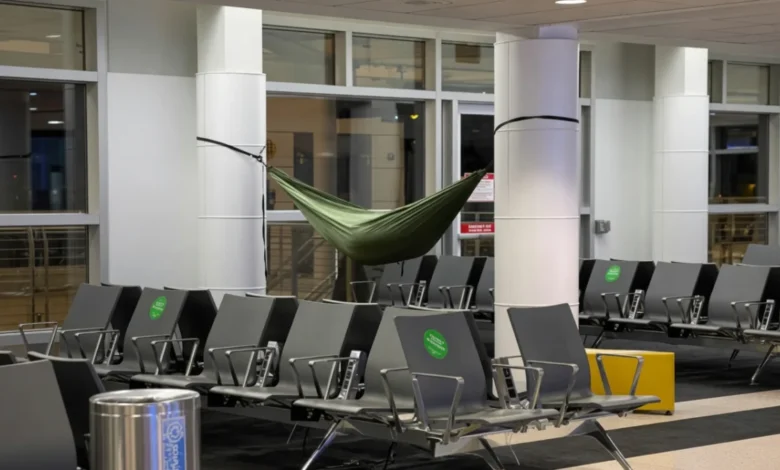
In an unexpected departure from its typical communications regarding security screenings and prohibited items, the Transportation Security Administration (TSA) recently utilized its social media platforms to encourage travelers to consider alternative methods for resting during airport delays. On July 22, 2026, the agency issued a statement via X (formerly Twitter) coinciding with "National Hammock Day," suggesting that passengers might utilize hammocks within terminal buildings to alleviate the stress of travel. The post, which included images of travelers suspended in "napping apparatuses," advised passengers to "check with the airport about where you can and can’t hang your napping apparatus" to avoid potential conflicts with facility management.
While the TSA’s tone was characteristic of its modern, pun-heavy social media strategy, the recommendation has ignited a complex discussion regarding the intersection of federal security guidelines, local airport ordinances, and the structural realities of aviation infrastructure. The suggestion that passengers should bring bulky sleeping equipment—referred to by the agency as "napparatus"—highlights a growing trend of "airport camping" born out of an era of increasing flight delays and cancellations. However, experts in aviation law and structural engineering warn that the reality of setting up a hammock in a public terminal is fraught with legal and safety complications that the TSA’s lighthearted post did not fully address.
The Rise of the Airport Napparatus Trend
The phenomenon of passengers seeking unconventional comfort in terminals is not entirely new, but the scale of the equipment being used has escalated. For decades, the sight of travelers—particularly younger demographics—carrying personal pillows or sleeping bags has been a common fixture of the air travel experience. However, recent photographic evidence from major hubs indicates a shift toward more substantial infrastructure.
In October 2022, a traveler at Phoenix Sky Harbor International Airport (PHX) shared an image of a hammock strung between two structural pillars in a gate area, citing a four-hour delay with American Airlines as the catalyst. Similar sightings have been documented at Minneapolis-St. Paul International Airport (MSP), where a passenger was photographed suspended in a Delta terminal. Beyond hammocks, some travelers have opted for even more significant arrangements. In December 2022, footage surfaced from Orlando International Airport (MCO) showing a traveler who had successfully navigated security with a full-sized air mattress, which was then inflated and placed in the middle of the terminal floor.
These incidents underscore a growing desperation among the traveling public. As the aviation industry grapples with staffing shortages, weather-related disruptions, and technical outages, the "layover" has frequently transformed into an overnight ordeal. In this context, the TSA’s acknowledgment of hammocks serves as a tacit admission of the discomfort inherent in the modern passenger experience.
Structural and Safety Implications of Indoor Hammocking
While the TSA’s social media post suggested that hammocks could "reduce tension," structural engineers point out that the tension created by such devices is precisely the problem. The use of airport columns as anchor points for hammocks introduces lateral loads that these structures may not be designed to support in a concentrated manner.
Technical data provided by outdoor equipment specialists indicates that the force exerted on a hammock’s anchor points is significantly higher than the weight of the occupant. At a standard 15-degree suspension angle, a 200-pound individual creates approximately 386 pounds of force on each end of the hammock. Most airport columns are designed for vertical compression—supporting the weight of the roof and upper floors—rather than the horizontal "shear" force generated by a suspended load.
Furthermore, the placement of these devices creates significant safety hazards regarding egress. Airport terminals are high-traffic environments governed by strict fire codes and the Americans with Disabilities Act (ADA). Hammocks strung between pillars can block accessible routes, impede passenger queues, and obstruct the path of emergency responders. There is also the issue of "boarding flow" and maintenance; cleaning crews and airport staff often work through the night, and makeshift campsites can hinder their ability to maintain facility hygiene and safety.
The Legal Labyrinth: Federal Encouragement vs. Local Enforcement
The primary criticism of the TSA’s recommendation lies in the jurisdictional disconnect between the federal agency and local airport authorities. While the TSA is responsible for screening passengers and their belongings, it does not own or operate the airports themselves. Most major U.S. airports are managed by city departments or regional port authorities, each with its own set of bylaws.
Many of these local regulations explicitly prohibit the very behavior the TSA is now promoting. For example, the rules for Newark Liberty International Airport, codified under New Jersey Administrative Code (N.J.A.C. 19:76-1.28), strictly forbid sleeping or lying down in public areas of the terminal in a manner that obstructs others or violates the intended use of the space. Similar ordinances exist at hubs across the country, often designed to prevent loitering and ensure that seating remains available for active travelers.
The TSA’s advice to "check with the airport" presents a practical challenge for the average traveler. Airport management offices are typically located in administrative wings, far from the gate areas where passengers are stranded. Information desks are often staffed by volunteers or third-party contractors who do not have the authority to waive safety codes or structural regulations. Consequently, a passenger who follows the TSA’s suggestion may find themselves in a confrontation with airport police or security guards, leading to the "falling out" that the TSA ironically warned against.
Public Reaction and the Paradox of Security Theater
The public response to the TSA’s "National Hammock Day" post has been marked by a mixture of amusement and indignation. A significant portion of the criticism centers on the perceived hypocrisy of the agency’s policies. Critics point out the irony of a security regime that requires passengers to remove their shoes and prohibits containers of water exceeding 3.4 ounces, yet simultaneously suggests that those same passengers should bring hammocks, straps, and potentially mattresses into the secure zone.
One viral response to the agency’s post summarized the sentiment: "So we have to get strip-searched and demeaned by the staff, can’t bring a bottle of water into the airport, but we can set up tents and camp?"
This highlights a broader tension in the passenger experience. The TSA is often viewed as the primary architect of the "unpleasantness" of modern air travel, characterized by long lines and invasive procedures. For that same agency to then "celebrate" the fact that passengers feel the need to bring their own sleeping infrastructure—while disclaiming any responsibility for where that infrastructure can actually be used—strikes many as tone-deaf.
Chronology of the "Airport Camping" Conversation
- October 2022: Viral images of a hammock in Phoenix Sky Harbor (PHX) bring national attention to the lengths travelers will go to for comfort during multi-hour delays.
- December 2022: The "Orlando Mattress" incident goes viral, showing a traveler using a full air mattress in the terminal, sparking debates about what constitutes "carry-on" luggage.
- 2023-2025: A series of major airline technical failures and weather events leads to record-breaking numbers of stranded passengers, further normalizing the sight of people sleeping on terminal floors.
- July 22, 2026: The TSA officially leans into the trend with its National Hammock Day post, shifting the conversation from a passenger "hack" to a federally acknowledged (if not authorized) practice.
Analysis: The Future of Passenger Comfort Infrastructure
The controversy surrounding the TSA’s hammock endorsement may serve as a catalyst for a broader reevaluation of airport design. In international hubs such as Singapore Changi (SIN) or Seoul Incheon (ICN), dedicated "snooze zones" and nap pods are standard amenities, recognizing that long-haul travel and delays are inevitable components of the industry. In contrast, many U.S. airports have historically utilized "hostile architecture"—seating with armrests designed to prevent lying down—to discourage sleeping in terminals.
If federal agencies like the TSA are going to acknowledge the necessity of passenger "napparatuses," there may be increased pressure on airport authorities to provide sanctioned spaces for their use. This could include designated "hammock zones" with reinforced pillars or expanded quiet rooms with comfortable, flat surfaces.
Until such infrastructure becomes standard, the burden remains on the traveler to navigate the conflicting signals of federal suggestions and local enforcement. The TSA’s promotion of National Hammock Day, while intended as a lighthearted engagement with the public, ultimately highlights a systemic failure in the travel experience: an environment so uncomfortable that a federal security agency suggests its citizens bring their own beds to the gate.
As air travel continues to face challenges in reliability, the "napparatus" may remain a fixture of the terminal landscape, regardless of whether the local ordinances—or the structural pillars—are ready to support the weight.