The Paradox of Spa: How Formula 1’s 2026 Hybrid Era Challenges the Sport’s Most Revered Circuit

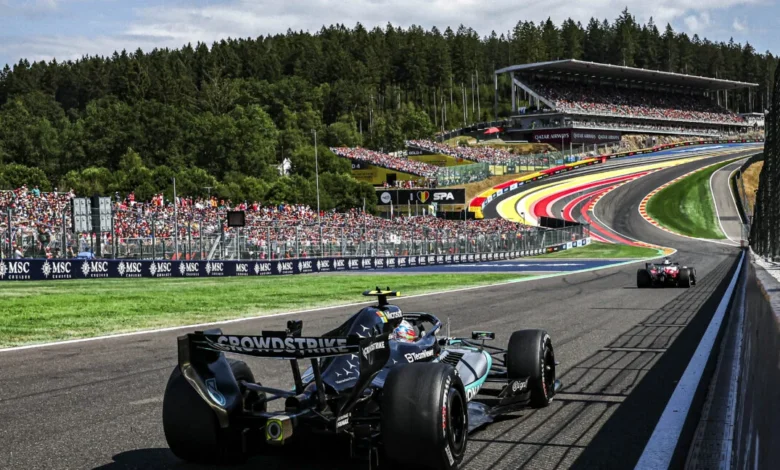
Formula 1’s return to the hallowed grounds of Spa-Francorchamps for the 2026 Belgian Grand Prix this past weekend underscored a growing disconnect between the sport’s current technical regulations and the inherent demands of its most legendary circuits. While Mercedes’ Kimi Antonelli secured a dominant sixth victory of the season, the triumph was overshadowed by widespread frustration from drivers and observers regarding the performance limitations of the 2026-specification F1 cars on this dramatic Ardennes track. The prevailing sentiment echoed across the paddock was that the intricate hybrid power units, with their constrained energy deployment strategies, are rendering circuits like Spa a shadow of their former glorious selves, impacting both driver experience and the spectacle of racing.
The Circuit de Spa-Francorchamps, a ribbon of tarmac etched into the undulating landscape of the Ardennes forest, holds an almost mythical status in motorsport. It was one of the original venues in the inaugural Formula 1 season of 1950, but its history stretches back even further, with the first Belgian Grand Prix held there in 1922. In its earliest iterations, the circuit was a formidable 9-mile (14.5 km) loop of public roads, encompassing the towns of Malmedy and Stavelot before returning to Francorchamps. Post-World War II, the layout was slightly revised to 8.7 miles (14.1 km), becoming ferociously fast and equally dangerous. Cars of that era, boasting immense power with minimal safety concessions, regularly achieved average lap speeds exceeding 150 mph (240 km/h), creating a breathtaking, albeit perilous, challenge for drivers. Legends were born and lost on its unforgiving stretches.
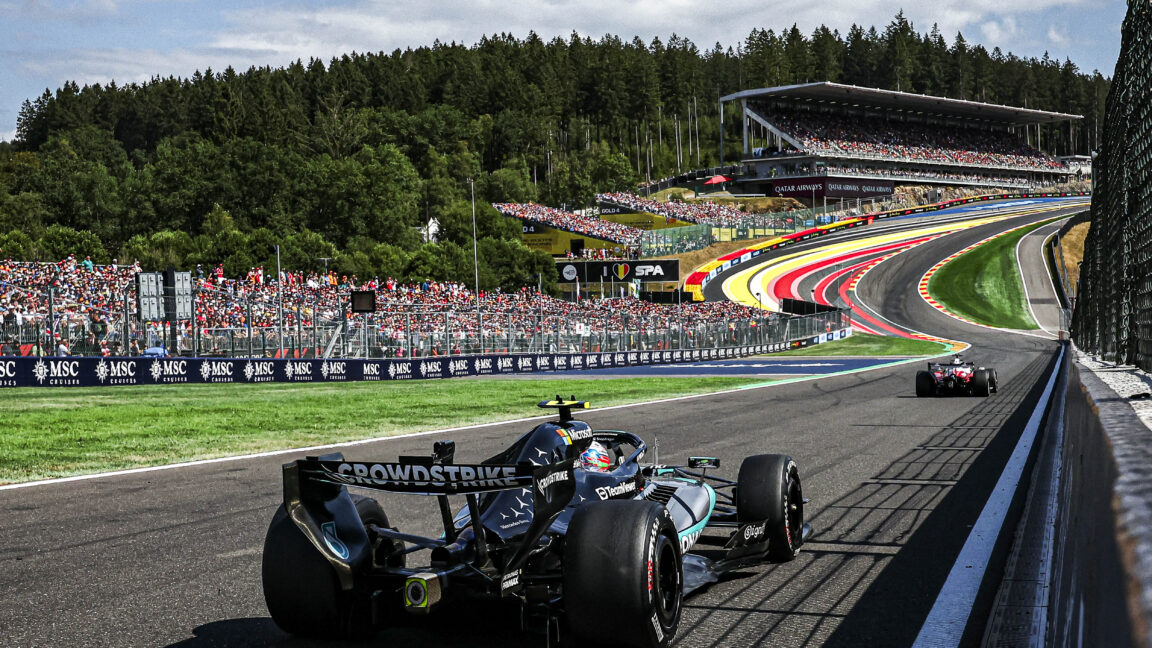
The modern Spa, reconfigured in 1979, significantly reduced the original layout to its current 4.3 miles (6.9 km), though it remains the longest track on the F1 calendar. Notably, portions of the circuit continued to serve as public roads until 2000, when it was finally dedicated solely to racing. Its iconic corners, such as the legendary Eau Rouge and Raidillon complex—a rapid left-right uphill sequence climbing 77 feet (24 meters)—and the sweeping, high-speed Pouhon, are celebrated as ultimate tests of a driver’s skill and bravery. However, the unique characteristics of the 2026 F1 cars, particularly their energy management requirements, are profoundly altering how these historic sections are navigated.
The 2026 Hybrid Conundrum and its Impact
The crux of the issue lies in the current generation of F1 hybrid power units. As demonstrated earlier in the season at Suzuka, Japan, and emphatically reiterated at Spa, the 2026 F1 battery, with its limited 4 MJ capacity, is only capable of powering the car’s electric motor for mere seconds per lap. For a significant portion of the remaining lap, the energy-starved cars are effectively running with less power delivered to their rear wheels than a car in the junior F2 feeder series. This drastic reduction in available power necessitates a driving style known as "lift and coast," where drivers briefly lift off the throttle and coast into corners to allow the engine to divert power to recharge the battery.
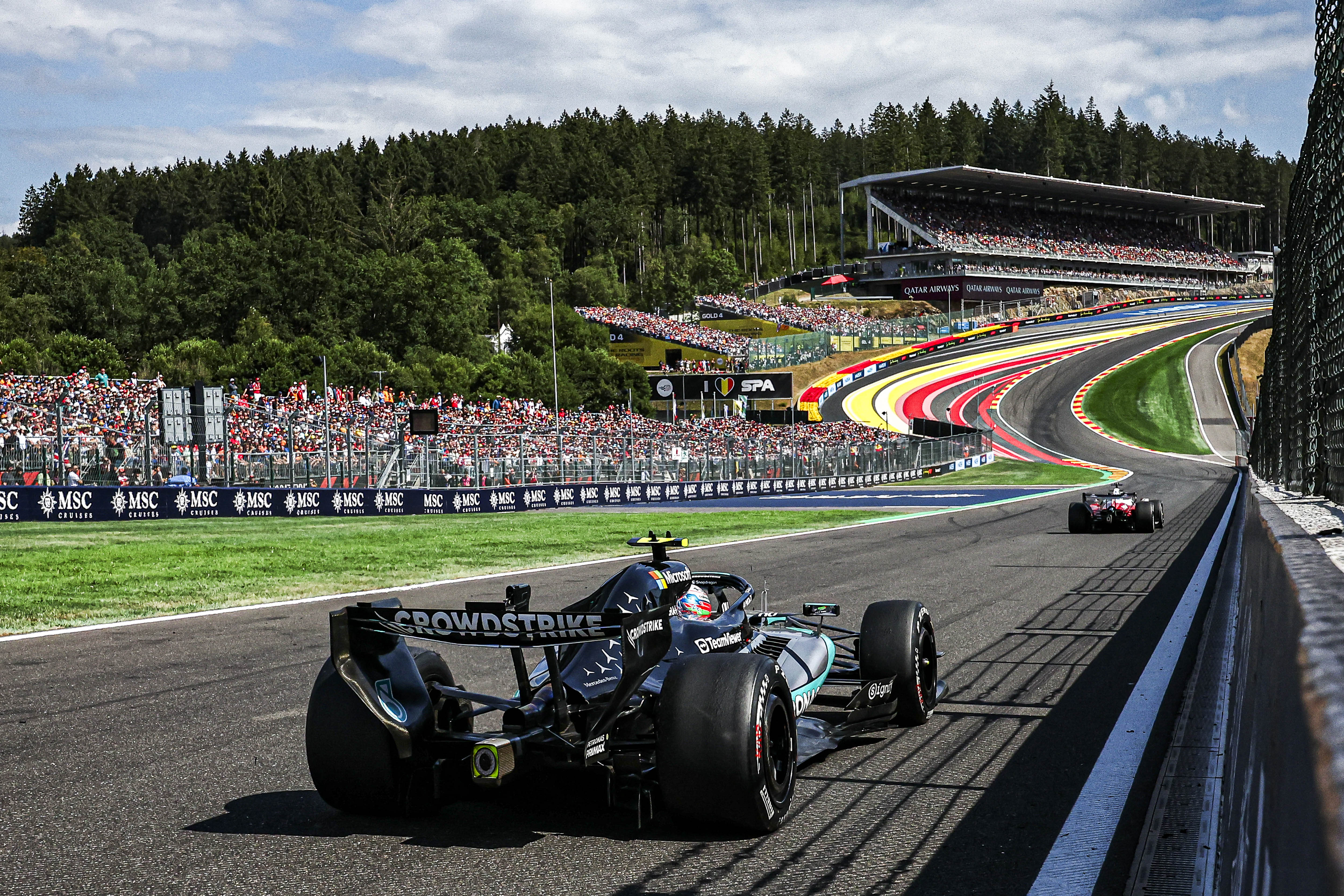
This strategy fundamentally undermines the traditional approach to a circuit like Spa. Corners that once demanded unwavering commitment and outright bravery to be taken flat-out are now approached with a tactical compromise. The high-speed sweepers and long straights, which define Spa’s character, are particularly affected. Drivers, instead of pushing the limits of grip and engine power, are forced to manage energy, creating a sensation of driving underpowered machinery.
Max Verstappen, the Red Bull ace and a frequent critic of the current regulations, articulated this frustration vividly after qualifying. "For most of sector two, you run just on the engine," he stated, referring to the middle sector of Spa. "So what is that? 450 bhp, 500 bhp? Something like that, which is, I guess, more or less what a Formula 3 car has but with F1 downforce. So you can imagine, of course, that that is not very exciting to drive." His comments highlight the stark contrast between the aerodynamic capabilities of the F1 cars and their intermittent power delivery, leading to a diminished driving experience. While Verstappen wryly added, "But honestly, I don’t want to sit here and complain again because probably someone will shoot me outside the door," his underlying dissatisfaction was palpable.
Qualifying Drama and Race Day Incidents
The Belgian Grand Prix weekend began with intense qualifying sessions, setting the stage for the race. Kimi Antonelli of Mercedes-AMG F1 Team once again demonstrated his exceptional prowess with the 2026 cars, securing pole position with a commanding three-tenths of a second margin over Max Verstappen. Verstappen’s second-place grid slot was partly aided by strategic teamwork; his Red Bull teammate, facing a grid penalty for an engine change, provided a crucial slipstream through the final sector, allowing Verstappen to maximize his lap time.
However, the qualifying session brought significant woes for Antonelli’s teammate, George Russell. Tipped as a championship contender at the start of the season, Russell has consistently been outpaced by his teenage teammate. The half-second gap between the two Mercedes cars in qualifying at Spa was particularly concerning, leading to an intricate blame game between driver and car. Initial suggestions of Russell’s discomfort with the new driving style required by the 2026 cars gave way to suspicions of a deeper technical issue with his Mercedes-AMG F1 W17. Russell’s car was visibly slower than Antonelli’s on several flat-out sections, prompting a frantic investigation by the team.
The emerging culprit appeared to be the self-learning AI systems employed by teams for energy deployment strategies. These sophisticated, yet often opaque, systems manage the limited 4 MJ battery capacity. Even minor, unoptimized energy deployments for torque fill or to mitigate wheelspin can critically deplete the battery, leaving a driver with significantly less power than anticipated. Russell’s frustration was evident: "My whole focus for the last 36 hours has been on straight-line speed. It hasn’t been focused on the set-up, tires, or anything, because we’re all trying to solve what is going on." He described a disorienting experience on track: "Even my last lap, for some reason, I lost another tenth and a half to myself, just on the straight. And you’re watching on your steering wheel, [you’re] losing speed when you’re full gas on the straight. You feel powerless. We don’t know what’s going on. I don’t think it’s the power unit, to be honest. My team are really, really on it now, to try and solve it."
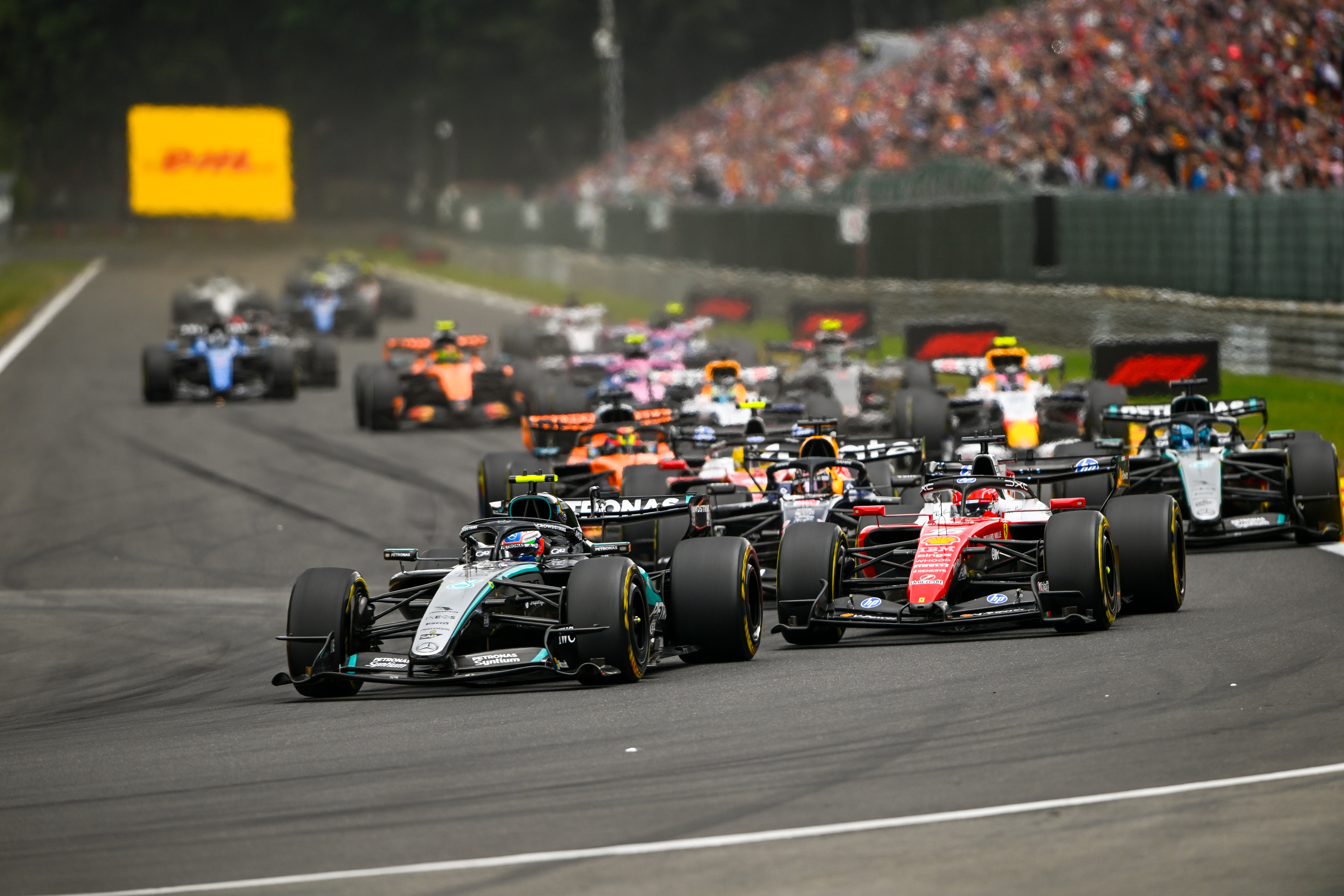
Despite the team’s efforts, the issue persisted into the race. Russell’s car was noticeably slower than its competitors as the pack hurtled down the Kemmel Straight. In an attempt to regenerate energy and make an overtake on Lewis Hamilton’s Ferrari into Les Combes—a corner traditionally a heavy braking zone but now part of the lift-and-coast routine—Russell misjudged the move. Hamilton, minding his own race line, had nowhere to go, leading to contact. Russell clipped Hamilton, spun into the gravel trap, and retired from the race, his frustration erupting in an expletive-filled radio tirade directed at his garage.
Controversially, the race stewards deemed the collision Hamilton’s fault, issuing the Ferrari driver a five-second penalty despite what appeared to be a clear racing incident compounded by Russell’s car’s performance limitations. This decision sparked further debate among fans and pundits, adding another layer of discontent to an already troubled weekend.
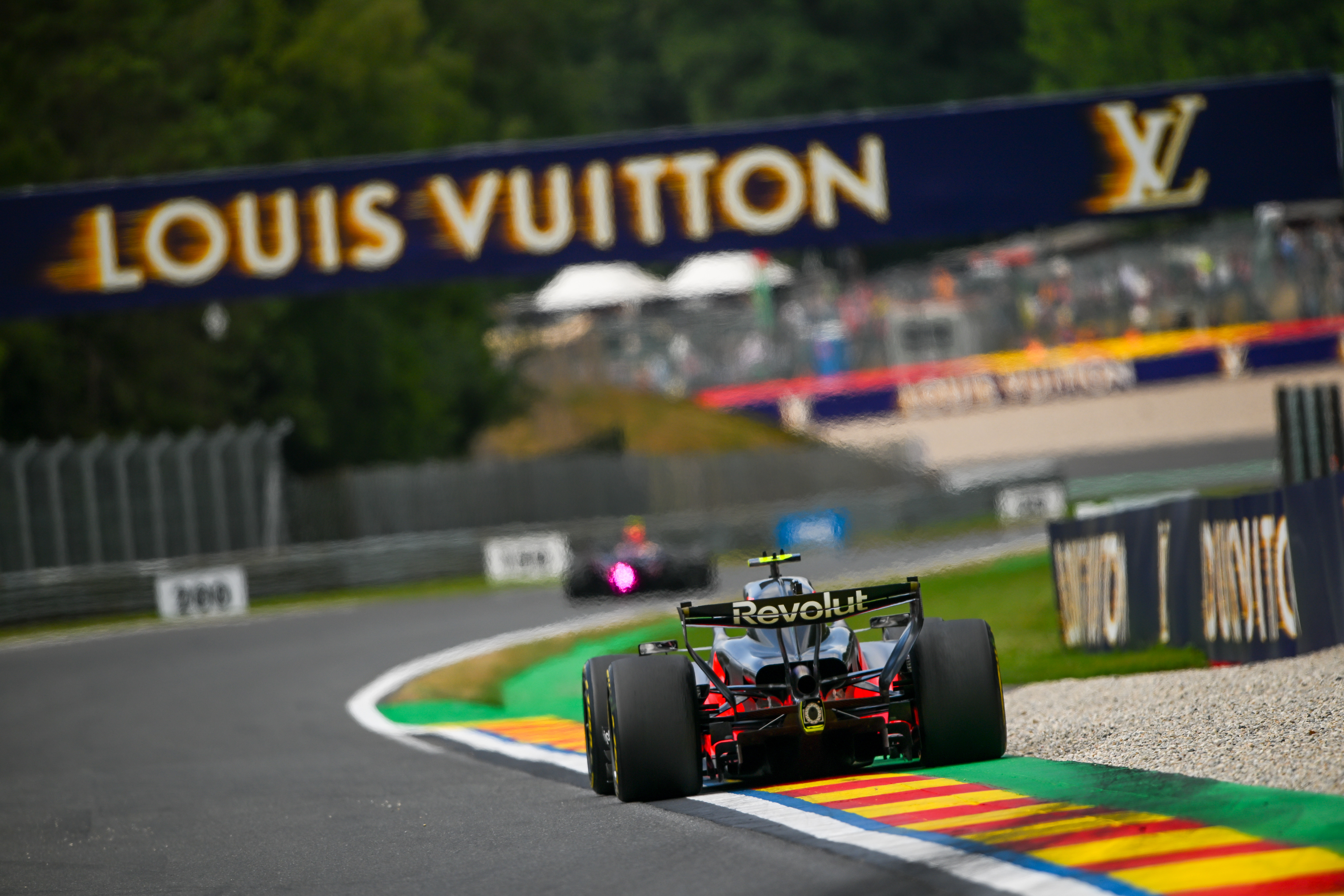
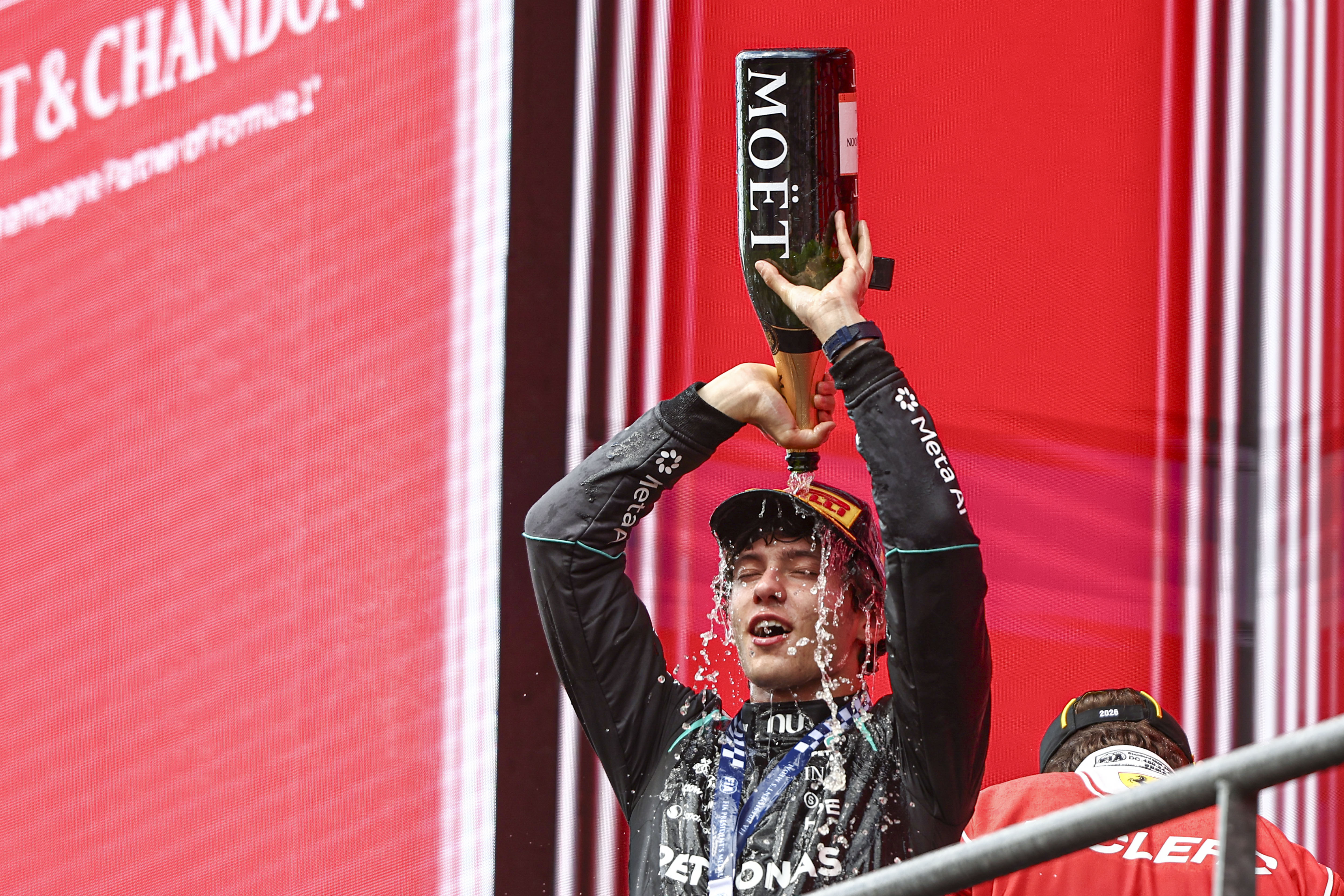
The race itself saw Kimi Antonelli solidify his season dominance. Although Verstappen briefly snatched the lead at the start, Antonelli quickly reasserted control by Les Combes and never looked back, claiming his sixth victory of the season. Amidst the struggles, Gabriel Bortoleto of Audi Revolut F1 Team delivered a commendable performance, finishing eighth and adding another four points to his and Audi’s tally, demonstrating his aptitude for the challenging Spa circuit.
Driver Morale and the Future of F1
The current state of F1, particularly the performance characteristics of the 2026 cars, continues to fuel speculation about drivers’ futures. Max Verstappen, consistently vocal about his preference for purer, more powerful racing machines, finds himself in a unique position. Rumors persist about an escape clause in his Red Bull contract, potentially activatable if he is not among the top two in the drivers’ championship. A move to McLaren has been mooted, as has a complete F1 sabbatical to pursue other racing ambitions, such as the 24-hour endurance races at Le Mans, the Nürburgring, and even the Spa 24 Hours.
While the prospect of Verstappen competing in GT3 and prototype racing is alluring for motorsport enthusiasts, the general consensus, including the author’s analysis, is that he is likely to remain in F1 with Red Bull. His post-qualifying comments, "I’m mentally just adjusting to it. I’m trying to make the best out of it," and "Even though, of course, it’s not what I like, not what I love to do in Formula 1. But I can also sit at home and drive nothing. But that also doesn’t do anything. So I’m just trying my best," indicate a pragmatic approach to a less-than-ideal situation rather than an imminent departure.
The broader implications of these technical regulations are significant. The 2026 Belgian Grand Prix, despite Antonelli’s commanding win, was widely regarded as "far from a classic." This sentiment is a critical concern for Formula 1 as it balances technological innovation with the core elements that make the sport thrilling. The current ruleset, by compelling drivers to "lift and coast" through legendary corners and reducing outright power, risks diluting the spectacle and the challenge that historically defined Grand Prix racing.
The reliance on opaque AI energy management systems also introduces an element of unpredictability and frustration for drivers, as evidenced by George Russell’s struggles. This raises questions about the balance between human skill and technological dependency in F1. If drivers are "powerless" to overcome car-specific energy deployment glitches, it detracts from the purity of competition.
For classic circuits like Spa, and indeed Monza which is hinted at, the future under these regulations looks challenging. These tracks were designed for a different breed of F1 car, one where raw power and aerodynamic efficiency were unleashed without the constant need for energy conservation. The current cars are simply ill-suited to extract the full potential, and thus the full spectacle, from these historic venues. This situation begs for a re-evaluation by the FIA and F1 management to ensure that the pursuit of technological relevance does not inadvertently diminish the very essence of what makes Formula 1 the pinnacle of motorsport. The delicate balance between innovation, driver satisfaction, and fan engagement will be crucial in shaping the sport’s trajectory in the coming years.
Related posts: