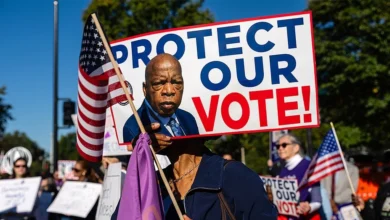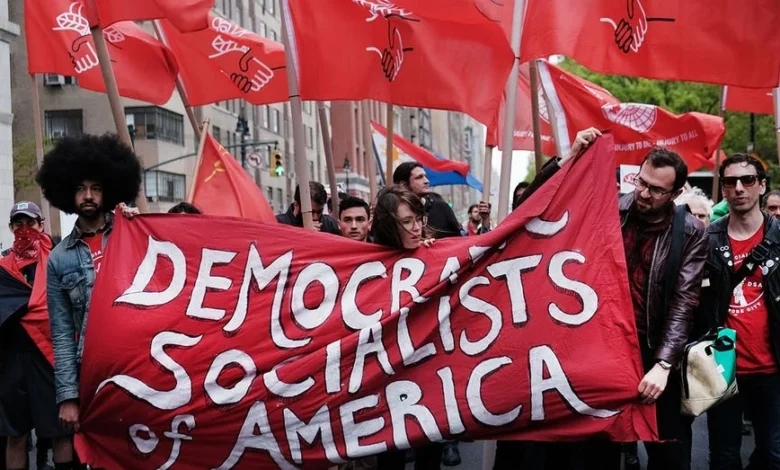
The Democratic Socialists of America (DSA) has officially endorsed Michigan state lawmaker Donavan McKinney in his primary challenge against incumbent Representative Shri Thanedar, D-Mich., marking another significant escalation in the ongoing ideological battle within the Democratic Party. This endorsement, confirmed by the national DSA on Monday to Fox News Digital, highlights a deepening rift between the party’s established leadership and its burgeoning far-left wing, a dynamic that continues to fuel internal strife and reshape the political landscape. The contest in Michigan’s 13th Congressional District is poised to be a closely watched indicator of the DSA’s growing influence and its strategy of pushing the Democratic Party further left, even at the expense of challenging incumbents who themselves boast progressive credentials.
The Incumbent Under Siege: Rep. Shri Thanedar’s Tumultuous Tenure
Representative Shri Thanedar, a first-term congressman representing a deep-blue Detroit-area district, has garnered attention for his own pronounced progressive stances. Before his current challenge, Thanedar had made headlines for his vocal support for the impeachment of former President Donald Trump, extending similar threats to various Cabinet officials. His legislative agenda has also included pioneering efforts to establish a national reparations system, advocating for financial restitution to Black Americans, a policy position strongly favored by the progressive wing of the party. Despite these positions, which align with many far-left objectives, Thanedar finds himself the target of a primary challenge from the very wing he once championed.
A pivotal moment in Thanedar’s political trajectory, and indeed a catalyst for the current challenge, occurred in October 2023 when he publicly renounced his membership in the Democratic Socialists of America. His decision came in the immediate aftermath of the brutal October 7 attacks in Israel, which saw Hamas militants launch a devastating assault characterized by widespread murder, rape, and kidnapping. Thanedar explicitly cited the DSA’s response to these events as his reason for dissociation. In a statement released shortly after the attacks, Thanedar declared, "After the brutal terrorist attacks on Israel, which included the indiscriminate murder, rape, and kidnapping of innocent men, women, and children, I can no longer associate with an organization unwilling to call out terrorism in all its forms." This stance put him at odds with segments of the DSA, which often adopts a more critical view of Israeli policy and has been perceived by some as equivocal in condemning Hamas. This break, despite his otherwise progressive record, has now opened the door for a challenger who arguably represents a more unyielding interpretation of socialist principles, particularly on foreign policy matters.
The Challenger: Donavan McKinney and the DSA’s Strategic Play
Donavan McKinney, a Michigan state lawmaker, emerges as the DSA’s chosen instrument to unseat Thanedar. His endorsement by the national DSA, preceded by support from the Detroit-area chapter, signals a concerted effort to consolidate power within the Democratic Party’s grassroots. While McKinney’s specific policy platform is still being detailed, his alignment with the DSA implies a commitment to a range of policies including universal healthcare, ambitious climate action, and robust social safety nets, often pushing for more expansive and transformative changes than many mainstream Democrats.
The significance of McKinney’s challenge is amplified by the high-profile endorsements he has received from prominent figures within the progressive movement. Senator Bernie Sanders, I-Vt., a self-proclaimed democratic socialist and a highly influential figure on the American left, has thrown his weight behind McKinney. Similarly, Representative Rashida Tlaib, D-Mich., a leading member of "The Squad" and a staunch progressive voice in Congress, also a DSA member, has publicly backed McKinney over her fellow Michigan Democrat. These endorsements lend substantial credibility and organizational support to McKinney’s campaign, signaling to the broader progressive base that Thanedar is no longer considered sufficiently aligned with the movement’s core tenets. The backing from such figures not only provides a fundraising boost but also galvanizes a dedicated volunteer base, crucial for primary elections in deep-blue districts where grassroots mobilization can often outweigh traditional campaign advertising.
A Deepening Ideological Chasm: The DSA’s Rise and "Dirty Break" Strategy
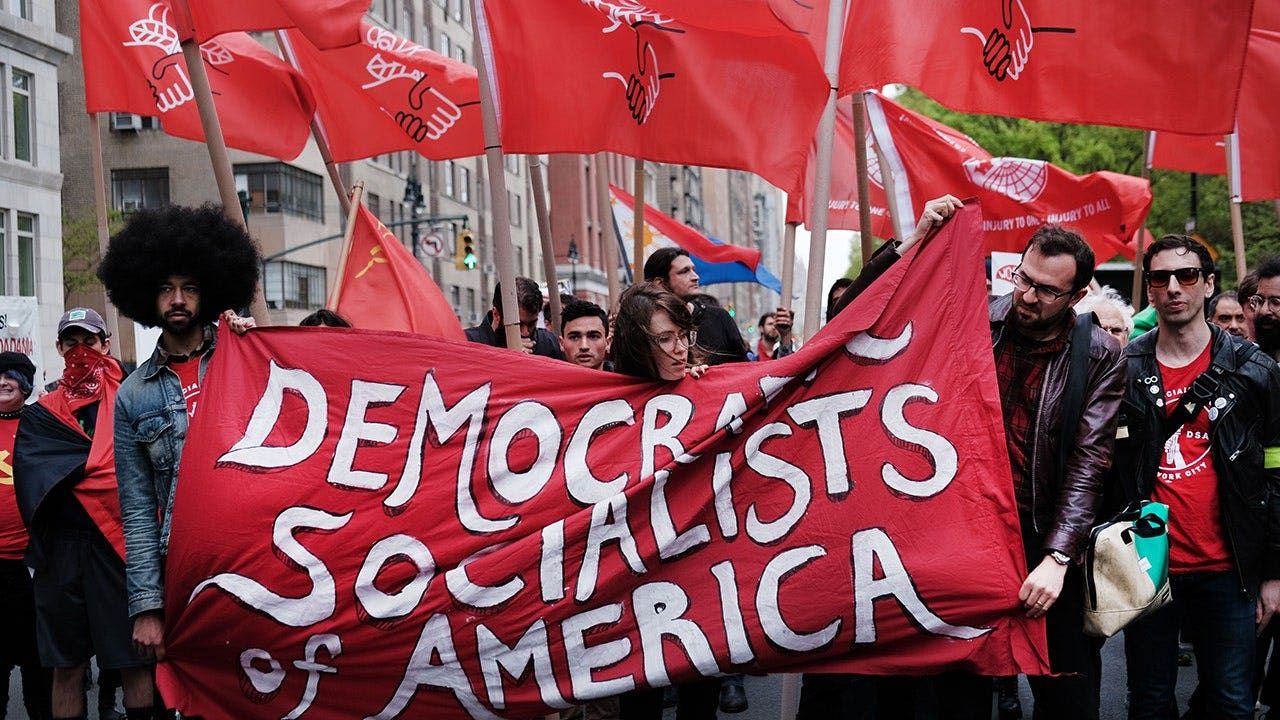
The current primary challenge in Michigan is not an isolated incident but rather a symptom of a broader, well-orchestrated strategy by the Democratic Socialists of America to reshape the Democratic Party from within. The DSA, which saw a significant surge in membership and influence following Bernie Sanders’ 2016 presidential campaign, has adopted a strategy often referred to as a "dirty break." This approach involves running candidates on the Democratic Party line to gain access to ballots and resources, while simultaneously aiming to push the party’s platform to the left and, in some cases, replace establishment figures with more ideologically pure socialist representatives.
Over the past several election cycles, this strategy has yielded notable successes. High-profile examples include the victories of Representatives Alexandria Ocasio-Cortez (D-N.Y.), Jamaal Bowman (D-N.Y.), and Cori Bush (D-Mo.), all of whom successfully unseated long-serving Democratic incumbents by mobilizing progressive grassroots support. These victories demonstrated the viability of challenging the Democratic establishment, particularly in urban and highly progressive districts where a motivated, ideologically aligned base can be decisive in low-turnout primary elections.
The original article mentions other recent examples of this far-left wave. While not all are explicitly stated as DSA-backed, they reflect a broader trend of incumbents facing formidable challenges from their left flank. Rep. Dan Goldman, D-N.Y., and Congressional Hispanic Caucus Chairman Adriano Espaillat, D-N.Y., have both contended with significant primary challenges from the left, highlighting the widespread nature of this internal pressure. More directly, the DSA-backed Melat Kiros unseated longtime Denver-area Rep. Diane DeGette, D-Colo., a prominent member of the Congressional Progressive Caucus, further illustrating that even incumbents with progressive leanings are not immune to challenges from those perceived as more ideologically steadfast. These contests are often characterized by intense grassroots organizing, leveraging social media, and focusing on issues such as economic inequality, climate justice, and social justice reforms that resonate strongly with younger, more diverse, and urban voter bases.
The Israel-Hamas Conflict: A Catalyst for Democratic Disunity
The ongoing conflict between Israel and Hamas, particularly following the October 7 attacks, has emerged as a significant fault line within the Democratic Party, exacerbating existing ideological tensions and acting as a powerful catalyst for internal disunity. The DSA, along with many of its endorsed candidates and allied progressive organizations, has consistently adopted a critical stance on Israeli policies, often advocating for Palestinian rights and a more robust U.S. response to the humanitarian crisis in Gaza. This position often contrasts sharply with more traditional Democratic foreign policy, which has historically maintained strong support for Israel.
Rep. Thanedar’s decision to renounce his DSA membership specifically over their response to the Oct. 7 attacks underscores the profound moral and political dilemmas faced by progressive Democrats. While many on the left express deep concern for Palestinian suffering, the explicit condemnation of Hamas’s actions and unwavering support for Israel’s right to self-defense became a litmus test for some. Thanedar’s move positioned him closer to the mainstream Democratic stance on Israel, but simultaneously alienated him from the more radical elements of the progressive movement, including the DSA. This ideological divergence on a critical foreign policy issue has now directly translated into a domestic political challenge, demonstrating how global events can profoundly impact local elections and intra-party dynamics. The conflict has forced many Democrats to choose sides, not just on policy but on fundamental ethical questions, further segmenting a party already grappling with diverse viewpoints.
The Broader Implications for the Democratic Party
The escalating internal conflict within the Democratic Party, exemplified by the Thanedar-McKinney primary, carries significant broader implications for the party’s future.
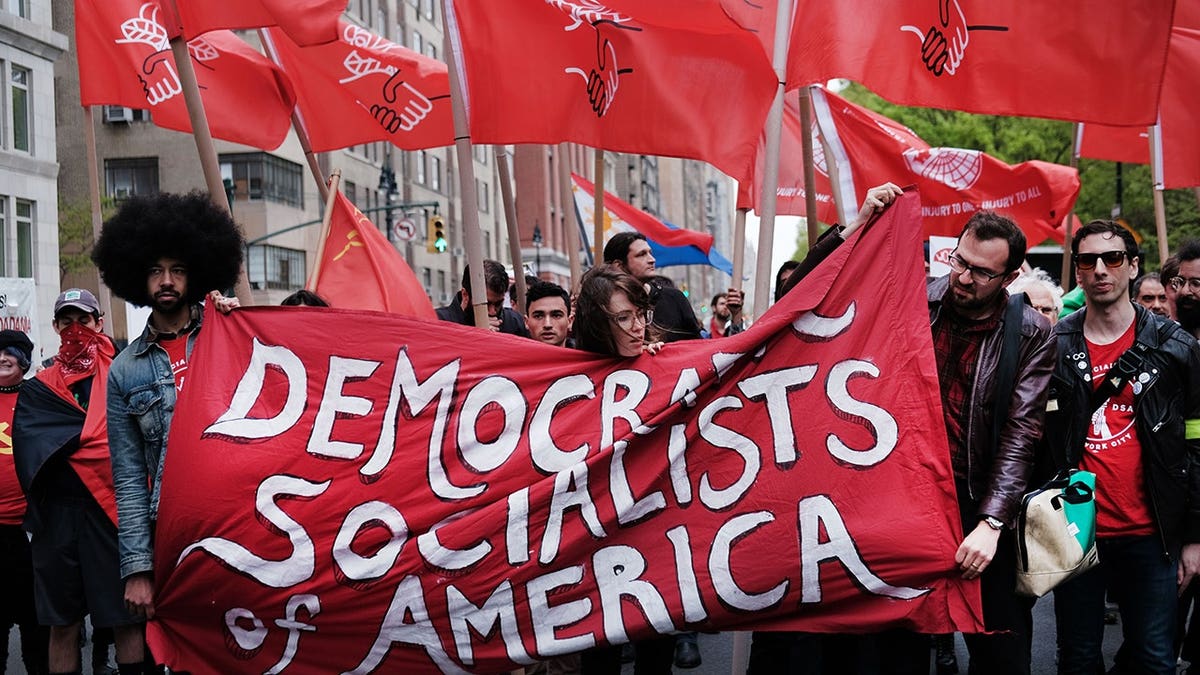
Electoral Vulnerability: One of the most pressing concerns for many moderate Democrats is the potential for the party to be perceived as moving too far to the left, which could jeopardize their electoral prospects in general elections, particularly in swing districts or states. As Rep. Henry Cuellar, D-Texas, a vulnerable moderate Democrat, expressed on Fox News’ "Saturday in America," "As a Democrat, I reject what the DSA is doing. I read their platform, and it is radical." This sentiment reflects a fear that if the party’s platform becomes too closely associated with explicit socialist policies, it could alienate crucial independent and moderate voters necessary for victory in competitive races. The emphasis on issues like reparations, expansive social programs, and specific foreign policy stances, while energizing the base, might create an image that is difficult to sell to the broader American electorate.
Republican Strategy: Republicans have keenly observed and capitalized on these internal Democratic struggles. The GOP frequently leverages the rise of the DSA and the progressive wing to paint the entire Democratic Party as "socialist" or "radical." This narrative is a powerful tool in their electoral strategy, aimed at galvanizing conservative voters and swaying undecided moderates who may be wary of what they perceive as extreme policy proposals. Every primary victory by a DSA-backed candidate or a significant challenge to a moderate Democrat provides Republicans with fresh ammunition to reinforce this narrative, potentially complicating Democratic efforts to unify ahead of general elections.
Party Identity: The ongoing internal struggle represents a battle for the very soul of the Democratic Party. It pits the pragmatic, incrementalist approach of the traditional establishment against the transformative, systemic change advocated by the progressive and socialist wings. The outcome of these primary contests will determine not only who represents specific districts but also the overarching ideological direction of the party. A stronger DSA presence could shift legislative priorities towards more ambitious social spending, environmental regulations, and potentially a more non-interventionist foreign policy, fundamentally altering the party’s agenda in Congress. This internal push-and-pull creates uncertainty about the Democratic Party’s core identity and its long-term vision.
Legislative Impact: Should more DSA-backed candidates win primaries and subsequently general elections, it could lead to a more assertive progressive caucus in Congress. This shift could intensify calls for policies such as Medicare for All, the Green New Deal, tuition-free college, and significant criminal justice reform. While these policies have strong support among progressives, they often face resistance from moderates within the party, as well as significant opposition from Republicans. A more polarized Democratic caucus could make it more challenging for party leadership to forge consensus and pass legislation, potentially leading to increased gridlock even when Democrats control Congress.
Looking Ahead: The 2024 Midterms and Beyond
The primary contest in Michigan’s 13th Congressional District, while localized, serves as a crucial bellwether for the Democratic Party’s trajectory in the upcoming 2024 midterms and beyond. The results of this race will offer insights into the enduring power of the DSA’s organizing model, the potency of ideological challenges, and the extent to which the Israel-Hamas conflict continues to fragment the party’s progressive base.
The potential for more incumbent challenges remains high, especially in deep-blue urban districts where DSA and allied progressive groups have a strong organizational presence and can effectively mobilize voters in low-turnout primary elections. The long-term effects on Democratic unity and electoral success are considerable. A party deeply divided by ideological purity tests and internecine primary battles may struggle to present a unified front against Republican opposition in general elections. The outcome of these contests will also underscore the critical role of funding and grassroots mobilization, as challenger campaigns often rely heavily on small-dollar donations and volunteer efforts to overcome the financial advantages of incumbents.
Ultimately, the clash between Thanedar and McKinney is more than just a local race; it is a microcosm of the larger struggle for the future direction of the Democratic Party, reflecting fundamental disagreements over policy, ideology, and the very nature of progressive politics in America. As the party navigates these turbulent waters, the choices made in primary elections like this one will significantly shape its identity and electoral fortunes for years to come.