DOJ Intervenes in xAI Lawsuit Citing Grok Chatbot as Vital to National Security and Missile Operations

In a legal move that legal experts describe as unprecedented, the United States Department of Justice has intervened in a Clean Air Act lawsuit to defend Elon Musk’s artificial intelligence company, xAI. The lawsuit, brought by residents of Memphis, Tennessee, and Southaven, Mississippi, alleges that xAI’s massive data center operations are utilizing unpermitted gas turbines that pose significant health risks to the surrounding community. However, the federal government’s intervention does not seek to enforce environmental regulations; rather, it moves to dismiss the case on the grounds that the continued operation of the Grok chatbot is a matter of "paramount national security."
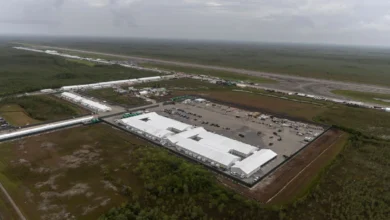
The legal battle centers on the Colossus 2 data center, a sprawling facility designed to train the next generation of Grok, the AI model developed by xAI. The plaintiffs, represented by the NAACP, Earthjustice, and the Southern Environmental Law Center, contend that the facility relies on dozens of unpermitted gas turbines to meet its immense energy demands. These turbines are alleged to be among the largest industrial sources of smog-forming nitrogen oxides in the United States, with the potential to emit more than 5,000 tons of pollutants annually. Despite these environmental concerns, the Department of Justice has filed a motion to throw out the suit, arguing that any disruption to Grok’s development could impair the nation’s ability to conduct armed conflict and maintain a technological edge over global adversaries.
The Colossus 2 Project and Environmental Allegations
The xAI facility in the Memphis area, known as Colossus 2, represents one of the most significant investments in AI infrastructure globally. To power the tens of thousands of advanced GPUs required for training large language models, the site requires a level of electrical throughput that local grids are often unable to provide on short notice. To bridge this gap, xAI installed a massive array of onsite gas turbines. According to the complaint filed by the NAACP, these turbines were operating without the necessary permits required under the Clean Air Act, a federal law designed to control air pollution on a national level.
Nitrogen oxides (NOx), the primary pollutant cited in the lawsuit, are a family of poisonous, highly reactive gases. These gases form when fuel is burned at high temperatures. NOx pollution is a significant contributor to the formation of ground-level ozone and smog, which can trigger serious health problems, including asthma, bronchitis, and other respiratory issues. For the residents of Memphis and Southaven, the industrial expansion has brought not only the threat of dirty air but also a constant auditory burden. Residents living near the facility have reported a persistent, high-volume whirring sound emanating from the data center’s cooling systems and power generation units, which they claim has diminished their quality of life and property values.
The plaintiffs are seeking civil penalties of over $100,000 per day for the alleged violations. Under the Clean Air Act’s citizen-suit provision, private individuals and advocacy groups have the right to sue polluters when the government fails to take enforcement action. This mechanism is intended to serve as a backstop for environmental protection, ensuring that corporations cannot bypass regulations through political influence or administrative oversight.
Chronology of the Dispute and Military Integration
The timeline of the conflict reveals a rapid escalation from a local zoning and environmental issue to a matter of high-level federal policy.
- Mid-2024: xAI begins the rapid build-out of the Colossus data center in Memphis. To meet aggressive deadlines for Grok’s development, the company bypasses traditional utility timelines by installing onsite gas turbines.
- Late 2024 – Early 2025: Local residents and environmental groups begin documenting air quality changes and noise pollution. Investigations by the NAACP and Earthjustice reveal that the turbines lack the requisite federal and state air permits.
- Early 2025: The NAACP and its partners file a formal complaint under the Clean Air Act, seeking an injunction against the unpermitted turbines and substantial civil penalties.
- Mid-2025: Reports surface regarding the Pentagon’s increasing reliance on Grok for logistical and tactical operations. The Department of War acknowledges a $200 million contract with xAI.
- Monday, June 2026: The Department of Justice submits a motion to intervene in the lawsuit. The filing includes a declaration from the Pentagon’s AI chief, Cameron Stanley, detailing Grok’s role in "Operation Epic Fury."
The DOJ’s filing provides a rare glimpse into the militarization of commercial AI. According to the document, Grok was utilized by the Department of War to target and deploy over 2,000 munitions to distinct targets within a 96-hour window during a recent military operation. The government argues that because Grok is now an integral part of the nation’s defense infrastructure, the courts cannot legally shutter the facility or impose penalties that might hinder its operational capacity.
The National Security Argument and Sovereign Immunity
The crux of the government’s defense rests on an expansive interpretation of national security and the doctrine of sovereign immunity. Historically, sovereign immunity has protected the federal government from being sued without its consent. In the 20th century, this doctrine was frequently used to exempt military bases from environmental regulations. Bases such as Camp Lejeune became infamous for groundwater contamination that was shielded from oversight for decades under the guise of military necessity.
However, legal experts note that the DOJ’s intervention in the xAI case represents a significant departure from precedent. In this instance, the government is not defending a federal installation, but a private corporation. Laura Thoms, a former DOJ attorney with nearly two decades of experience, noted that she has never seen the government intervene on behalf of a private defendant to argue that environmental enforcement should be entirely waived.
The government’s motion asserts that Grok’s continued availability is "paramount" to national security, particularly in the context of potential armed conflict with peer adversaries like China. By labeling a private data center as a critical national security asset, the administration is effectively attempting to extend the legal protections typically reserved for the military to a private entity owned by Elon Musk.
Official Responses and Political Context
The reaction to the DOJ’s intervention has been polarized along political and environmental lines. Within the administration, the move is seen as a necessary step to ensure that the United States does not lose the "AI arms race." Mississippi Governor Tate Reeves has publicly supported the facility, stating that Grok is essential for preventing adversaries from closing the technology gap. Similarly, some investors have dismissed environmental concerns as distractions or, in extreme cases, as foreign-influenced attempts to sabotage American innovation.
Conversely, environmental advocates and civil rights leaders have decried the move as a "power grab." Kym Meyer of the Southern Environmental Law Center argued that the administration is using national security as a blanket excuse to bypass all environmental checks and balances. She suggested that if this intervention is successful, it could set a precedent where any corporation with a government contract could claim immunity from the law.
Abre’ Connor of the NAACP highlighted the human cost of this legal strategy, referring to the impacted communities as "sacrifice zones." These are areas where the health and safety of residents—often in low-income or minority neighborhoods—are deemed secondary to industrial or military objectives. The residents of Memphis, who are already dealing with the industrial legacy of the region, now find themselves at the center of a geopolitical struggle that threatens their local environment.
Broader Implications for Environmental Law and AI Warfare
The outcome of this case will likely have far-reaching implications for the future of both environmental regulation and the integration of AI into the military. If the court accepts the DOJ’s argument, it would fundamentally weaken the Clean Air Act’s citizen-suit provision. It would suggest that the executive branch has the unilateral authority to decide which companies are "too important to comply" with environmental laws.
Furthermore, the case underscores the rapid and often opaque transition of generative AI from a novelty tool to a lethal military asset. The disclosure that Grok was used to target missiles marks a turning point in the public understanding of how LLMs (Large Language Models) are being utilized. While the public interacts with Grok as a chatbot on social media platforms, the Department of War views it as a high-speed data processing engine capable of managing complex battlefield logistics and targeting.
As data centers continue to proliferate across the United States to support the AI boom, the tension between technological progress and environmental protection will only intensify. The xAI lawsuit serves as a primary example of this conflict, pitting the immediate health concerns of a local community against the long-term strategic ambitions of the federal government. For now, the residents of Memphis and Southaven remain in a state of uncertainty, living in the shadow of a facility that the government claims is vital to the survival of the nation, even as it allegedly fouls the air they breathe.
Related posts: