
Best Alice Munro Books Stories
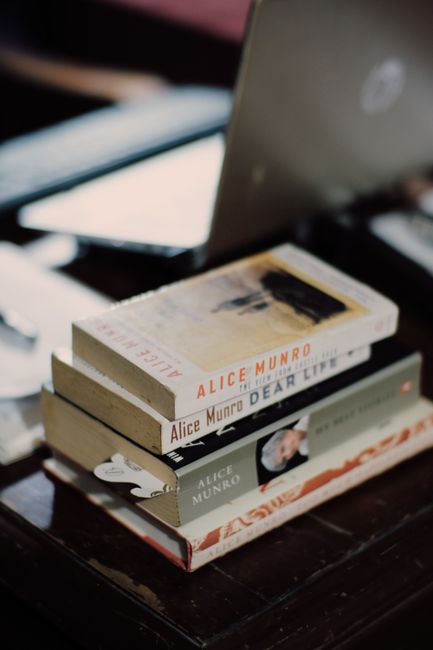
Alice Munro: Unpacking the Master of the Short Story
Alice Munro, a Nobel laureate in Literature, redefined the landscape of the modern short story with her unparalleled ability to capture the quiet complexities of ordinary lives, primarily in rural and small-town Ontario. Her works delve into the internal landscapes of women, exploring themes of memory, desire, regret, betrayal, and the enduring power of human connection, often with a subtle yet profound emotional resonance. Munro’s narrative style is characterized by its deceptive simplicity, its precise prose, and its masterful control of pacing and perspective. She eschews grand pronouncements, instead focusing on the accumulated weight of small moments, the unspoken truths that shape relationships and individual destinies. Her stories are not about dramatic plot twists but about the gradual unfolding of character, the subtle shifts in understanding that can alter a life.
Her debut collection, Dance of the Happy Shades (1968), immediately announced Munro’s distinctive voice. The titular story, "Dance of the Happy Shades," exemplifies her early style, presenting a group of women at a social gathering where unspoken tensions and past regrets simmer beneath the surface of polite conversation. The collection as a whole showcases her ability to imbue everyday experiences with a disquieting psychological depth. Stories like "Walker Brothers Cowboy," though seemingly straightforward tales of mundane encounters, reveal the latent desires and missed opportunities that haunt her characters. Munro’s early work established her reputation for capturing the nuances of small-town life, the social strictures, and the often-unfulfilled aspirations of her female protagonists. The seemingly ordinary setting becomes a crucible for exploring universal human experiences, making her stories both deeply specific and universally relatable.
Lives of Girls and Women (1971), while often described as a novel, functions more as a collection of interconnected stories, charting the coming-of-age of Del Jordan. This work offers a more sustained exploration of female adolescence and the gradual awakening to the complexities of sexuality, family dynamics, and societal expectations. Munro’s unflinching gaze at the sometimes-awkward, often-painful process of growing up, particularly for girls navigating a world shaped by patriarchal norms, is a recurring strength. The stories within Lives of Girls and Women examine the influence of mothers and aunts, the allure of forbidden knowledge, and the gradual erosion of innocence. Del’s journey is marked by a series of illuminating encounters, each contributing to her evolving understanding of herself and the world around her. Munro’s ability to capture the specific vernacular and social codes of rural Ontario lends an authentic texture to Del’s experiences, while the emotional core of her struggles resonates with readers across different backgrounds.
In Something I’ve Been Meaning to Tell You (1974), Munro continued to refine her focus on memory and the often-unreliable nature of our recollections. The title story itself is a powerful exploration of familial secrets and the difficulty of genuine communication. Characters grapple with past events, their memories colored by emotion and self-deception. Munro masterfully employs flashbacks and digressions, mimicking the way memory actually functions, weaving together disparate threads to create a rich tapestry of past and present. The collection highlights her talent for creating characters who are flawed, contradictory, and deeply human, their motivations often opaque even to themselves. The emotional weight of the stories comes not from dramatic climaxes but from the quiet revelations that emerge from careful observation and introspection.
The Moons of Jupiter (1982) further solidified Munro’s reputation as a preeminent short story writer. The collection features some of her most celebrated pieces, including "The Hunger Artist," a poignant examination of artistic ambition and personal sacrifice. Munro’s characters often find themselves at a crossroads, forced to make difficult choices that have far-reaching consequences. The stories in this collection demonstrate a remarkable range, from intimate portraits of domestic life to broader explorations of societal change. The interplay of past and present, the lingering influence of childhood experiences on adult lives, and the subtle shifts in perception that can dramatically alter one’s understanding of reality are all central to Munro’s thematic concerns. Her prose remains exquisitely crafted, each sentence honed for maximum impact.
Friend of My Youth (1990) is another landmark collection, featuring stories that delve deeply into the intricacies of female friendships and the enduring power of past relationships. The title story, a complex narrative about a young woman’s entanglement with a charismatic older man and his disturbed wife, showcases Munro’s ability to explore morally ambiguous situations with empathy and nuance. Her characters are rarely purely good or evil; instead, they exist in shades of gray, their actions driven by a complex interplay of circumstances, desires, and ingrained habits. This collection underscores Munro’s profound understanding of human psychology and her ability to articulate the unspoken feelings that shape our interactions. The subtle power of her endings, which often leave the reader with a lingering sense of ambiguity, is a hallmark of her style.
Runaway (2004) is widely considered one of Munro’s most accomplished collections, containing several stories that are considered masterpieces of the form. "The Bear Came Over the Mountain," later adapted into the film Away from Her, is a devastatingly beautiful and heartbreaking story about Alzheimer’s disease and its impact on a long-term marriage. The collection as a whole explores themes of love, loss, betrayal, and the search for identity with extraordinary insight and emotional depth. Munro’s characters are often in transition, their lives disrupted by unforeseen events or the slow erosion of time. Her ability to capture the quiet desperation, the flicker of hope, and the profound resilience of the human spirit is unparalleled. The stories in Runaway demonstrate a masterful command of narrative structure, with intricate plotting and richly drawn characters that linger long after the last page.
Too Much Happiness (2009) is a collection that grapples with some of Munro’s darkest themes, including violence, madness, and the search for meaning in a seemingly indifferent world. The titular story, inspired by the true story of Sophia Kowalczyk, a Polish mathematician and physicist, showcases Munro’s fascination with historical figures and the hidden lives of remarkable women. Her ability to synthesize meticulous research with profound emotional understanding allows her to create narratives that are both intellectually stimulating and deeply moving. This collection reveals the breadth of Munro’s literary interests and her capacity to explore the most challenging aspects of the human condition. The stories are characterized by their intellectual rigor and their unflinching examination of the complexities of life.
Dear Life (2012), her most recent collection, published shortly after she received the Nobel Prize, offers a retrospective quality, revisiting themes and characters from her earlier works while continuing to explore new territory. The collection includes stories that feel both elegiac and celebratory, reflecting on the passage of time and the enduring power of memory. Munro’s late work is marked by a profound wisdom and a sense of acceptance, even in the face of life’s inevitable sorrows. The stories in Dear Life are characterized by their lyrical prose, their intricate character development, and their ability to evoke a deep sense of place and atmosphere. Her final collection stands as a testament to her enduring genius and her profound contribution to the art of the short story.
Munro’s influence on contemporary literature is immeasurable. She elevated the short story to a level of literary seriousness previously reserved for the novel, proving that within the confines of a few pages, one could explore the entirety of the human experience with profound depth and resonance. Her meticulously crafted prose, her keen psychological insight, and her ability to capture the subtle nuances of everyday life have inspired generations of writers. Her focus on the lives of ordinary women, often overlooked in traditional literary narratives, has opened up new avenues for storytelling and ensured that a wider range of voices and experiences are recognized and celebrated. Munro’s legacy is one of enduring artistic achievement, a testament to the power of language to illuminate the human heart. Her collected works offer a rich and rewarding reading experience, a deep dive into the complexities of life lived, often quietly, but with profound emotional consequence.
