The North American Electric Reliability Corp. (NERC) has released its 2026 Summer Reliability Assessment, signaling a pivotal shift in the stability of the United States power grid as it prepares for a season of forecasted record-breaking temperatures. Despite predictions of an abnormally hot summer across the continent, the report indicates that the massive influx of solar energy and battery storage capacity over the last twelve months has significantly mitigated the risk of widespread blackouts. This assessment comes at a time of intense political debate regarding the transition from fossil fuels to clean energy, providing empirical evidence that renewable resources are now foundational to the reliability of the nation’s electrical infrastructure.
The 2026 Reliability Outlook: A Season of Extremes
As the summer of 2026 approaches, meteorological models suggest that the United States will face some of the highest temperatures on record. Traditionally, such forecasts would trigger alarms regarding the grid’s ability to meet the surge in demand caused by air conditioning and industrial cooling. However, NERC’s latest findings suggest a "strengthened readiness" across the majority of the North American power system.
The primary drivers of this improved outlook are what NERC describes as "record resource additions." Since the previous summer, the grid has integrated a substantial volume of new generation, predominantly consisting of solar arrays and lithium-ion battery storage systems. These technologies, which were once considered supplemental, have moved into a primary role in maintaining grid equilibrium. While the report acknowledges the addition of some new natural gas-fired generators, the sheer scale of renewable expansion has outpaced fossil fuel growth by a wide margin.
A Paradigm Shift in Power Generation Data
The statistics provided in the NERC assessment underscore a rapid transformation of the American energy landscape. Over the past year, the U.S. grid added approximately 30.5 gigawatts (GW) of new solar generation capacity. To put this into perspective, 1 GW is roughly equivalent to the output of a large nuclear reactor or two mid-sized coal plants. This 30.5 GW surge represents the most prevalent and lowest-cost new source of power currently being added to the domestic market.
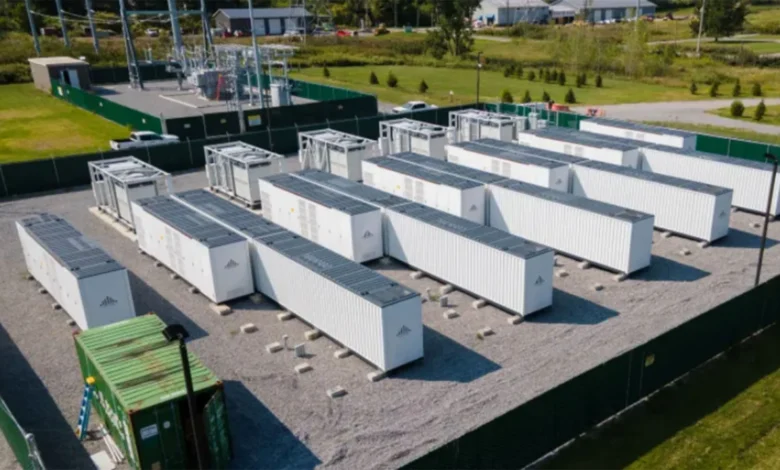
However, the intermittent nature of solar—generating power only when the sun is shining—has historically been a point of contention for grid operators. NERC addresses this by measuring the "peak contribution" of these resources. The report found that the 30.5 GW of new solar contributes roughly 16.4 GW of capacity during the specific hours of peak summer demand. This is complemented by the addition of 16 gigawatts of battery storage capacity, which has nearly doubled in some regions since 2025. These batteries allow for the "shifting" of energy, capturing excess solar production during the day and discharging it during the critical evening hours when demand remains high but solar output drops.
In contrast, the addition of new fossil gas generation was significantly lower, totaling approximately 7 gigawatts. This disparity highlights a market-driven pivot toward clean energy, incentivized by federal tax credits and the declining costs of storage technology.
Political Conflict Over Aging Fossil Fuel Infrastructure
The NERC report arrives amidst a heated legal and political battle between the Trump administration and environmental advocacy groups. Over the last year, the Department of Energy (DOE) has utilized emergency powers to force five coal plants and one oil-and-gas-fired plant to remain operational past their scheduled retirement dates. The administration has argued that these aging "baseload" plants are essential to prevent energy emergencies and maintain grid stability.
However, the NERC assessment appears to contradict this narrative. Notably, NERC’s positive reliability projections for the summer of 2026 were reached without including any of the units forced to stay open by the DOE. The report explicitly states that these plants were not incorporated into the "anticipated resources" for the assessment areas.
Tyson Slocum, director of the energy program at the nonprofit watchdog group Public Citizen, noted that the report confirms that delaying the retirement of outdated coal plants may actually hinder grid modernization. "Delaying the retirement of outdated coal plants that require millions of dollars in upgrades and maintenance to keep them operational only prevents more reliable sources from being added to the grid," Slocum stated. The ongoing court challenges to the DOE’s emergency orders will likely use the NERC data to argue that the "energy emergency" cited by the administration does not exist in the current capacity landscape.
Regional Success Stories and Remaining Vulnerabilities
The improvement in grid stability is most visible in the Midcontinent Independent System Operator (MISO) region, which manages the grid for 15 U.S. states—from Louisiana to North Dakota—and the Canadian province of Manitoba. In the 2025 assessment, MISO was flagged as having "elevated risk" for summer shortfalls. In 2026, thanks to a surge in solar installations and battery storage, the region has been downgraded to "normal risk."
This shift is particularly significant because MISO is home to several of the coal plants the federal government has fought to keep online in Michigan and Indiana. The data suggests that the new renewable resources have more than compensated for the planned retirement of these older units.
Despite the overall positive outlook, NERC warns that certain regions remain at "elevated risk" under extreme conditions:
- New England and the Pacific Northwest: These areas could face shortfalls during prolonged heatwaves.
- West Texas: Rapid industrial growth and high temperatures continue to stress local infrastructure.
- Saskatchewan, Canada: Limited interconnections and high demand pose potential risks.
- The Pacific Northwest Drought: A specific concern for the Northwest is the ongoing drought, which has significantly reduced the output of hydropower—a cornerstone of the region’s energy mix.
Quantifying the Impact of Solar and Storage
The reliability of renewables is often misunderstood as a binary "on or off" state. NERC’s report provides a more nuanced technical analysis through the "nameplate capacity" vs. "peak contribution" metric.
In the MISO region, NERC found that solar resources are capable of providing 60 percent of their nameplate generation capacity during peak demand hours. Even more impressive is the performance of battery storage; NERC assigned MISO’s fleet of 3.6 GW of batteries a 97 percent peak contribution rating. In the Southwest Power Pool (SPP), which serves 14 states in the Midwest and Great Plains, solar was assigned a 54 percent peak rating, while batteries received an 84 percent rating.
Jessi Eidbo, a senior adviser at the Sierra Club and member of NERC’s Large Loads Working Group, emphasized that these numbers should put to rest the argument that renewables are a liability. "This report reflects the conclusion that renewables are significant contributors to reducing risk on the system today," Eidbo said. The high reliability ratings for batteries, in particular, demonstrate their role as a "dispatchable" resource that can respond to grid stress with higher precision than many aging thermal plants.
Chronology of the Grid Transition (2024–2026)
The transition to the current state of relative stability has been marked by several key milestones over the past two years:
- Summer 2024: Multiple regions, including Texas and California, set records for solar and battery contribution, narrowly avoiding blackouts during "heat dome" events.
- Late 2024: The federal government begins issuing emergency orders to prevent the retirement of coal plants in the Midwest, citing concerns over "resource adequacy."
- 2025 Assessment: NERC warns that six U.S. regions face elevated risk, sparking a national conversation about the pace of the energy transition.
- Early 2026: A surge in battery deployments, particularly in Texas (ERCOT) and California (CAISO), begins to flatten the "duck curve"—the phenomenon where net demand drops during the day and spikes at sunset.
- May 2026: NERC releases the current assessment, showing a move from "elevated" to "normal" risk for the vast majority of the U.S. population.
Broader Impact and Implications for the Future
The findings of the 2026 Summer Reliability Assessment have profound implications for energy policy and the economy. First, they validate the massive investments made under the Inflation Reduction Act (IRA), which provided the tax certainty needed for developers to bring 30 GW of solar online in a single year. Second, they suggest that the "reliability" argument used to defend coal and oil generation is becoming increasingly difficult to sustain with data.
However, challenges remain. The grid must now contend with "large loads"—massive increases in demand from data centers, artificial intelligence processing hubs, and the electrification of the transport sector. While solar and batteries are currently keeping pace, the long-term stability of the grid will require continued investment in transmission lines to move renewable energy from sun-drenched and wind-swept plains to urban centers.
Furthermore, the vulnerability of the Pacific Northwest due to drought highlights the need for a diversified portfolio. As climate change makes weather patterns less predictable, the grid cannot rely on any single source. The success of 2026 lies in the combination of resources: the immediate power of solar, the shifting capability of batteries, and the remaining backbone of gas and nuclear.
As the U.S. enters what is expected to be a grueling summer, the NERC report offers a rare piece of good news: the transition to clean energy is not just an environmental imperative, but is increasingly the most effective strategy for keeping the lights on. The "boatload" of new solar and storage has provided a buffer that, for now, appears strong enough to weather the heat.
Related posts: