Chevron Seeks Major Texas Tax Breaks for Natural Gas Power Plant Dedicated to Microsoft Data Center


Energy giant Chevron, operating through its subsidiary Energy Forge One, has submitted a formal application to the Texas State Comptroller’s office seeking a tax abatement worth hundreds of millions of dollars. The requested incentives are intended to support the construction of a massive natural gas-fired power plant in West Texas. However, unlike traditional utility infrastructure, this facility is not designed to bolster the state’s public electrical grid or provide relief to residential consumers. Instead, the plant is slated to provide "behind-the-meter" electricity exclusively for a high-capacity data center, with tech titan Microsoft named as the likely primary tenant.
The application, filed under the state’s newly established Jobs, Energy, Technology, and Innovation (JETI) Act, represents a significant test of Texas’s updated corporate incentive framework. In late January, the Texas Comptroller’s office issued a recommendation to support the approval of the application, marking the first time a project dedicated solely to powering a data center has received such a nod under the program.
The Intersection of Big Oil and Big Tech
The collaboration involves a complex web of corporate interests. Chevron’s subsidiary is working alongside Engine 1, an investment fund known for its focus on energy transitions, to develop the project. In March, following reports that Microsoft was in negotiations to secure power from the Energy Forge project, Chevron confirmed it had entered into an "exclusivity agreement" with both Microsoft and Engine 1.
The move comes at a sensitive time for Microsoft. In January, the company launched a public relations campaign pledging to be a "good neighbor" in the regions where it builds its infrastructure. This commitment included a promise to pay a "full and fair share of local property taxes" and to avoid asking local municipalities to reduce property tax rates. However, critics point out that seeking massive state-level abatements through programs like JETI may contradict the spirit of these pledges, even if the company technically adheres to local rate structures.
Microsoft’s corporate vice president and general counsel for infrastructure, Rima Alaily, stated that while discussions with Chevron are ongoing, no commercial terms have been finalized and no definitive agreement exists. Chevron spokesperson Paula Beasley echoed this, noting that the tax incentives currently under consideration apply strictly to the power generation facility and do not extend to the future data center facilities it may serve.
Financial Scope and the JETI Act Framework
The JETI Act, passed by the Texas Legislature in 2023, was designed to replace the controversial Chapter 313 program. The previous program was often criticized for lacking transparency and providing massive tax breaks to companies that likely would have invested in Texas regardless of the incentives. JETI aims to provide more oversight while still offering a cap on the taxable value of property for school district maintenance and operations taxes.
Under the current proposal, the Energy Forge project could save Chevron and its partners more than $227 million over a 10-year period. These savings are predicated on the eventual scale of the investment, which is expected to reach into the billions. The Pecos-Barstow-Toyah Independent School District board approved the project’s application in February. Because the state of Texas effectively backfills the lost revenue to the school district, the local educational budget remains unaffected, a mechanism designed to encourage local boards to approve such deals.
Despite the massive scale of the project, the direct employment benefits appear modest. The application specifies that the plant will provide "over 25 permanent, full-time jobs." Under the JETI Act, electricity generation facilities are often exempt from the more stringent job-creation requirements applied to other industrial sectors, a point of contention for labor advocates and fiscal hawks alike.
The Rise of Behind-the-Meter Power
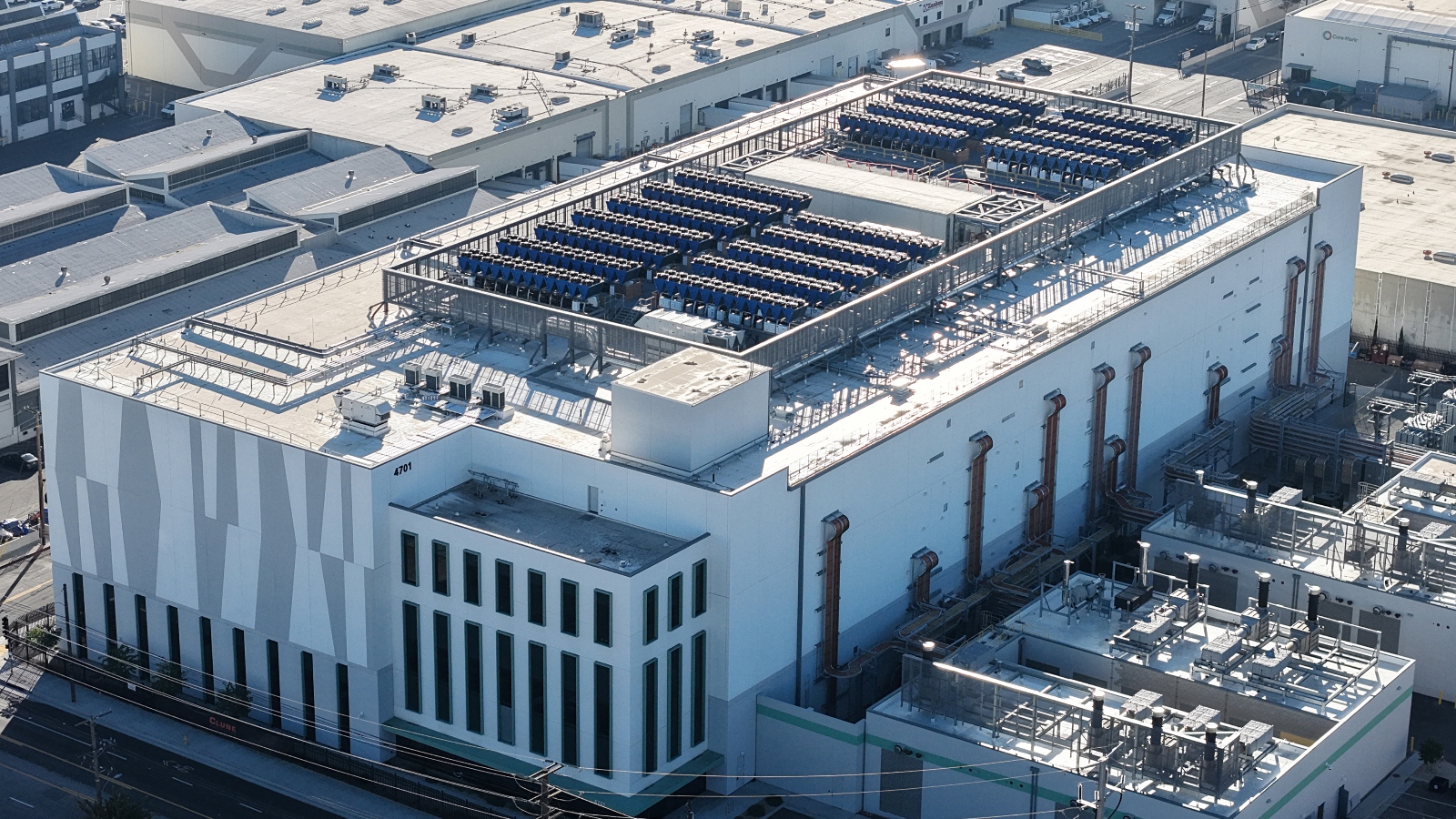
The Energy Forge project highlights a growing trend in the data center industry: the move toward independent power generation. As the demand for artificial intelligence and cloud computing skyrockets, the traditional electrical grid is struggling to keep pace. Data center developers in many parts of the United States face waits of several years to connect to the public grid.
To bypass these bottlenecks, developers are increasingly turning to "behind-the-meter" solutions—private power plants built on-site that feed directly into the facility. Data from the nonprofit Global Energy Monitor indicates that the U.S. currently has nearly 100 gigawatts of gas-fired power in the development pipeline specifically for data centers.
This trend poses a challenge for state planners. While these private plants do not draw power from the public grid, they also do not contribute to the grid’s stability during periods of peak demand, such as Texas’s extreme summer heatwaves or winter freezes. Furthermore, the proliferation of private gas plants complicates state and corporate goals for carbon neutrality.

Environmental Impact and Carbon Footprint
The environmental implications of the Energy Forge plant are substantial. A recent analysis of several "behind-the-meter" projects currently under construction suggests that these facilities will emit greenhouse gases at levels comparable to entire nations.
Specifically, the Chevron-led project in West Texas is permitted to emit more than 11.5 million tons of CO2 equivalent annually. For perspective, this exceeds the total annual carbon emissions of Jamaica in 2024. This high emission profile stands in stark contrast to the sustainability goals often touted by Big Tech companies. Microsoft, for instance, has pledged to be carbon negative by 2030.
Chevron has maintained that the plant is being designed to comply with all federal and state air quality standards. However, climate experts argue that the sheer volume of emissions from these dedicated plants could undermine broader efforts to mitigate climate change, especially as they represent a long-term commitment to fossil fuel infrastructure.
Political and Economic Scrutiny in Texas
The request for tax breaks comes as Texas lawmakers begin to question the long-term fiscal impact of data center incentives. While Texas has historically been a low-regulation, high-incentive state, the sheer volume of tax revenue being forfeited has sparked a bipartisan backlash.
Republican Lieutenant Governor Dan Patrick has been vocal about his concerns, recently ordering the state legislature to study the "cost and consequences" of sales tax exemptions for data centers. Current projections suggest these exemptions could cost the state treasury $3 billion by 2029. Patrick and other officials are seeking to ensure that Texans receive a tangible benefit from these investments, rather than merely subsidizing the infrastructure of trillion-dollar tech corporations.
Nathan Jensen, a professor of government at the University of Texas at Austin, noted that while the JETI program has more guardrails than its predecessor, the "but-for" requirement—the claim that a project would not happen without the tax break—remains difficult to verify. Chevron’s application claims that without the abatement, five other sites across the U.S. would be "more attractive," and Texas would lose out on billions in potential revenue. Critics like Jensen argue this is often a routine claim used to secure subsidies for projects that were already destined for the state due to its proximity to natural gas supplies and existing infrastructure.

The Global Context of Data Center Expansion
The situation in Texas is a microcosm of a global phenomenon. From Northern Virginia to Dublin, Ireland, the rapid expansion of data centers is straining energy grids and sparking public debates over land use and taxation. In many jurisdictions, data centers are now the single largest drivers of new electricity demand.
In the United States, at least 14 states do not currently disclose the total revenue lost through data center tax abatements, according to a report by the watchdog group Good Jobs First. This lack of transparency makes it difficult for taxpayers to evaluate whether the economic trade-offs are worth the cost.
Greg LeRoy, executive director of Good Jobs First, emphasized that corporate pledges to pay "fair shares" of taxes are often carefully worded to exclude abatements. "If they don’t say, ‘We will refuse tax abatements,’ then they’ve got their fingers crossed behind their back," LeRoy said.
Future Implications for Policy and Infrastructure
As the AI-driven demand for data processing continues to grow, the tension between economic development, energy stability, and environmental responsibility is expected to intensify. Some experts, such as Jane Flegal of the Searchlight Institute, suggest that the current system of tax incentives should be overhauled.
Flegal argues that instead of providing abatements that encourage "behind-the-meter" gas development, states should restructure the tax code to incentivize tech companies to fund public grid upgrades. This would allow for the integration of more clean energy and ensure that the infrastructure buildout benefits the broader public rather than just private corporate interests.
For now, the Energy Forge project serves as a landmark case. If approved, it will solidify a new model for energy-intensive industries in Texas: private, fossil-fuel-powered islands of infrastructure, supported by taxpayer-funded incentives, operating independently of the public systems that serve the rest of the state. As the Texas State Comptroller and the legislature continue to evaluate the application and the broader JETI program, the outcome will likely set a precedent for how the world’s most powerful energy and technology companies interact with state governments for decades to come.
Related posts: