Santa Marta Conference Marks Pivotal Shift Toward Global Fossil Fuel Phaseout and the Rise of Electro-Democracies

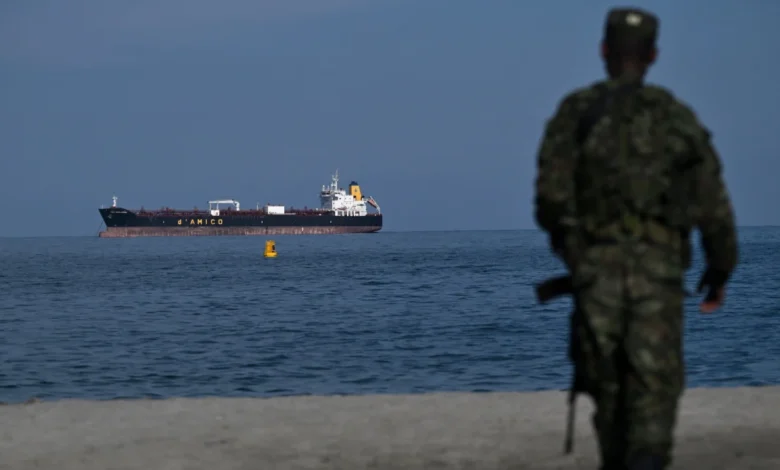
Against the backdrop of the Caribbean coast in Santa Marta, Colombia, where coal ships often dot the horizon and oil tankers linger in the distance, a landmark diplomatic event has signaled a potential turning point in the global energy landscape. The International Conference on the Just Transition Away from Fossil Fuels, concluded this week, saw the Colombian government lead a coalition of nearly 60 nations in a concerted effort to dismantle the global economy’s long-standing dependence on coal, gas, and oil. This gathering, the first of its kind to focus specifically on the mechanics of a total phaseout, has been characterized by participants as the dawn of a "new global climate democracy," setting the stage for a geopolitical realignment between nations committed to renewable electrification and those remaining tethered to fossil fuel extraction.
The conference occurred during a period of intense global economic volatility. Recent geopolitical conflicts, including military escalations in the Middle East that have severely disrupted supply chains through the Strait of Hormuz, have sent oil and gas prices to historic highs. This "second energy crisis" within a five-year span has underscored the inherent instability of a fossil-fuel-based economy. For many of the delegates in Santa Marta, the move toward renewables is no longer framed solely as an environmental necessity but as a critical matter of national security and economic sovereignty.
The Chronology of a Shifting Paradigm
The road to the Santa Marta conference was paved by a series of cascading global events that eroded confidence in traditional energy markets. Following the global energy shocks of the early 2020s, the international community found itself grappling with a "triple whammy" of rising energy costs, subsequent food price spikes due to fertilizer shortages, and rampant inflation that necessitated aggressive interest rate hikes. These economic pressures disproportionately affected developing nations, many of which are burdened by high levels of external debt and lack the fiscal reserves to buffer against market volatility.
The conference itself was structured to bypass the often-stagnant nature of traditional multilateral negotiations. The opening sessions were dedicated to the latest climate science, establishing a baseline of urgency that informed the subsequent "people’s summit." This secondary gathering brought together civil society groups, labor unions, and indigenous representatives to ensure that the "just" element of the transition was not overlooked. By the final two days, high-level ministerial talks were underway, characterized by an absence of the veto-wielding power plays often seen at larger UN climate summits. Instead, the focus remained on "intensive and constructive dialogue" regarding the implementation of decarbonization roadmaps.
The timeline for this movement continues into next year, with the Pacific island nation of Tuvalu and the Republic of Ireland set to co-host a follow-up summit. In the interim, participating nations have committed to developing national roadmaps that outline specific steps for phasing out fossil fuel extraction and consumption, which are intended to be integrated into the broader United Nations climate framework.
Economic Data and the Renewable Surge
The economic arguments presented at Santa Marta were supported by data indicating a historic shift in power generation. According to reports from the energy think tank Ember, renewable energy sources—primarily wind and solar—overtook coal in global electricity generation for the first time last year. Renewables accounted for 33.8 percent of global power, narrowly edging out coal’s 33 percent. This shift is being driven by the plummeting costs of solar hardware and battery storage technology, making clean energy the most cost-effective option for new power capacity in the majority of the world.
Furthermore, the International Energy Agency (IEA) has revised its long-term outlook, suggesting that the current energy crisis has permanently altered the perception of fossil fuels. IEA Chief Fatih Birol noted that the reliability of oil and gas as a stable foundation for economic growth has been "broken," likened to a vase that cannot be put back together. The agency predicts a significant, permanent boost to nuclear and renewable energy investments as governments seek to decouple their economies from volatile global commodities.
However, the financial hurdle remains significant. While renewables offer lower operational costs, the upfront capital required for the transition is immense. Current estimates suggest that roughly $1.5 trillion is spent annually on fossil fuel subsidies globally. Diverting even a fraction of these subsidies toward clean energy infrastructure and grid modernization could provide the necessary capital for developing nations to leapfrog fossil fuel dependency. Additionally, there is growing momentum for windfall taxes on the record profits of oil majors, with advocates suggesting these funds should be channeled into a global transition fund to assist vulnerable communities.
Official Responses and Geopolitical Implications
The rhetoric from the conference was one of defiance against the status quo of "petro-states." Irene Vélez Torres, Colombia’s environment minister and the chair of the talks, emphasized that the gathering represented a "new method" of international cooperation. By bringing together high-ambition governments and civil society, the conference aimed to create a counterweight to the lobbying power of the fossil fuel industry.
UN Climate Chief Simon Stiell echoed this sentiment, observing that the very industries fighting to maintain the world’s addiction to fossil fuels are inadvertently accelerating the renewable boom. By driving prices up and weaponizing energy supplies, fossil fuel interests have made the "economic logic of renewables impossible to ignore," according to Stiell. This has led to an unlikely alliance between environmentalists and military advisers, both of whom now view decentralized renewable energy as a superior route to national security and protection against sabotage.
However, the conference also highlighted a widening rift. While the "electro-democracies" at Santa Marta discussed roadmaps for a green future, other major powers are moving in the opposite direction. The United States, under administrations prioritizing "energy dominance," has continued to expand its role as a leading gas producer. Similarly, Russia and various Middle Eastern autocracies remain deeply invested in maintaining the global reliance on hydrocarbons. This divide suggests that the future of climate diplomacy may be defined by a "bottom-up" approach among like-minded nations rather than universal consensus.
Challenges to Implementation and Internal Contradictions
Despite the optimistic tone of the Santa Marta vision, the "conference of doers" faces significant internal and external challenges. Many of the participating nations are currently struggling to align their domestic policies with their international pledges. For example, the Netherlands and the United Kingdom, both present at the talks, have recently faced criticism for considering or approving new drilling projects in the North Sea. Brazil and Tanzania also have existing plans for fossil fuel expansion that would need to be scrapped to meet the goals discussed in Colombia.
The political stability of the movement is also in question. In Colombia, the very host of the conference, a looming presidential election threatens to upend the country’s climate leadership. The ruling party’s candidate, Iván Cepeda, represents the continuation of the green transition. However, he faces a strong challenge from Abelardo de la Espriella, a far-right populist who has campaigned on a platform of increasing fracking and oil production to stimulate the economy. A shift in Colombian leadership could remove one of the most vocal advocates for the fossil fuel phaseout from the global stage.
Broader Impact and the Road to Tuvalu
The legacy of Santa Marta will ultimately be measured by the ability of its participants to translate dialogue into binding national policy. The "Santa Marta Process" is designed to create a template for implementation that can be replicated by other nations. By focusing on "just transitions," the movement seeks to ensure that workers in the coal and oil sectors are not left behind, offering a roadmap for diversifying local economies that have been dependent on extraction for decades.
Mary Robinson, the former President of Ireland and a prominent voice at the conference, stressed that the transition must be grounded in justice, caring for both nature and the most vulnerable people. As the focus shifts toward the next summit in Tuvalu, the international community will be watching to see if the "seeds of a new initiative" planted in Santa Marta can survive the pressures of domestic politics and the counter-offensives of the global fossil fuel lobby.
For now, the conference stands as a rare moment of clarity in a fractured geopolitical landscape. It has defined a clear choice for the coming decade: a continued reliance on the volatile, extraction-based systems of the past, or a collective move toward an electrified, democratic, and renewable future. While the road ahead is fraught with economic and political obstacles, the "contagious hope" felt on the beaches of Santa Marta suggests that the momentum for a post-fossil fuel world may finally be reaching a point of no return.
Related posts: