The Quiet Revolution of Repair Cafes is Reshaping the American Consumer Economy

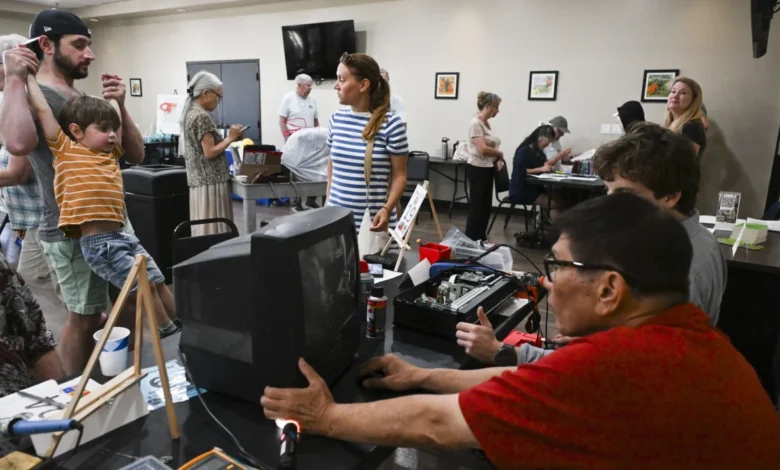
On a cool, damp Saturday in Decatur, Georgia, the local church parking lot serves as a theater for a growing cultural shift. Inside a modest warehouse, dozens of residents gather, carrying broken lamps, wobbly chairs, and glitching electronics—items that in a standard retail environment would be destined for a landfill. This scene, replicated in hundreds of cities across the United States, represents the burgeoning "Repair Cafe" movement. These volunteer-led gatherings function as hubs for communal maintenance, where tailors, electricians, and carpenters donate their time to help neighbors restore items that modern corporate retail models have deemed disposable.
The movement stands in direct opposition to the "planned obsolescence" prevalent in the consumer goods sector. By encouraging citizens to extend the lifespan of their belongings, these cafes are emerging as a grassroots strategy to combat the environmental and economic toll of a throw-away culture.
The Anatomy of a Disposable Economy
The contemporary American marketplace is heavily weighted toward replacement. Industry analysts note that for categories ranging from household appliances to consumer electronics, the cost of professional repair—often exacerbated by proprietary parts and software locks—frequently exceeds the price of a new unit. This phenomenon has created a crisis of waste. According to data from the Environmental Protection Agency, the United States generates hundreds of millions of tons of municipal solid waste annually, a significant portion of which consists of consumer durables.
The "Right to Repair" movement, which provides the legislative framework for these cafes, has gained significant political traction. In 2023, California, Colorado, Minnesota, and New York enacted landmark legislation designed to force manufacturers to provide the tools, manuals, and parts necessary for independent repair. These laws address the findings of the Federal Trade Commission’s "Nixing the Fix" report, which concluded that manufacturers actively discourage, and at times prohibit, the repair of their own products.
Chronology of a Movement
The origins of the modern repair movement trace back to 2010, when Martine Postma, a journalist in the Netherlands, founded the first Repair Cafe. Motivated by concerns over environmental degradation and the increasing volume of household waste, Postma established a model based on knowledge-sharing rather than service-for-hire.
The concept quickly transcended European borders. By the mid-2010s, the model took root in North America. The trajectory of the movement has been marked by:
- 2010: The founding of the first Repair Cafe in Amsterdam.
- 2015-2018: The establishment of organized, periodic meetups in major American metropolitan areas, including Seattle, New York, and Atlanta.
- 2023: A banner year for legislative success, with four U.S. states passing right-to-repair bills.
- 2025: A record year for impact, with Repair Cafe International reporting that its network prevented nearly 2 million pounds of waste from entering landfills, equivalent to the weight of over 100 Boeing 747 aircraft.
Economic Necessity Meets Environmental Advocacy
While many participants are driven by a desire to reduce their personal carbon footprint, for others, the repair cafe is an economic imperative. In neighborhoods like Collier Heights, Atlanta, where the median household income is lower than in more affluent districts like Decatur, the repair cafe provides a vital service.
Gale Pines, a recent nursing graduate in Atlanta, illustrates the socio-economic dimension of the movement. When their air fryer failed, the lack of an affordable replacement threatened their ability to manage daily nutrition while job-hunting. At the local repair cafe, a volunteer diagnosed the issue as a faulty capacitor. By replacing a single component, the device was restored to full functionality. For individuals facing material scarcity, these cafes provide a buffer against the high cost of living and the inflationary pressures on consumer goods.

The Psychology of Ownership and Connection
Beyond the tangible benefits of a fixed toaster or a mended chair, organizers point to a profound psychological shift. Martine Postma describes the act of discarding broken items as an inherently "lonely" experience—a disconnected cycle of purchasing and disposing that leaves the consumer without agency.
When individuals like Lilly Pettus bring a 30-year-old dining room chair to be fixed, they are doing more than saving a piece of furniture. They are participating in a communal act that reclaims a sense of ownership over their material world. Pettus, who moved the chair through several states, viewed the repair as an act of preserving family history.
This sentiment is echoed by volunteers. Lew Lefton, an experienced tinkerer, views the rediscovery of mechanical skills as a form of "future-proofing." As the world faces complex, large-scale threats such as climate change and rapid technological disruption, the ability to maintain one’s own tools is increasingly viewed as a form of fundamental literacy.
Fact-Based Analysis of Broader Implications
The implications of the repair movement extend far beyond individual household savings. From a macroeconomic perspective, the transition toward a "circular economy"—where resources are kept in use for as long as possible—could fundamentally alter the manufacturing landscape.
- Environmental Impact: Manufacturing is a carbon-intensive process. Extending the life of an electronic device by even a few years significantly offsets the "embodied carbon" associated with the extraction of raw materials, shipping, and assembly.
- Labor Market Shifts: While critics argue that a focus on repair threatens retail jobs, proponents suggest that it stimulates the service sector. A shift toward repair requires a localized workforce skilled in technical maintenance, potentially creating stable, high-skilled jobs that cannot be easily offshored.
- Corporate Accountability: As legislation forces companies to release repair manuals and open their hardware architecture, the power dynamic between the consumer and the manufacturer is beginning to shift. This represents a significant challenge to the business models of tech giants that rely on planned obsolescence to drive recurring revenue.
Official Responses and Future Outlook
Despite the momentum, the movement faces significant opposition from trade groups representing major appliance and tech manufacturers. These groups argue that unauthorized repairs pose safety risks and could compromise the security of connected devices.
However, repair advocates and independent repair shops counter that these concerns are often overstated and used as a pretext to maintain a monopoly on repair services. The success of the European Union’s recent directive, which requires certain goods to be repairable for a decade after purchase, suggests that the political will to regulate these industries is growing globally.
As the movement matures, organizers are looking toward more systemic solutions. Postma has advocated for policies such as the taxation of virgin raw materials. By making it more expensive to manufacture new goods, such a policy would naturally favor the economic viability of repair services, effectively internalizing the environmental costs of production.
A New Standard of Living
The repair cafe movement is no longer a fringe hobby; it is becoming a cornerstone of a more resilient, sustainable society. By turning the act of repair into a social event, these cafes bridge the gap between abstract climate goals and daily, tangible actions.
For participants in Decatur and beyond, the message is clear: when a product breaks, it is not necessarily the end of its life, nor is it the end of the owner’s utility. In a world characterized by rapid turnover and increasing digital isolation, the simple, collaborative act of fixing a chair or a motor offers a blueprint for a more durable, connected future. As the movement continues to scale, it serves as a persistent reminder that in an age of disposable goods, the most radical thing one can do is to hold onto what they already have.