President Trump spends Thanksgiving in Florida amid policy friction and demands for economic investigation

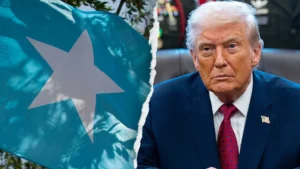
President Donald Trump is observing the Thanksgiving holiday from his Mar-a-Lago estate in Florida, marking a period of relative quietude that has nonetheless been punctuated by sharp political rhetoric and administrative scrutiny. While the holiday is traditionally reserved for national unity and personal reflection, the president’s public remarks on Thursday morning served to highlight ongoing tensions between his administration and various federal institutions, most notably the Department of Commerce.
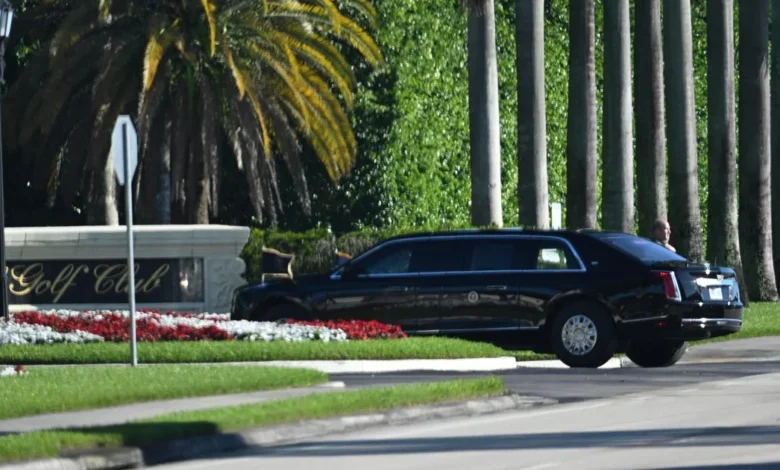
The president, accompanied by First Lady Melania Trump, began his Thursday with a policy briefing at his nearby golf club. According to White House sources, the couple is scheduled to participate in the annual tradition of placing telephone calls to U.S. service members stationed across the globe, offering holiday greetings to those currently serving in the armed forces. Despite the celebratory nature of the day, the president’s social media activity reflected a combative stance toward political opponents, international demographics, and the economic reporting apparatus of the United States government.
The Conflict Over Economic Data
At the heart of the president’s recent grievances is the Department of Commerce’s decision to revise the gross domestic product (GDP) growth figures for the third quarter. The Commerce Department officially updated its estimate to 4.3% on an annual basis, a notable increase from the previous projection of 3.4%.
The president has characterized these revisions as "fake Economic Numbers," asserting without providing supporting evidence that the figures were manipulated or improperly reported in the lead-up to the recent midterm elections, which saw significant setbacks for the Republican Party. Mr. Trump has formally demanded an investigation into the methodology and timing of these adjustments.
Economists and federal statisticians have pushed back against the suggestion of impropriety, noting that the Bureau of Economic Analysis (BEA), which operates under the Commerce Department, maintains a rigid, non-partisan schedule for data updates. These revisions are standard practice, designed to incorporate more comprehensive source data—such as late-arriving corporate financial statements and updated retail metrics—that were unavailable at the time of the initial "advance" estimate. By design, the BEA releases three iterations of GDP data to ensure accuracy; these revisions are a technical necessity to capture the complexity of a multi-trillion-dollar economy.
A Broadside Against Political Rivals
In his holiday social media post, the president expanded his critique to include a wide array of perceived adversaries. His rhetoric targeted "the radical far left," immigrants, and those he accused of attempting to reshape the American judiciary. The statement specifically alleged a plot to implement a system akin to Sharia law within the U.S. court system—an assertion that legal scholars have dismissed as factually baseless.
Furthermore, the president expressed his frustration regarding the redistribution of wealth, framing it as a threat to the life-long achievements of "hardworking people." He also included references to the Somali community and those who he believes have failed to appreciate the ongoing renovation of the White House ballroom, signaling a continued focus on cultural and domestic policy grievances during the holiday break.
The Iowa Ammunition Detonation: A Case of Administrative Friction
Beyond the economic dispute, the administration is grappling with the fallout from the controlled detonation of approximately five tons of degraded lead azide at the Iowa Army Ammunition Plant. The operation, which took place earlier this week, was praised by the president as a success, with Mr. Trump attributing the necessity of the detonation to the failures of the Obama administration.
However, behind the scenes, the situation has revealed significant internal discord. Reports from individuals familiar with the matter suggest that the lead-up to the detonation was marked by chaos. Senior officials were reportedly blindsided by the urgency and scale of the operation, leading to a scramble for accountability regarding why the deteriorating state of the explosives had not been escalated to the highest levels of the executive branch sooner.
While the administration has publicly projected an image of control, the internal confusion regarding the Iowa plant underscores broader concerns about the efficiency of administrative oversight within the current cabinet structure. The incident serves as a case study in the communication gaps that can occur when federal agencies attempt to manage legacy infrastructure risks under high-pressure political conditions.
Diplomatic Engagements and International Security
Contrasting with his domestic criticisms, the president held a high-stakes meeting on Wednesday night with NATO Secretary General Mark Rutte. The two leaders issued a joint statement describing the session as "very impactful," with a primary focus on the volatile security landscape in Eastern Europe and the Middle East.
The discussions reportedly centered on the ongoing conflict in Ukraine and the necessity of preventing any escalation of hostilities involving Russia. Furthermore, the two leaders addressed the role of Iran in regional stability. The meeting highlighted the president’s ongoing commitment to managing global alliances even as his administration focuses on domestic policy disputes. The emphasis on "avoiding any actions that intentionally, or unintentionally, expand the war" suggests a deliberate effort by the White House to maintain a degree of diplomatic guardrails amidst a period of intense global geopolitical volatility.
Seasonal Traditions and Political Optics
Amidst the policy-heavy atmosphere, the White House has maintained several traditional markers of the holiday season. Earlier this week, the president performed the annual turkey pardon, granting "freedom" to two birds named Freedom and Feathers, both of whom have been relocated to a sanctuary farm in Texas. First Lady Melania Trump, meanwhile, presided over the arrival of the official White House Christmas tree, an event that provided a brief respite from the political maneuvering that has defined the week.
Analysis: The Path Ahead
The confluence of the president’s demands for an investigation into the Commerce Department, the internal friction surrounding the Iowa detonation, and the ongoing diplomatic engagement with NATO leaders points to a complex final quarter for the administration.
The focus on economic data accuracy is particularly significant. When a head of state questions the legitimacy of federal statistical agencies, it risks undermining public trust in the institutions that provide the baseline for market expectations, interest rate decisions by the Federal Reserve, and business investment planning. As the administration prepares for the upcoming fiscal year, the credibility of these economic metrics will likely remain a flashpoint in Washington.
Moreover, the president’s willingness to utilize the Thanksgiving holiday to air grievances against a wide spectrum of the American public—ranging from political activists to specific immigrant communities—indicates that he is not shifting toward a more conciliatory tone following the midterm election results. Instead, the current trajectory suggests an intensification of the "us versus them" narrative that has characterized his tenure.
As the administration moves past the holiday, all eyes will be on the Department of Commerce to see how it responds to the pressure for an investigation. Whether the administration will pursue a formal inquiry or if the rhetoric serves primarily as a rhetorical tool for political mobilization remains to be seen. In the meantime, the president remains at his Florida residence, balancing the demands of his office with the performative requirements of the presidency during one of the most prominent holidays in the American calendar.