Army asserts imminent danger as standoff over hazardous lead azide disposal reaches critical threshold

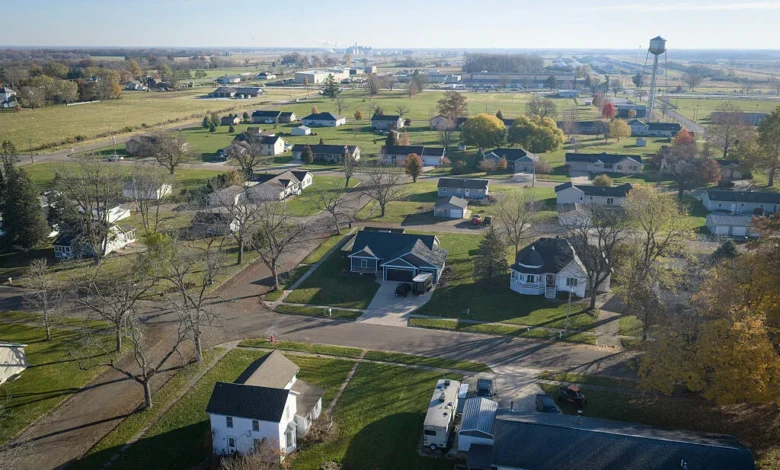
The U.S. Army is currently navigating a precarious impasse regarding the disposal of volatile lead azide at a munitions facility, framing the situation as a binary choice between a calculated, mitigated detonation or the catastrophic risk of an uncontrolled, spontaneous explosion. As the standoff persists, the military has bypassed traditional environmental regulatory hurdles, asserting in recent federal court filings that the material has reached a state of instability that constitutes an "immediate threat to human health, public safety, property, or the environment."
This high-stakes environmental and political dilemma centers on a cache of hazardous material that has reportedly become too dangerous to transport or neutralize through conventional methods. The Army’s decision to pursue an emergency detonation has sparked intense scrutiny from state officials, legal experts, and the incoming administration, all of whom are grappling with the potential fallout of a disaster that could occur if the material is not handled immediately.
A Chronology of Escalation
The current situation is the culmination of a weeks-long series of delays, technical assessments, and shifting deadlines. The Army initially designated last Thursday as the final window for a controlled detonation, with officials like Telle characterizing the date as the "latest possible moment" to perform the operation before plummeting temperatures increased the risk of spontaneous combustion.
However, the timeline proved fluid. Following the missed Thursday window, the military pushed the operation to Monday, then Tuesday, and eventually to Wednesday. This series of delays has fueled skepticism regarding the military’s internal risk assessment protocols. Critics argue that the frequent shifts in the timeline suggest either an evolving technical crisis or a lack of definitive operational control over the volatile materials.
The background of this incident involves the cancellation of a contract with MuniRem, a specialized environmental services firm known for its expertise in the neutralization of energetic materials. The sudden termination of this contract has become a central point of contention, with state leaders questioning why a specialized vendor was removed from the site at such a critical juncture.
The Legal and Regulatory Framework
The conflict has spilled into the federal court system, where the Army is seeking to bypass the standard permitting processes dictated by the Environmental Protection Agency (EPA). Under normal circumstances, such an operation would require rigorous compliance with the Resource Conservation and Recovery Act (RCRA) and other environmental safety mandates.
However, government lawyers argued in recent filings that the urgency of the situation overrides these requirements. By invoking the "imminent threat" clause, the military is attempting to shield its actions from the oversight of the EPA. This legal maneuver highlights a significant tension between federal military authority and state-level environmental protections. If the court upholds the Army’s position, it sets a notable precedent for how military branches may handle hazardous waste disposal in the future, potentially prioritizing speed and risk mitigation over established environmental safeguards.
Political Friction and Accountability
The situation has taken on a distinctly political dimension, with high-level figures trading barbs over who bears responsibility for the eventual outcome. In a recent social media statement, former President Donald Trump weighed in on the matter, labeling the controlled detonation as the "proper course" of action. Simultaneously, he sought to shift the burden of responsibility onto the federal appeals court and incoming Governor-elect Rob Sand, a Democrat.
Trump’s assertion that the Governor-elect would be held accountable for any "death or destruction" resulting from a spontaneous detonation represents an attempt to externalize the political fallout of a potential disaster. This rhetoric has further complicated an already fraught situation, as local leaders find themselves being forced to endorse a military operation that they have had little hand in planning.
Governor-elect Rob Sand has responded by calling for radical transparency. In a public statement, Sand questioned the logic behind the military’s decision-making process, particularly regarding the termination of the MuniRem contract. "Iowans deserve transparency over how we got here, then answers and accountability to stop this from ever happening again," Sand wrote. His position reflects a broader frustration among state stakeholders who feel that the federal government has kept them in the dark while simultaneously offloading the risk onto the local population.
Technical Risks: Understanding Lead Azide
Lead azide is a primary explosive used as a detonator in ammunition and other explosive devices. It is notoriously sensitive to friction, impact, and temperature changes. Unlike many other explosive compounds, lead azide is prone to rapid degradation when stored improperly, which can lead to the formation of unstable crystals. These crystals can become so sensitive that even minor vibrations or changes in ambient temperature can trigger a detonation.
The Army’s contention that temperatures are a limiting factor is rooted in the chemistry of the substance. As temperatures drop and fluctuate, the expansion and contraction of containers—or the material itself—can introduce mechanical stresses that act as a trigger. Experts in hazardous materials management note that when lead azide reaches this stage of degradation, it is essentially a "ticking time bomb" that cannot be safely moved or transported via public roads. This reality restricts the military’s options, forcing them to conduct a "burn-in-place" or "controlled detonation" operation, which typically involves burying or shielding the material before triggering it to minimize the impact on the surrounding environment.
Implications for Environmental Safety and Governance
The broader implications of this incident extend well beyond the immediate site. The failure to maintain a consistent disposal plan raises questions about the oversight of military industrial sites across the country. If a specialized contract can be canceled, and a project can descend into such an unstable state that it requires an emergency, unpermitted detonation, then the existing protocols for hazardous waste management may be insufficient.
Furthermore, the shift toward delegating blame to local and state officials creates a dangerous precedent in federal-state relations. When the federal government acts under the guise of emergency authority to bypass state-regulated environmental laws, it erodes the system of checks and balances designed to protect citizens from industrial or military accidents.
There is also the matter of long-term environmental remediation. An uncontrolled explosion—or even a large-scale controlled one—could disperse hazardous lead particles into the surrounding soil and groundwater. Lead contamination is a severe public health issue, with long-lasting neurological and developmental impacts on populations exposed to even trace amounts in their water or food sources.
Looking Ahead
As the deadline for the detonation approaches, the eyes of the public and the scientific community remain fixed on the site. Whether the operation proceeds on Wednesday or is delayed further, the Army remains under immense pressure to prove that its assessment of "imminent threat" is accurate and that it has taken all necessary steps to protect the surrounding community.
The resolution of this crisis will likely trigger a comprehensive investigation by federal oversight committees. There is a clear need for a post-mortem on the decision-making processes that led to the termination of the MuniRem contract and the subsequent accumulation of such a large quantity of unstable lead azide. Until these questions are answered, the incident will serve as a stark reminder of the risks inherent in the storage and disposal of legacy military materials.
The standoff serves as a microcosm of the challenges inherent in managing the dangerous, often hidden, remnants of industrial-scale warfare and national defense. As public trust in these procedures fluctuates, the military must reconcile its need for operational flexibility with the fundamental duty to ensure the safety and transparency that the public expects from its government. The outcome of the next few days will not only determine the safety of the local area but will also define the future of how such hazardous situations are handled by federal agencies in the years to come.