From backyard shed to the skies: The mechanical engineer who built his own four-seater plane during the pandemic

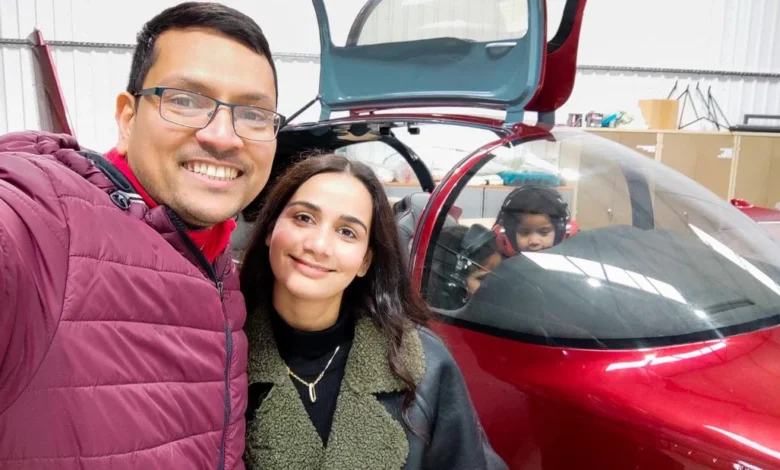
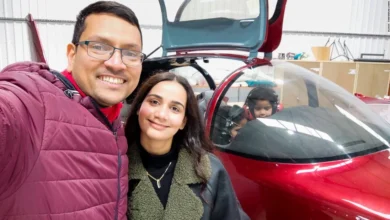
For most, the Covid-19 lockdowns were a period of enforced stillness, marked by the limitations of domestic isolation. For Ashok Aliseril Thamarakshan, a mechanical engineer based in Essex, England, the pandemic became the unlikely catalyst for an ambitious aeronautical project that would eventually see him and his family soaring across European skies. What began as a curiosity about aviation evolved into an 18-month, labor-intensive mission to construct a high-performance, four-seater aircraft in his own back garden, defying the logistical constraints of a global health crisis.
The genesis of this endeavor dates back over a decade, when Aliseril moved into a property in proximity to a local airfield. The constant hum of light aircraft served as a persistent backdrop to his daily life, gradually piquing his interest in flight. However, it was not until his wife, Abhilasha, gifted him a 30-minute flight experience for his birthday that the abstract interest solidified into a concrete ambition. During his first lesson, he flew to the Isle of Wight—a transformative experience that demonstrated the visceral freedom of private aviation. "That was quite an eye-opener into how flying gives you the freedom to just go places if you have that ability, and access to an aircraft," Aliseril later reflected.
The Path to Pilot Licensing and Ownership
Following his initial exposure to flight, Aliseril committed to the rigorous process of earning his Private Pilot’s License (PPL), which he secured in 2019. While the license granted him the legal authority to pilot aircraft, it simultaneously introduced him to the limitations of the general aviation rental market. Typically, flying clubs offer two-seater aircraft that were sufficient for his initial training but increasingly impractical as his family grew to include two daughters.
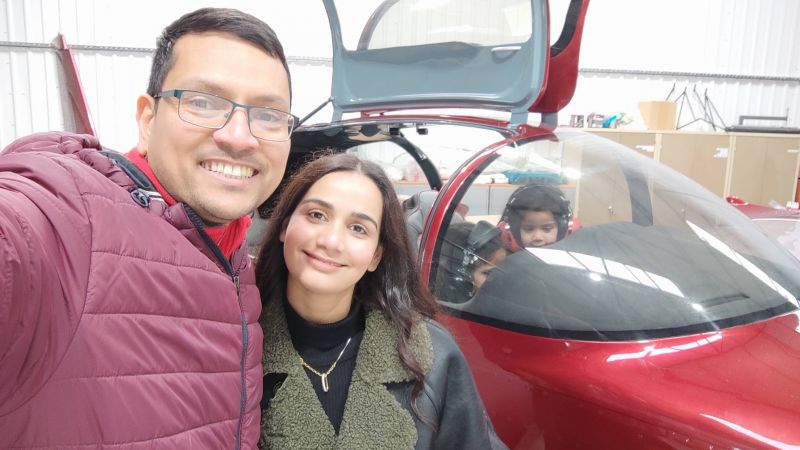
The prospect of purchasing an existing aircraft was met with skepticism by Aliseril, particularly after he inspected several vintage models from the 1960s and 1970s. His engineering background informed a cautious approach to maintenance and safety; he felt uncomfortable trusting his family’s safety to older machines with opaque maintenance histories. Consequently, he pivoted toward a more unconventional solution: the construction of a self-assembly, kit-built aircraft.
The Selection of the Sling TSi
After extensive research into kit-built aviation, Aliseril identified the South African-manufactured Sling TSi as the ideal candidate. The four-seater aircraft offered the necessary capacity for his family, modern avionics, and a reputation for robustness. In January 2020—just before the onset of global travel restrictions—he traveled to the Sling Aircraft factory in Johannesburg to conduct a test flight. Confident in the machine’s performance, he ordered the first phase of the kit. By the time the components arrived in the UK, the nation had entered its first, and most restrictive, Covid-19 lockdown.
Chronology of a Backyard Build
The construction phase, which commenced in April 2020, required a strategic approach to project management. Although Aliseril had intended to hire a professional workshop, the lockdown necessitated the construction of a specialized shed in his garden. This workspace, while physically constrained, proved to be a tactical advantage, allowing him to work on the aircraft whenever time permitted.
The construction adhered to the stringent regulations set forth by the Light Aircraft Association (LAA) and the UK Civil Aviation Authority (CAA). In the United Kingdom, amateur-built aircraft are subject to rigorous oversight. Each major phase of assembly—from the initial structural work on the tail and wings to the complex integration of the engine and avionics—required inspection and sign-off by LAA representatives. In total, the project underwent approximately 12 formal inspections before the aircraft was deemed airworthy.

Aliseril’s family became integral to the process. His wife, Abhilasha, provided essential assistance with mechanical tasks that required multiple sets of hands, while his then-seven-year-old daughter, Tara, contributed by removing protective plastic from the various components. This collaborative effort helped maintain momentum during the long, socially isolated months of 2020 and 2021.
Technical Specifications and Financial Realities
The Sling TSi is a high-wing, all-metal aircraft designed for efficiency and safety. By the time the final assembly was completed at a hangar near Cambridge, the aircraft—registered as G-Diya, named after his youngest daughter—represented a significant investment of both time and capital. The kit itself was priced at approximately £80,000, but when accounting for the specialized Rotax engine, high-end avionics, a propeller, and various finishing materials, the total project cost reached roughly £180,000 (approximately $203,000).
To mitigate the financial burden of ownership, Aliseril structured the project as a shared venture. He partnered with three other pilots, effectively spreading the operational and maintenance costs. This arrangement transformed the aircraft into a communal asset, which Aliseril argues is a sustainable model for private aviation. "To get your private license, it costs quite a bit," he noted. "I knew that once it was done, I would easily be able to find people to share that cost. It becomes a communal thing."
Implications of Home-Built Aviation
The success of the G-Diya project highlights several broader implications for the aviation industry and the amateur building community. First, the efficiency of the modern kit-built aircraft is noteworthy; the Sling TSi consumes approximately 20 liters of fuel per hour of flight, making its operational costs comparable to the fuel consumption of a standard SUV. This level of efficiency, coupled with the ability to bypass commercial airline logistics, offers a compelling alternative for regional travel within Europe.

Furthermore, the project serves as a case study for the "experimental" category of aviation. While some may view amateur-built planes with caution, the rigorous regulatory framework overseen by bodies like the LAA ensures that these aircraft meet strict safety standards before receiving a "Permit to Fly."
The psychological transition from "project" to "aircraft" was completed in January 2022, when the plane successfully passed its final inspection and took its first test flight. Aliseril, watching from the ground, described the experience as a "big relief." Following the test pilot’s endorsement of the machine’s handling, Aliseril began flying the aircraft himself.
A New Era of Family Travel
Since its maiden flight, G-Diya has logged over 300 flight hours. The family has utilized the aircraft for both domestic trips to seaside locations like Skegness and international excursions, including a memorable journey to Bergerac, France, and flights as far as Norway. By documenting their travels on their social media platform, "Fly Home or Away," the family has contributed to a growing online community of amateur builders and aviation enthusiasts.
The impact of this project extends beyond the mere utility of travel. It has fostered a network of relationships among local pilots and encouraged a new generation to consider the possibilities of home-built aviation. Aliseril remains an advocate for the hobby, suggesting that while it requires significant dedication and "hands-on" aptitude, the combination of modern, "Ikea-style" instruction manuals and collaborative ownership models makes the prospect of building a personal aircraft more accessible than it has been in decades.

In early 2023, the project reached its final stage of maturity when Aliseril completed the construction of a dedicated hangar at an Essex airfield, resolving the final logistical challenge of where to store the aircraft. Today, G-Diya stands as a testament to the intersection of engineering discipline, family dedication, and the enduring human desire for the freedom of flight. For Aliseril, the project was never just about the aircraft itself, but about the capability to bridge distances—both physical and aspirational—within the span of a weekend. The success of his endeavor suggests that for those willing to commit the time and follow the necessary regulatory path, the sky is not merely a destination, but a viable, and even practical, space for personal exploration.
Related posts: