Parvus Asset Management Moves to Oust Accor CEO Sébastien Bazin Amid Ennismore Buyout Controversy and Lagging Returns

Paris — In what is shaping up to be one of the most high-stakes corporate governance showdowns in the European hospitality sector in recent years, Accor’s largest shareholder has formally initiated a campaign to unseat long-serving Chairman and Chief Executive Officer Sébastien Bazin. Parvus Asset Management, which commands a substantial 14.1% stake in the French hospitality giant valued at approximately €1.6 billion, announced on Thursday that it will put forward a resolution at the company’s next annual general meeting to remove Bazin from his dual leadership role.
The activist push is fueled by mounting investor frustration over what Parvus characterizes as a prolonged period of stagnant shareholder value, compounded by Accor’s controversial €1.6 billion (approximately $1.8 billion) buyout of its minority partners in the lifestyle hotel joint venture, Ennismore. While the exact date for Accor’s next annual meeting has not yet been formally announced—though traditionally held in the month of May—the
looming proxy battle sets the stage for a dramatic referendum on Bazin’s leadership strategy, which has steered the company through a decade of major structural transformations.
As of press time, Accor has not responded to multiple requests for comment regarding Parvus’s aggressive maneuver. However, the unfolding crisis has already sent ripples across European financial markets, casting a spotlight on the divergent performance trajectories of global hospitality titans and putting institutional governance under intense scrutiny.
The Core Grievances: Underperformance and Capital Allocation
At the heart of Parvus Asset Management’s public rebuke is a stark narrative of long-term underperformance relative to international peers. In an uncompromising open letter published Thursday, the asset manager laid out a comparative performance metric that starkly illustrates the widening valuation gap between Accor and its primary American and British competitors.
According to Parvus’s calculations, Accor shares delivered a total return of just 99% between December 2013 and November 2026. By contrast, rivals in the global lodging sector experienced exponential growth over the exact same timeframe: InterContinental Hotels Group (IHG) generated a 593% return, Hilton Worldwide Holdings surged by 863%, and Marriott International led the pack with a staggering 950% return.

Parvus did not mince words in its critique, attributing the sustained valuation discount to fundamental operational and strategic missteps. The letter explicitly cited an “unfocused strategy, inconsistent capital allocation, and inadequate governance oversight” as the primary culprits behind the lagging returns. For years, institutional investors have quietly debated whether Accor’s expansive portfolio—which spans economy brands like Ibis, midscale options like Novotel, and ultra-luxury properties like Raffles and Fairmont—has become overly complex, diluting management’s focus and frustrating efforts to streamline operations.
The Ennismore Factor: A Costly Lifestyle Bet
While broader strategic drift formed the baseline of Parvus’s discontent, the immediate catalyst for the current revolt appears to be Accor’s heavy financial commitment to its lifestyle division, Ennismore.
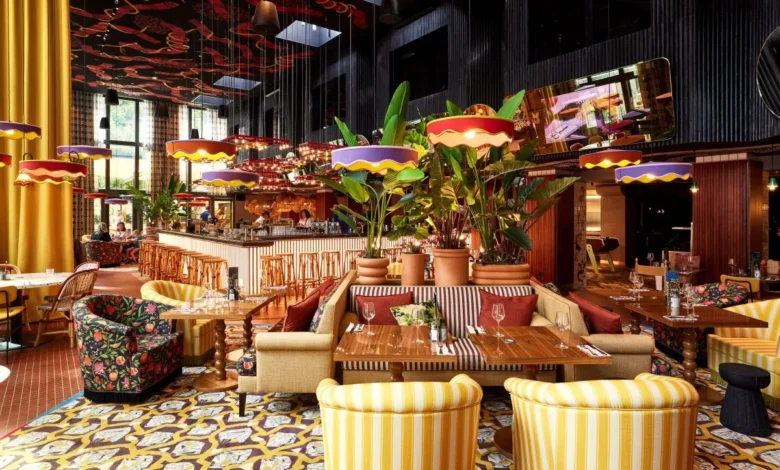
The lifestyle hospitality segment, known for trendy, design-forward properties and buzzing public social spaces, has been a cornerstone of Bazin’s vision to modernize Accor and capture the lucrative younger demographic. In recent years, Accor consolidated its grip on the sector by orchestrating a €1.6 billion buyout of its minority partners in the Ennismore joint venture.
However, major institutional investors like Parvus viewed the transaction with deep skepticism. Critics argue that committing billions of euros to buy out partners in a niche, capital-intensive lifestyle segment represents a questionable deployment of capital at a time when traditional asset-light franchising models are yielding higher, more predictable returns for competitors like Marriott and Hilton. Parvus contends that such mega-deals underscore a pattern of erratic capital allocation that prioritizes portfolio expansion over tangible shareholder value creation.
A Decade of Transformation Under Sébastien Bazin
To understand the weight of the current standoff, it is necessary to examine the tenure of Sébastien Bazin, who assumed the helm of Accor in August 2013. Taking over a storied French enterprise that had long operated as a hybrid owner-operator of real estate, Bazin engineered one of the most radical corporate overhauls in the history of the hospitality industry.
His signature strategic maneuver was the structural split of Accor in 2016 into two distinct entities: HotelInvest, the asset-heavy real estate owning division, and HotelServices (later rebranded as AccorInvest and Accor, respectively). Bazin subsequently sold off the majority stake in AccorInvest to a consortium of sovereign wealth and institutional investors, effectively pivoting Accor into an asset-light management and franchising powerhouse.
Proponents of Bazin’s tenure have historically credited this transformation with shielding the company from real estate downturns, boosting operating margins, and freeing up capital for aggressive global expansion and brand acquisition. Under his watch, Accor aggressively bulked up its luxury and lifestyle portfolio through high-profile mergers and acquisitions, including the landmark $2.9 billion acquisition of FRHI Hotels & Resorts—parent company of Fairmont, Raffles, and Swissôtel—in 2016, followed by the formation of the Ennismore joint venture in 2021.

Yet, despite these aggressive portfolio expansions, the anticipated rerating of Accor’s stock price has consistently lagged behind expectations. While the asset-light model was designed to mirror the financial profiles of its asset-light American peers, Accor has continually traded at a valuation discount, burdened by lingering complexity, exposure to volatile European economic cycles, and investor unease over its sprawling brand architecture.
Chronology of the Conflict
The friction between Parvus Asset Management and Accor leadership did not materialize overnight. The timeline of events leading up to this proxy showdown reveals a steady escalation of shareholder dissatisfaction:
- August 2013: Sébastien Bazin is appointed Chairman and CEO of Accor, initiating a strategic pivot toward an asset-light business model.
- July 2016: Accor completes its landmark acquisition of FRHI Hotels & Resorts (Fairmont, Raffles, Swissôtel), significantly expanding its footprint in the luxury segment.
- May–June 2018: Accor finalizes the sale of a majority stake in its real estate subsidiary, AccorInvest, completing the structural separation of its hotel operations from its real estate holdings.
- October 2021: Accor partners with Sharan Pasricha to create Ennismore, establishing a standalone lifestyle hotel joint venture housing brands like Mama Shelter, Hoxton, and 25hours.
- 2023–2025: As broader macroeconomic pressures ease post-pandemic, global hospitality peers such as Marriott and Hilton experience record equity valuations, while Accor’s share price continues to exhibit relative sluggishness, prompting quiet grumbling among major institutional stakeholders.
- 2025–2026 (Implied): Accor executes a massive €1.6 billion buyout of its partners within the Ennismore joint venture to consolidate full ownership, a move that draws sharp criticism from institutional investors regarding capital deployment.
- November 20, 2026: Parvus Asset Management publicly publishes its open letter holding a 14.1% stake, announcing its formal intention to table a resolution at the upcoming annual meeting to remove Sébastien Bazin as Chairman and CEO.
Market Implications and the Road to the Annual Meeting
The decision by Parvus—a notoriously disciplined and research-driven institutional investor—to go public with its campaign marks a pivotal turning point. In European corporate governance, proxy fights launched by major anchor shareholders carry immense weight, particularly when targeting a chief executive who has held office for over a decade.
Financial analysts note that the unfolding battle could trigger a broader reassessment of Accor’s strategic direction, regardless of whether Bazin ultimately steps down. Should Parvus succeed in rallying other institutional shareholders, pension funds, and proxy advisory firms to its cause, Accor could face immense pressure to initiate strategic alternatives. These alternatives could potentially include a comprehensive portfolio review, the accelerated spin-off or sale of non-core lifestyle assets like Ennismore, or a formalized commitment to enhanced share buybacks and capital return programs.
Conversely, if Bazin successfully defends his seat—bolstered by the support of other core stakeholders, such as Middle Eastern sovereign wealth funds that have historically maintained a presence in Accor’s share register—the company will still be forced to confront the fundamental valuation gap highlighted by Parvus. Management will need to articulate a clearer, more convincing roadmap to bridge the performance chasm separating Accor from its American and British counterparts.
As the corporate world awaits the official scheduling of Accor’s annual general meeting—expected in the spring of 2027—all eyes remain fixed on Paris. The coming months will test the resolve of Accor’s board of directors, the loyalty of its institutional base, and the legacy of one of Europe’s most prominent hospitality executives.