Unequal Justice in Alabama: The Disparate Prosecution of Pregnancy Loss and Domestic Abuse in Houston County

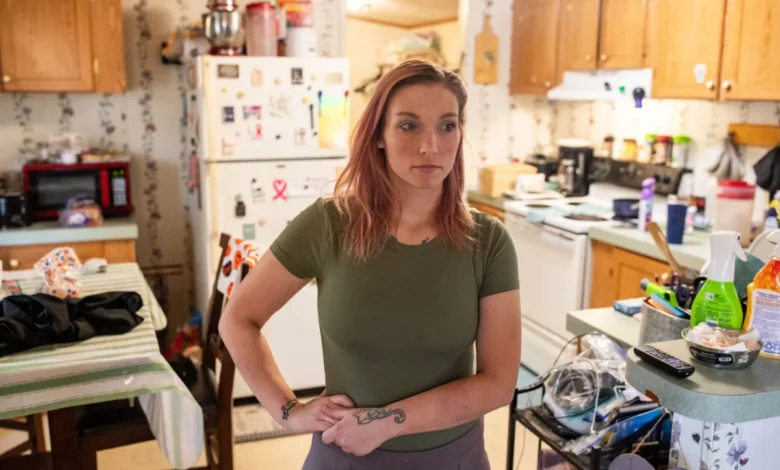
On the night of February 15, 2022, the quiet life of a rookie police officer in Headland, Alabama, collapsed. Robert Maddox Jr. contacted a colleague in a state of visible agitation, claiming his wife, Brittany, was three months pregnant and experiencing a severe medical emergency. He requested that his coworker, Officer James “Bo” Knight, watch their two small children while the couple rushed to the hospital. When Knight arrived, he was confronted with a grim scene: Robert was holding a plastic bag that appeared to contain fetal remains. Three hours later, Robert returned from the hospital carrying a white container, allegedly remarking, “They put my fucking baby in a box.”
What followed was a legal odyssey that exposed a profound dissonance in Alabama’s criminal justice system. While the state has positioned itself as a national leader in “fetal personhood”—the legal doctrine that a fetus holds the same rights as a born child—the application of this doctrine appears to be dictated less by the sanctity of life and more by the identity of the accused.
A Chronology of Allegations and Legal Inaction
The investigation into Robert Maddox began weeks after the miscarriage when Brittany Maddox sought help from an abuse-prevention organization. She alleged that her husband had subjected her to a pattern of physical abuse, which culminated in a violent assault on the night of the pregnancy loss. Brittany provided documentation to the Houston County courts, including photographic evidence of bruising on her neck and text messages in which Robert appeared to admit culpability.
In one chilling exchange, Robert wrote, “Being honest is going to get us both screwed. The truth is going to give me locked up.” In another, he addressed the miscarriage directly: “I can’t give you your baby back. That’s something I’m always going to live with knowing I did that.”
Despite these admissions and a sworn statement from Officer Knight—who testified that Robert admitted to hitting his wife in the stomach and choking her the night before the incident—the prosecution’s resolve wavered. Initially charged with murder, Robert was released on bond just five weeks after his arrest. He never spent another day in jail during the subsequent four-year legal process.

In May 2026, the case concluded with a plea deal that dismissed the manslaughter charge entirely. Robert was sentenced to five years of probation, a $3,000 fine, and court-mandated anger management. Houston County District Attorney Russ Goodman later cited a lack of “causal connection” as the reason for the downgrade, asserting that no expert witness could definitively link the physical abuse to the miscarriage, despite the defendant’s own recorded admissions.
The Double Standard: Chemical Endangerment Prosecutions
The leniency afforded to Robert Maddox stands in sharp, uncomfortable contrast to the treatment of women in the same jurisdiction. Houston County has earned a reputation for its aggressive pursuit of “chemical endangerment” charges against pregnant women who test positive for controlled substances.
Data compiled by ProPublica and other advocacy groups indicate that since 2009, over 40 pregnant women in Houston County have been arrested on these charges. These prosecutions often occur automatically after hospital drug tests, bypassing the traditional thresholds for criminal intent. Unlike the case against Robert, where the state struggled to find a “causal link” between violence and fetal loss, the state faces no such hurdle when prosecuting mothers for prenatal drug use. In these cases, the mere presence of substances in a mother’s system—or her newborn’s—is sufficient to trigger a felony prosecution.
Courtney Haney, a Dothan resident, serves as a poignant example of this disparity. After struggling with addiction during pregnancy, Haney was arrested at the hospital immediately after giving birth. Despite having no prior felony convictions, she was caught in a cycle of incarceration due to probation violations related to her addiction. “I was holding my daughter in my hands and the police walked in,” Haney recalled. She eventually spent four months in jail, a fate shared by many other women in the county who have been prosecuted under the same statutes.
Broader Implications of Fetal Personhood
The legal framework in Alabama, rooted in the 2006 chemical endangerment law, was ostensibly designed to protect children from the dangers of home-based methamphetamine production. However, as noted by legal scholars and organizations like Pregnancy Justice, the law has been repurposed into a tool for the mass surveillance and criminalization of pregnancy.
Lourdes Rivera, president of Pregnancy Justice, reports that the organization has identified 2,298 cases of women arrested since 2006 on charges related to their pregnancy. These numbers are trending upward in the wake of the U.S. Supreme Court’s decision to overturn the federal right to an abortion. “Law enforcement is using laws that were never intended to apply to pregnancy to investigate, arrest and punish women,” Rivera stated. “And it’s only getting worse.”

The implications are twofold: first, the chilling effect on public health. When women fear that seeking medical care during pregnancy—or testing positive for drugs while in labor—will result in immediate arrest and separation from their children, they are less likely to seek prenatal care or substance abuse treatment. Second, the fundamental inequity of the law. When a man who allegedly kills a fetus through domestic violence is granted probation, while a mother who gives birth to a healthy child after using drugs is sent to prison, the claim that these laws are designed to protect the “unborn” appears increasingly hollow.
The Human Cost and Systemic Failure
The disparity in outcomes for individuals like Robert Maddox and Courtney Haney highlights a significant gap in the Alabama legal system’s stated priorities. While DA Russ Goodman maintains that his office has shifted toward recommending addiction treatment for pregnant defendants, the reality for many remains a cycle of debt, probation violations, and prison.
For Brittany Maddox, the conclusion of her husband’s case offered no closure. Having spent four years preparing for a trial, the sudden dismissal of the manslaughter charge in favor of a probation-only plea felt like a secondary victimization. “The charge being dropped four years after he was arrested as part of a plea deal makes no sense to me,” she said. “That wrecked me in a lot of ways.”
The case of the Maddox family and the recurring pattern of chemical endangerment arrests in Houston County suggest that the state’s approach to fetal personhood is far from uniform. By focusing heavily on the behavior of pregnant women while exercising wide discretion and leniency for violent offenders, the system reveals that the legal protections afforded to the unborn are applied selectively.
As the state moves forward, the question remains whether the judicial system can reconcile these starkly different approaches. Experts argue that until the law treats the violence perpetrated against pregnant women with the same—or greater—severity than the nonviolent, substance-related actions of the women themselves, the goal of “protecting the unborn” will remain secondary to the convenience of existing prosecution metrics. In the corner of Alabama where these cases unfold, the law has become a blunt instrument, one that seems capable of profound severity for some, yet surprising mercy for others.
Related posts: