Why Hotel Executives Fear Artificial Intelligence Booking Agents Just as Much as Airlines Do

The rapid commercialization of artificial intelligence has sparked a high-stakes ideological divide within the global travel industry. While tech enthusiasts envision a frictionless future where personal autonomous agents handle every detail of itinerary planning, hospitality and aviation executives are pushing back with surprising force. The central tension does not stem from fear of technological failure, nor is it driven purely by data privacy mandates or regulatory compliance frameworks. Instead, travel industry leaders are increasingly worried that artificial intelligence agents will systematically dismantle the most lucrative pillar of modern tourism economics: impulse buying, psychological merchandising, and the art of the upsell.
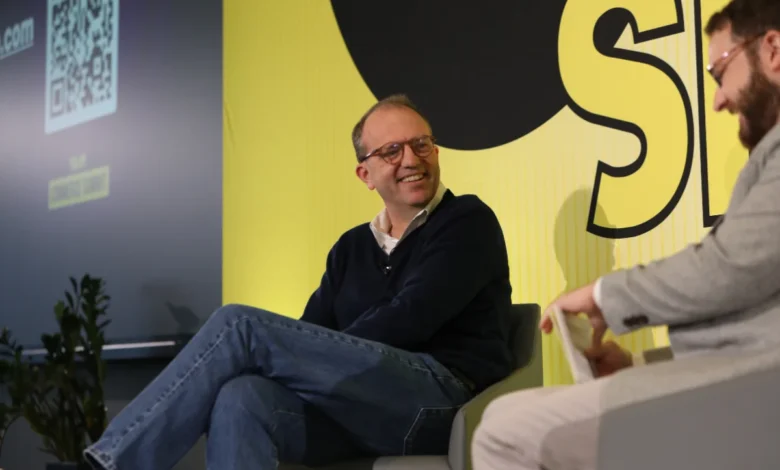
This underlying anxiety came to a head during the Skift Commerce Summit in New York City, where industry figures gathered to debate the commercial evolution of digital travel retail. The dialogue exposed a widening chasm between software developers building autonomous agents and the executives tasked with protecting hotel and airline profit margins. As automated personal assistants grow increasingly sophisticated, capable of scouring the web for the lowest rates and executing transactions on behalf of users, the traditional consumer journey faces an unprecedented structural threat.
The Anti-Agent Backlash: Merchandising and the Death of the Impulse Buy
The modern travel booking ecosystem relies heavily on visual merchandising, strategic friction, and emotional purchasing triggers. When a human traveler browses an online booking portal, they are frequently greeted by high-definition photography, enticing descriptions of upgraded accommodations, and targeted promotions designed to encourage last-minute splurges. A weary traveler might be persuaded to upgrade from a standard queen room to a deluxe suite with a panoramic city view, or add a daily spa credit and premium breakfast package to their reservation, driven by a momentary impulse of self-care or aspirational luxury.
According to Tyler Morse, chairman and chief executive officer of MCR Hotels, artificial intelligence agents are fundamentally immune to these psychological persuasion tactics. Speaking on stage at the New York summit, Morse offered a blunt assessment of how the hospitality sector views the rise of autonomous software buyers.
"Everyone is going to ban the agents because it’s in their interest to do so," Morse stated, cutting straight to the core economic motivation behind the emerging resistance.
Unlike human consumers, who can be swayed by aesthetic appeal, brand loyalty perks, emotional storytelling, or clever digital marketing campaigns, an AI bot operates purely on algorithmic parameters. Programmed to optimize specific constraints—such as minimizing total cost, maximizing square footage per dollar, or adhering strictly to a corporate travel policy—an AI agent will bypass the carefully curated upsell displays that generate billions of dollars in ancillary revenue for hotels annually. To an algorithm, a standard room is functionally identical to a premium suite if the required amenity metrics are met, leaving no room for the profitable emotional impulses that keep hospitality profit margins healthy.
Diverging Justifications: Privacy versus Profitability
The resistance against AI booking agents is not monolithic, however. While hotel executives like Morse are primarily motivated by the erosion of merchandising power and ancillary spend, other sectors of the travel industry are framing their opposition around legal, security, and regulatory vulnerabilities.
On the exact same day as Morse’s remarks at the Skift Commerce Summit, United Airlines made headlines by officially banning autonomous AI bots from accessing its booking systems and inventory channels. Unlike MCR Hotels, which focused its critique on commercial dynamics and the loss of the splurge, United Airlines pointed explicitly to data privacy risks, cybersecurity vulnerabilities, and complex regulatory compliance obligations as the primary drivers of its policy.
The juxtaposition between the positions of MCR Hotels and United Airlines highlights the multi-dimensional threat that artificial intelligence poses to legacy travel architecture. Airlines operate under stringent federal regulations, complex ticketing agreements, and sensitive passenger data protection laws. Allowing third-party scrapers and autonomous agents to continuously query inventory systems introduces severe server loads, potential data scraping breaches, and liability issues regarding passenger data privacy under frameworks such as the European Union’s General Data Protection Regulation (GDPR) and various state-level U.S. privacy laws.
Conversely, the hotel sector deals with fragmented property management systems, franchise agreements, and direct-booking initiatives designed to bypass costly online travel agency (OTA) commissions. For hotel owners and operators, the introduction of AI agents represents yet another intermediary layer sitting between the property and the guest, stripping away valuable first-party data and neutering the direct-to-consumer merchandising funnel.
The Evolution of Travel Distribution: A Historical Chronology
To understand the current panic surrounding artificial intelligence booking agents, it is necessary to examine the historical trajectory of travel distribution technology over the past three decades. The modern digital travel economy has evolved through distinct technological waves, each shifting the balance of power between suppliers, intermediaries, and consumers.
In the late 1990s and early 2000s, the advent of web-based online travel agencies such as Expedia, Travelocity, and Priceline disrupted traditional brick-and-mortar travel agencies. For the first time, consumers could compare flight schedules and hotel rates directly from their home computers. Initially viewed as a threat, OTAs quickly became dominant intermediaries, charging hotels substantial commissions—often ranging from 15% to 25% per booking—to secure digital visibility.
The subsequent decade, spanning from 2010 to 2020, was defined by the mobile revolution and the rise of metasearch engines like TripAdvisor, Kayak, and Google Hotels. Major hotel chains, led by Marriott, Hilton, and independent operators like MCR Hotels, responded by launching aggressive "Book Direct" loyalty campaigns. These initiatives offered lower rates, exclusive perks, and seamless mobile app experiences to recapture customer relationships and reduce dependence on high-commission OTAs.
By the early 2020s, generative artificial intelligence began permeating consumer software. Companies ranging from nimble travel tech startups to behemoths like Google, Apple, and OpenAI began developing personal digital assistants capable of executing multi-step tasks across the web. These autonomous agents promised to revolutionize consumer behavior by eliminating the tedious friction of comparing dozens of tabs, reading hundreds of reviews, and manually inputting payment details.
However, as these agents transition from experimental consumer novelties to commercial execution tools capable of completing transactions, the travel industry has recognized that the technology threatens to upend the delicate ecosystem painstakingly built over the last twenty years. Rather than a human browsing a hotel’s direct website and falling victim to a well-designed promotional banner, an autonomous bot simply queries an application programming interface (API), filters the results by price and location, and completes the checkout without ever gazing at a marketing photograph or considering a room upgrade.
Economic Implications and the Future of Direct-to-Consumer Sales
The macroeconomic implications of a widespread industry ban on AI agents are profound. If major hotel chains, independent ownership groups, and airlines successfully block or heavily restrict autonomous software from interacting with their inventory systems, it could effectively stifle the mainstream adoption of personal AI assistants for travel planning.
However, industry analysts warn that outright bans may prove difficult to enforce in the long term. As conversational AI interfaces become deeply integrated into everyday consumer operating systems—embedded within smartphones, smart home devices, and web browsers—users will increasingly expect their digital assistants to manage mundane administrative tasks, including travel arrangements. If legacy hospitality brands attempt to wall off their inventories, consumers may simply migrate toward aggregators and alternative lodging platforms that are more welcoming to automated technologies, or utilize sophisticated browser-extension workarounds that mimic human browsing patterns to bypass anti-bot security walls.
This dynamic creates a complex strategic dilemma for hospitality executives. On one hand, protecting ancillary revenue streams and preserving the direct merchandising relationship with the guest is existential for hotel profitability. On the other hand, alienating tech-forward consumers who demand automated convenience could drive traffic away from direct channels and back toward third-party intermediaries willing to integrate with AI platforms.
Furthermore, the technology forces hotel brands to rethink how they present value within digital environments. If AI agents cannot be visually persuaded to buy an upgrade, hotels may need to develop machine-readable value propositions—programmatic incentives where algorithms can evaluate the total utility of bundled packages, such as factoring in free high-speed internet, complimentary parking, or flexible cancellation terms into a quantitative cost-benefit analysis.
Industry Response and Strategic Adaptation
As the debate intensifies, hospitality technology leaders are exploring alternative pathways to accommodate or neutralize the rise of artificial intelligence. Rather than adopting an entirely defensive posture of exclusion, some forward-thinking industry stakeholders are investigating whether proprietary AI agents can be developed to parry consumer bots. In this envisioned future, a hotel’s conversational AI concierge would negotiate directly with a customer’s personal AI assistant, creating a machine-to-machine commerce negotiation layer where dynamic pricing, room features, and personalized perks are traded algorithmically.
Nevertheless, the dominant sentiment across traditional hospitality leadership remains deeply skeptical of ceding control of the sales funnel to automated software. The human element of hospitality—the psychological comfort of luxury, the aesthetic appeal of a well-appointed lobby, and the emotional resonance of vacation anticipation—cannot be easily translated into binary code.
As the legal, technical, and commercial battles over autonomous booking agents unfold in the coming years, the travel industry finds itself at a defining crossroads. The outcome will determine whether the future of travel discovery is driven by human emotion and visual merchandising, or reduced to an efficient, cold calculation executed by machines behind the screen.