Wednesday Morning Football Briefing: Manchester United’s Managerial Crossroads and Premier League Transfer Market Speculation


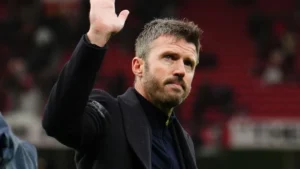
The landscape at Old Trafford remains the primary focus of Wednesday’s football discourse as the Manchester United hierarchy navigates a period of profound uncertainty regarding the future of Michael Carrick. While the club prepares for potential changes in the dugout, the broader Premier League market is beginning to stir, with top-flight clubs across England preparing their scouting and recruitment strategies ahead of the upcoming January transfer window.
The Manchester United Managerial Conundrum
The current situation at Manchester United is defined by a dichotomy between the future of the coaching staff and the stability of the club’s new leadership structure. According to reports from The Telegraph, Manchester United’s executive team, led by Omar Berrada and Jason Wilcox, is expected to remain firmly in place regardless of the outcome regarding Michael Carrick’s position. This signals a strategic shift at the club, where the administrative and sporting infrastructure is being treated as a separate, more permanent entity compared to the volatility of the first-team coaching role.
The internal debate surrounding Carrick’s tenure has reached a critical juncture. While there is a palpable desire for continuity, the club has been forced to explore contingency plans. BBC reports suggest that should the board opt to retain Carrick, they are prepared to reinforce his tactical support network. One name that surfaced as a potential addition during the summer window is Bayern Munich assistant Aaron Danks, whose reputation for tactical precision and youth development aligns with the profile Manchester United is seeking to integrate into their backroom staff.
However, the shadow of past connections continues to loom. Kieran McKenna, currently enjoying significant success elsewhere, remains a figure of admiration among certain segments of the Manchester United hierarchy. Despite this, ESPN notes that a reunion is considered highly unlikely. The prevailing view at Old Trafford is that the current environment, burdened by high expectations and the weight of recent historical underperformance, may not be the optimal setting for a young coach of McKenna’s profile at this specific stage of his career. The board appears keen to avoid a reactionary appointment, preferring instead to evaluate a wider, more experienced shortlist if a change becomes unavoidable.
Defensive Recruitment: The Hunt for Stability
Beyond the coaching narrative, Manchester United’s recruitment department is reportedly prioritizing defensive reinforcement. With the January window looming, the club has identified a trio of center-back targets: Calvin Bassey, Jarrad Branthwaite, and Nathan Collins.
This focus on the heart of the defense is backed by statistical necessity. Manchester United has struggled with both injury crises and inconsistency in the backline throughout the current campaign. Jarrad Branthwaite, in particular, has seen his stock rise significantly following his performances in the Premier League, making him a high-value target. However, the club must balance these ambitions against Financial Fair Play (FFP) constraints, which have governed the transfer activities of all top-flight English clubs in recent seasons. Securing a defender of the required caliber in January—a notoriously difficult window for business—will require significant capital and strategic negotiation.
Arsenal’s Forward-Looking Strategy
In London, Arsenal’s approach to the January window appears to be focused on long-term offensive versatility. The club is actively monitoring several high-potential prospects, including Real Madrid’s Endrick, Antonio Nusa, and Junior Kroupi. These links reflect Mikel Arteta’s desire to add depth to his attacking rotations.
The pursuit of Endrick, in particular, is complex. While talkSPORT reports an interest from the Gunners, AS indicates that the Brazilian forward is currently weighing a potential loan move away from the Santiago Bernabéu to secure consistent playing time. The involvement of clubs like Roma and Sporting highlights the international competition for such talent. Arsenal’s interest in Martin Zubimendi also persists, though they face stiff competition from Real Madrid, Atletico Madrid, and Chelsea, all of whom are monitoring the midfielder’s situation closely. The Premier League title race often hinges on squad depth during the winter months, and Arsenal’s scouting activity suggests an awareness that their current rotation may require reinforcement to sustain a challenge across all competitions.
The Broader Market and Financial Implications
The financial mechanics of the modern game are also in the spotlight this week, notably with the news that League Two side Fleetwood Town is set to receive a windfall exceeding £1 million following James Hill’s first senior England call-up. This underscores the importance of "sell-on" clauses and development fees in the English football pyramid, acting as a vital revenue stream for smaller clubs. Such payments serve as a reminder that every high-level international selection has a ripple effect that extends far beyond the elite tiers.
Meanwhile, the coaching merry-go-round continues to produce surprises. Reports from Fabrizio Romano clarify that Pierre Sage, should he depart Crystal Palace, is not expected to pursue a return to Lens. Instead, the manager is reportedly planning a sabbatical, highlighting the increasing physical and mental toll of top-flight management. Similarly, former Celtic manager Wilfried Nancy has made a decisive move, rejecting an offer from Ligue 1 side Le Havre. This indicates a selective approach among coaches, who are increasingly unwilling to take on projects that do not align with their long-term professional aspirations.
Analytical Context: The January Window
As the January transfer window approaches, the discourse surrounding these rumors highlights a shift in strategy among top clubs. The era of panic-buying in mid-season has largely been superseded by a more analytical, data-driven approach. Clubs are now looking for players who can provide immediate impact while maintaining resale value—a trend clearly visible in the interest surrounding young talents like Endrick and Nusa.
For Manchester United, the decision regarding Michael Carrick is not merely about a manager; it is about the identity of the team’s next cycle. The presence of Omar Berrada and Jason Wilcox is intended to provide a steady hand, ensuring that even if the manager changes, the club’s overarching philosophy—centered on efficient recruitment and tactical cohesion—remains intact.
The implications for the Premier League are clear: the gap between the top-four contenders and the rest of the league is being contested not just on the pitch, but in the boardroom. The upcoming months will be a test of resolve for executives and managers alike. Whether it is Arsenal’s search for offensive flair or Manchester United’s desperate need for defensive solidity, the January window will provide the definitive answer to how these clubs intend to finish the 2024/25 season.
Chronology of Recent Developments
- Early Week: Reports surface regarding the internal stability of Manchester United’s executive team despite coaching uncertainty.
- Mid-Week: Manchester United identifies defensive targets for January; Arsenal scouts reveal a list of potential wingers.
- Wednesday Morning: Clarification on managerial movements involving Pierre Sage and Wilfried Nancy underscores the personal toll of the sport.
- Current Status: All parties involved are in a period of evaluation, with formal bids expected to accelerate as the January 1st deadline approaches.
Strategic Outlook
The upcoming weeks will likely see a surge in official statements as clubs look to settle their coaching situations before the festive fixture list begins. For Manchester United, the priority remains balancing the short-term need for results with the long-term project being built by their new leadership. Meanwhile, the transfer market continues to be defined by a pursuit of youth and versatility, as elite clubs look to future-proof their squads against the physical demands of modern football. As the window opens, the primary question will be which clubs possess the financial flexibility to execute these high-stakes maneuvers, and which will be forced to wait until the summer to address their structural weaknesses.