Ancient Peruvian Societies Chose Resilience Over Violence During Climate Crises, Study Reveals

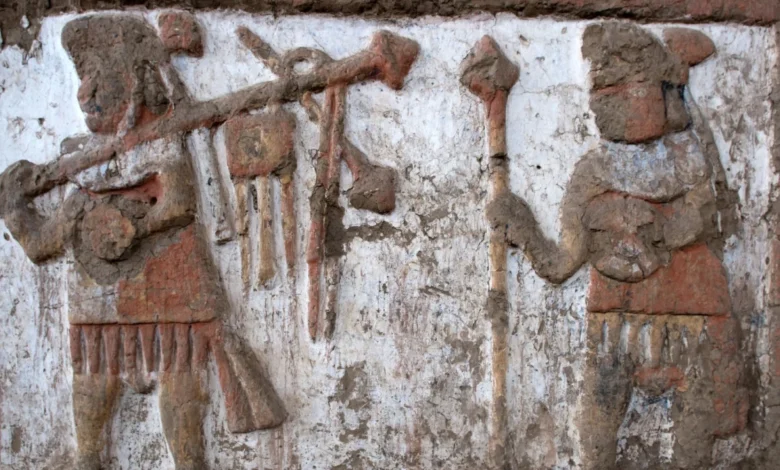
The modern era is grappling with increasingly catastrophic climate-fueled disasters, evoking widespread anxiety even as science illuminates their root causes. For prehistoric and ancient civilizations, however, understanding the complex mechanisms behind severe weather oscillations was an insurmountable challenge. Lacking modern meteorological frameworks, ancient cultures frequently interpreted extreme environmental shifts through a spiritual lens, occasionally responding with dramatic, high-stakes rituals. In northern Peru, archaeological records have long documented instances of mass human sacrifice, historically tied by researchers to catastrophic flooding events driven by phenomena such as El Niño.
New archaeological research, however, complicates this narrative. A comprehensive study recently published in the journal Frontiers in Environmental Archaeology reveals that while elite-driven mass sacrifices occasionally coincided with environmental collapses, widespread interpersonal violence was remarkably rare in daily life. Rather than descending into generalized brutality or internal warfare during periods of ecological stress, ancient populations in northern Peru predominantly relied on community resilience, cooperative adaptation, and resource management to survive climatic upheavals.
The Geography and Longevity of the Lambayeque Valley
To understand how ancient populations navigated ecological volatility, researchers focused on the Lambayeque Valley, situated within the coastal desert of northern Peru. Despite receiving minimal annual rainfall, the region has sustained human habitation for approximately 6,000 years. The valley’s geographic assets—chiefly its network of rivers fed by Andean runoff and its immediate proximity to the Pacific Ocean—allowed complex agricultural and maritime societies to take root and flourish for generations.
Among the most prominent of these cultures were the Moche, who inhabited the region from roughly 100 to 750 CE, and the Sicán civilization, which succeeded them from approximately 750 to 1375 CE. Both societies developed sophisticated engineering marvels, including extensive canal systems, monumental architecture, and advanced metallurgy.
According to George Mason University archaeologist and study co-author Haagen Klaus, the archaeological record demonstrates profound parallels between these ancient societies and modern humanity. "Archaeological evidence shows that in so many ways they were mirrors of us—in how they lived their daily lives, interacted with their world, ran their economies, and confronted (and sometimes contributed to) environmental crises," Klaus noted.
Reevaluating the Nexus of Climate and Ritual Violence
For decades, excavations across northern Peru have uncovered harrowing evidence of mass human sacrifices that frequently preceded the political collapse of major regional centers, including those of the Moche and Sicán. Scholars have long hypothesized a direct correlation between these grisly rituals and catastrophic El Niño Southern Oscillation (ENSO) events.
El Niño cycles trigger torrential rainfall in coastal Peru, washing away infrastructure, destroying agricultural fields, decimating food stocks, and destabilizing social hierarchies. In the face of such existential threats, ruling classes historically engaged in high-profile, state-sanctioned rituals—including mass human sacrifice—in an urgent bid to appease deities and restore cosmic and ecological balance.
These dramatic archaeological finds led many researchers to wonder if the widespread brutality seen in ritual contexts bled into the fabric of everyday life. The central question driving the recent study was whether chronic environmental stress fostered an environment of pervasive interpersonal violence, shifting the baseline of daily existence for ordinary citizens.
"If these big ritual sacrifices were indicative of some underlying crisis, we hypothesized that these events might have been extending into people’s everyday experience of the world," explained New York University archaeologist and study co-author Thomas Snyder.
Biohistorical Analysis of the Lambayeque Valley Skeletal Archive
To test this hypothesis, Snyder, Klaus, and an international team of collaborators leveraged the Lambayeque Valley Biohistory Project. This vast skeletal archive encompasses approximately 3,000 years of human history drawn from 30 distinct archaeological sites across the region.
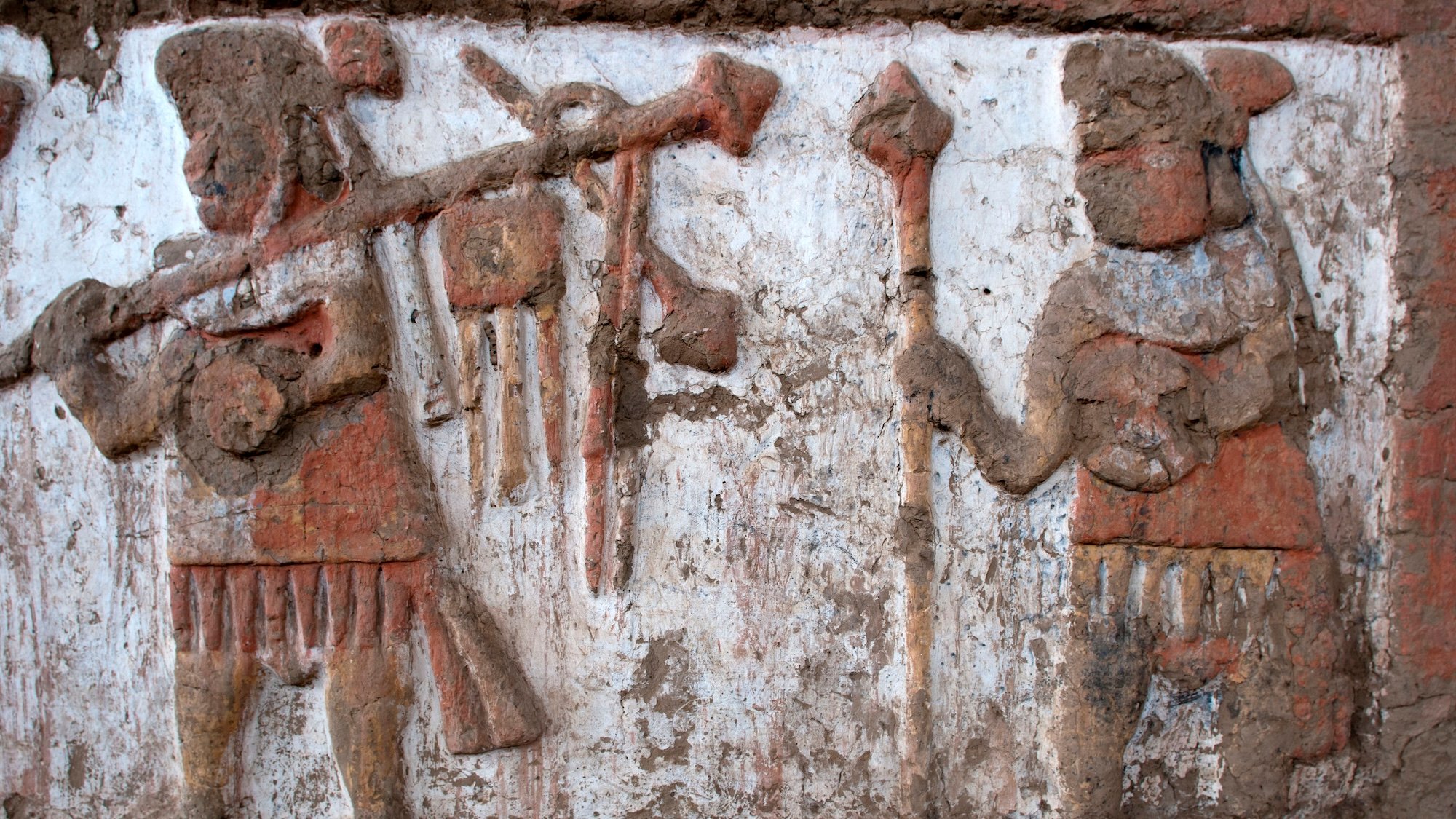
The research team conducted rigorous osteological analyses on more than 1,600 human remains, establishing precise demographic profiles and chronological estimates. Each skeleton was meticulously examined for indicators of intentional cranial trauma, defensive fractures, and other skeletal markers conventionally associated with interpersonal violence or warfare.
The results challenged the team’s initial assumptions. Out of the 1,600-plus individuals examined, only 25 sets of remains—representing a mere 1.6 percent of the total sample pool—exhibited physical evidence of interpersonal violence outside of ritual contexts. Furthermore, only 77 individuals displayed indicators of accidental trauma, such as healed fractures from falls or labor accidents. Crucially, none of these instances of interpersonal trauma correlated chronologically with known historical periods of severe ecological crisis or El Niño-induced flooding.
"The main thing that jumped out at us was just how few cases of interpersonal violence we observed outside ritualized contexts," Snyder emphasized. "In Lambayeque, there’s 6,000 years of creative adaptations to El Niño and longer-term changes in climate, and widespread violence wasn’t one of them."
Methodological Considerations and Chronological Scope
While the findings provide a compelling counter-narrative to theories of climate-induced social breakdown, the study’s authors acknowledge certain methodological limitations. Because it was not feasible to radiocarbon-date every individual skeleton within the expansive archive, the mortality data relies on broader chronological periods established through stratigraphic analysis and associated cultural artifacts.
Despite these temporal margins, the researchers maintain that the overarching statistical trend is clear. The sheer scarcity of trauma across millennia of habitation indicates that physical violence was not the default human response to environmental stress in pre-Columbian Peru. Instead, populations consistently prioritized collective survival strategies, technological innovation, and infrastructural reinforcement over internal conflict.
Implications for Contemporary Climate Discourse
The study’s conclusions carry profound implications extending far beyond Andean archaeology, offering a historical perspective on how human societies confront systemic environmental shocks. As modern global communities face accelerating climate change, rising sea levels, and resource scarcity, the historical precedent set by the inhabitants of the Lambayeque Valley challenges deterministic views on societal collapse.
The authors argue that the archaeological evidence serves as a powerful reminder that catastrophic environmental conditions do not automatically trigger social disintegration or widespread violence. Instead, human societies possess an inherent capacity for adaptation, cooperation, and resilience.
"This really highlights that widespread violence isn’t a predetermined response to climate change," Snyder said. "As a society, we both get to and have to choose how we respond to our own climate crisis."
Echoing this sentiment, Klaus underscored the agency embedded in human history, rejecting fatalistic narratives surrounding modern environmental anxieties. "Violence and social unraveling are not destined outcomes, ever," he concluded.
By demonstrating that ancient populations weathered millennia of severe climatic disruption through cooperation rather than internal conflict, the research reframes our understanding of the past. It suggests that the keys to surviving ecological crises lie not in conflict, but in the enduring human capacity for creative adaptation.