Shaping the Future of Justice: ABA Launches Legislative Priorities Survey as Washington Prepares for the 120th Congress

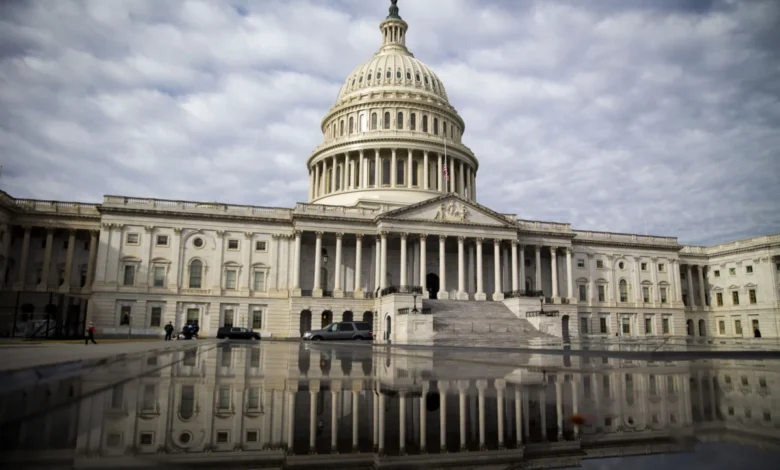
The historic November midterm elections have rewritten the political landscape in Washington, D.C., setting the stage for Democratic control of both chambers of Congress and a potentially consequential legislative agenda. As the dust settles on one of the most fiercely contested electoral cycles in recent American history, the nation’s capital is bracing for a profound shift in governance. With a new balance of political power taking shape during President Donald Trump’s final two years in office, institutional stakeholders across every sector are recalibrating their strategies. Among them, the legal profession is taking proactive steps to ensure its voice remains authoritative, unified, and impactful in the halls of power.
The American Bar Association (ABA) has officially opened its annual Legislative Priorities Survey, inviting its vast membership of legal professionals to help define the organization’s federal advocacy agenda for the upcoming 120th Congress. Convening in early January, the new Congress will face a labyrinth of complex legal, economic, and social challenges under a divided government. In response, the ABA is mobilizing its grassroots network to secure a strong seat at the table on critical issues affecting the practice of law, the integrity of the judicial system, and the broader administration of justice nationwide.
Background Context and the Evolving D.C. Landscape
The political environment heading into the 120th Congress is characterized by intense partisanship coupled with narrow legislative margins. Historically, midterms serve as a referendum on the sitting administration, and the recent elections delivered a stark message from the American electorate, empowering the opposition party to take control of both the House of Representatives and the Senate. This divided government dynamic creates a unique operational matrix for federal policymaking. While gridlock is a frequent byproduct of split legislative and executive control, it also opens distinct windows for bipartisan compromise on targeted issues, ranging from criminal justice reform to administrative law modernization and judicial funding.
For the legal profession, navigating this shifting ecosystem requires vigilant advocacy. The ABA, as the premier voluntary association of lawyers and legal professionals in the United States, has long served as a vital bridge between the legal community and policymakers on Capitol Hill. By establishing clear legislative priorities, the association aims to cut through the legislative noise, ensuring that lawmakers understand the practical implications of proposed statutes on court operations, constitutional rights, and the delivery of legal services.
The decision to launch the Legislative Priorities Survey at this specific juncture underscores the urgency of early engagement. As newly elected lawmakers prepare to draft bills, staff committees, and organize hearings, the foundational positions adopted by institutional advocates during the opening weeks of a congressional term often dictate the trajectory of legislative debates for years to come.
Chronology and Survey Logistics
The roadmap for the ABA’s priority-setting process is structured to maximize member engagement while ensuring rigorous administrative review before the formal agenda is adopted.
- November 6: The 2026 ABA Legislative Priorities Survey officially opens, becoming accessible to members nationwide.
- Mid-November: Personalized survey links are distributed via email to the majority of ABA members, complemented by formal invitations from ABA President Barbara Howard and outreach across the association’s official social media channels.
- December 4: The survey officially closes, cutting off member submissions to allow for comprehensive data aggregation and qualitative analysis.
- Early 2027 (ABA Midyear Meeting): Final survey results and synthesized recommendations are formally presented to the ABA Board of Governors for review and adoption.
Participation in the survey is restricted exclusively to ABA members, reinforcing the association’s commitment to internal democratic governance. Members can access the portal directly through the official ABA Grassroots Action Center (ambar.org/priorities). Designed with efficiency in mind, the survey takes less than 10 minutes to complete, ensuring that busy attorneys, judges, legal scholars, and public servants can readily contribute their insights without disrupting their professional obligations.
Streamlined Methodology and the 2026 Survey Framework
To enhance the quality of the data collected, the ABA has implemented a more streamlined ranking system for the 2026 survey compared to previous iterations. The architecture of the survey is split into two primary components designed to capture both consensus views and emerging concerns.
In the first section, respondents are asked to evaluate and prioritize issues that are already aligned with the ABA’s established advocacy policies. This helps leadership gauge the enduring relevance of traditional legal priorities, such as funding for the Legal Services Corporation (LSC), federal judicial compensation, protection of attorney-client privilege, and the defense of judicial independence.
The second section incorporates open-ended questions specifically tailored to identify novel or rapidly evolving policy challenges that the ABA should consider incorporating into its federal portfolio. This component is crucial for capturing issues that may require the development of entirely new association policies—ranging from the regulatory impacts of generative artificial intelligence in legal practice to emerging questions surrounding cybersecurity, data privacy, and cross-border digital commerce.
By combining structured ranking with open-ended qualitative feedback, the survey ensures that the resulting legislative agenda is both anchored in the core values of the profession and responsive to the dynamic realities of a rapidly modernizing society.
Rigorous Criteria for Final Priority Selection
Once the survey window closes on December 4, the collected data undergoes a rigorous analytical synthesis. The findings will be delivered directly to the ABA Board of Governors during the ABA Midyear Meeting in early 2027.
The Board does not rely solely on raw vote counts; rather, it evaluates the survey findings against a comprehensive matrix of institutional criteria to determine which issues ultimately achieve official "priority" status. These established criteria include:
- Breadth and Strength of ABA Interest: Assessing whether an issue commands broad-based consensus across diverse practice areas and demographic segments of the membership.
- Importance to the Practice of Law: Evaluating how directly a legislative or regulatory proposal impacts the daily operations, ethics, and economic viability of law practices.
- Public Perception of the Profession: Considering how advocacy on a given issue influences public trust and confidence in lawyers and the legal system.
- Opportunity for Impact: Measuring whether ABA intervention can meaningfully alter the outcome of a legislative debate or regulatory rulemaking process.
- Potential for Achievement: Pragmatically assessing the likelihood of legislative or executive success given the prevailing political winds in Washington.
- Timeliness of the Issue: Ensuring that the association focuses its finite political capital on matters demanding immediate congressional attention.
- Expertise of Lawyers: Leveraging the unique substantive knowledge and intellectual capital that the legal profession brings to complex policy debates.
- Importance to Society: Examining the broader humanitarian, economic, and civil rights implications of an issue for the general public.
- Importance to the Administration of Justice: Prioritizing measures that safeguard constitutional norms, procedural due process, and the effective functioning of federal and state courts.
This multi-factor evaluation model ensures that the final legislative agenda represents a balanced, highly strategic portfolio capable of withstanding rigorous scrutiny from both internal stakeholders and external policymakers.
Broader Impact and Implications for the Legal Profession
The stakes for the 120th Congress are exceptionally high. As lawmakers grapple with complex fiscal pressures, national security priorities, and societal transformations, the legislative output of the next two years will leave a lasting imprint on the American legal framework.
When the 120th Congress convenes in January, it will confront a legislative docket filled with contentious debates. Issues such as federal agency rulemaking authority, judicial nominations, civil rights enforcement, and criminal sentencing guidelines will undoubtedly take center stage. For the legal profession, having a robust, well-articulated voice in these debates is not merely an institutional preference—it is a professional obligation rooted in the commitment to uphold the rule of law.
Through the Legislative Priorities Survey, the ABA empowers its members to act as co-architects of the association’s federal advocacy strategy. By contributing their expertise, members directly reinforce the ABA’s capacity to serve as an effective, credible, and influential advocate on Capitol Hill.
Association leaders emphasize that broad participation is essential. As the political landscape in Washington, D.C., continues to evolve, the collective insights of practicing lawyers, judges, and legal academics will provide the empirical and intellectual foundation necessary to guide policymakers toward just, equitable, and workable solutions.
All eligible ABA members who have not yet completed the survey are strongly encouraged to visit ambar.org/priorities before the December 4 deadline. In doing so, they ensure that the legal profession’s core values, professional standards, and dedication to justice remain a powerful, enduring force in the nation’s capital during a pivotal era in American history.