Houston Mayor Shifts Policy on ICE Collaboration Amid Shifting Political Landscapes Across Texas

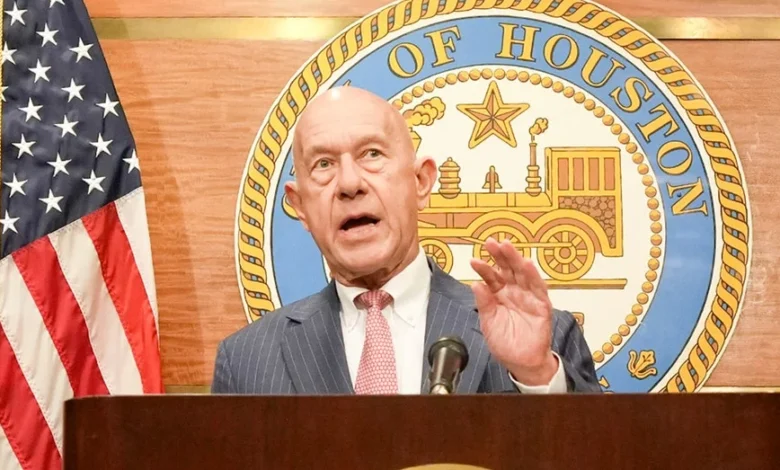
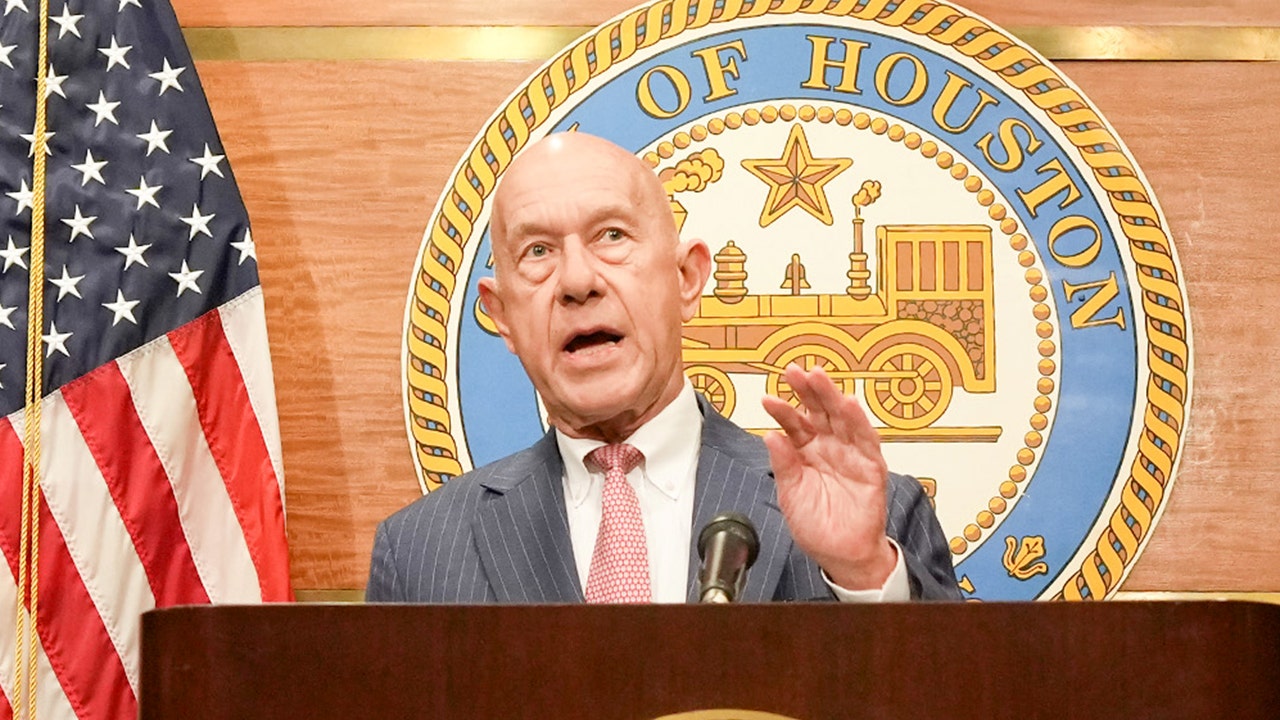
HOUSTON — In a significant policy reversal, Houston Mayor John Whitmire announced new restrictions on municipal police cooperation with federal immigration authorities, marking a pivotal moment in the nation’s fourth-largest city. The move comes in the wake of a striking political shift across Texas, where Democrats recently secured monumental victories, disrupting decades of undisputed Republican dominance at the state level.
Under the newly instituted directives, Houston Police Department (HPD) officers are no longer permitted to notify U.S. Immigration and Customs Enforcement (ICE) when they encounter undocumented immigrants during routine, nonviolent interactions, such as traffic stops or minor regulatory offenses.
The policy change signals a renewed friction point between local municipal governance and state-level oversight, unfolding against a rapidly evolving political backdrop that has stunned analysts and energized Democratic strategists nationwide.
Details of the New Municipal Directive
Mayor Whitmire formally outlined the updated enforcement protocol during an interview, followed by a detailed administrative statement alongside Police Chief Noe Diaz and other municipal leaders. According to the updated guidelines, if an officer encounters an individual without legal status during a nonviolent, non-jailable incident, the interaction will conclude with a warning or a citation, and the individual will be permitted to depart without federal immigration notification.
However, a strict threshold remains for criminal matters. "If they’re charged with a new crime, we’ll let ICE know as we get them to the jailhouse," Whitmire told reporters, emphasizing that municipal law enforcement will maintain standard reporting procedures for individuals booked into local detention facilities on jailable offenses.
Whitmire acknowledged that Governor-elect Gina Hinojosa will not officially assume office until January, but he characterized his administrative decision as a pragmatic, responsible, and effective policy designed to alleviate widespread community anxiety. The mayor noted that strict enforcement mandates previously tied to state funding requirements had generated palpable fear within diverse immigrant communities across the Houston metropolitan area.
A Historic Political Shift Across Texas
The timing of Whitmire’s policy adjustment closely aligns with historic political upheavals across the Lone Star State. Long considered an impenetrable fortress for the Republican Party, Texas experienced a sudden and dramatic electoral swing during the recent midterm cycle.
Governor Greg Abbott, a staunch conservative who served three terms and championed stringent immigration enforcement measures, lost his reelection bid. Compounding the shockwaves, state lawmakers and political observers watched as James Talarico flipped one of Texas’s high-profile U.S. Senate seats blue. This marked the first time a Democratic candidate captured the seat since the legendary late Treasury Secretary Lloyd Bentsen secured his final reelection victory in 1988—seven months before Talarico was born.
Furthermore, the statewide shift saw Gina Hinojosa emerge victorious in the gubernatorial race, positioning her to become the state’s first Democratic governor since Ann Richards left office in the mid-1990s. This sweeping blue wave fundamentally altered the balance of power, creating an environment where local municipal leaders felt newly emboldened to recalibrate policies that had previously been shaped under the threat of severe state-level penalties.
Chronology of Houston’s Immigration Policy Tug-of-War
The friction between Houston’s city leadership and state authorities is the latest chapter in a protracted legal and political struggle over local autonomy and sanctuary policies.
- March: Mayor Whitmire and Police Chief Noe Diaz initially introduced a localized protocol dictating that background checks revealing immigration-related warrants would require a police sergeant to oversee potential ICE involvement. The policy included a strict 30-minute response window for federal agents, failing which the subject would be released.
- April: The Houston City Council advanced and approved an ordinance formally capping the duration officers could detain individuals while waiting for ICE response teams.
- Spring and Summer: The municipal actions drew immediate ire from state leadership. Outgoing Republican Governor Greg Abbott threatened to withhold upwards of $100 million in state funding from any municipality enacting sanctuary-style policies. Concurrently, then-Attorney General Ken Paxton launched a formal state investigation into Houston’s immigration enforcement practices.
- Fall: Caving to mounting financial pressure and potential legal liability, Mayor Whitmire backed revisions to the April ordinance. The compromise restored broad officer discretion to contact ICE and wait for federal agents during routine civil immigration encounters, temporarily aligning the city closer to state mandates.
- Current Announcement: Following the November electoral realignment—which swept Abbott out of office and elevated Democrats to key statewide posts—Whitmire moved swiftly to reinstate strict limitations on ICE notifications, effectively rolling back the compromises made earlier in the year.
Federal Response and Law Enforcement Perspectives
The Department of Homeland Security (DHS) and federal immigration officials reacted swiftly to Whitmire’s announcement, expressing profound disappointment over the resurgence of municipal limitations on cooperative federal-local operations.
A DHS spokesperson issued a sharp critique, defending the necessity of integrated law enforcement partnerships to safeguard national security and public safety. "We remain disappointed that sanctuary politicians seek to limit cooperation with ICE, as our law enforcement are simply fulfilling their sworn duties to serve and protect our communities," the spokesperson said in an official statement provided to media outlets.
The federal agency emphasized that collaborative networks are indispensable for locating and detaining dangerous transnational criminals. Highlighting statistical data, the spokesperson noted that seven of the top ten safest cities in the United States maintain active, collaborative agreements with ICE. When local jurisdictions erect barriers between municipal police and federal immigration officers, DHS officials argue, agents are forced to conduct more visible and resource-intensive community operations to apprehend individuals released back into the public.
To underscore these concerns, federal authorities pointed to several high-profile arrests of criminal undocumented immigrants within the Houston area. Cases cited by DHS included Alexander Montano, a Cuban national convicted of willful homicide, burglary, and forced residential entry; Vietnamese national Ding Nguyen, also convicted of homicide; and Guatemalan national Julio Camey, convicted of sexual offenses against a child. Federal officials argue that restricting preliminary notifications during lower-level police encounters deprives agencies of critical intelligence windows that could prevent dangerous individuals from evading federal custody.
Broader Implications for Municipal Governance and State Relations
Whitmire’s policy shift underscores the delicate balancing act faced by urban mayors in politically polarized states. While large metropolitan centers like Houston, Dallas, Austin, and San Antonio frequently lean progressive or moderate-Democratic, they remain subject to the legislative and executive authority of state governments that may hold vastly divergent ideological priorities.
The interplay between local police departments and federal immigration enforcement has long been a flashpoint in American jurisprudence and public policy. Proponents of sanctuary-style limitations argue that disassociating local police from immigration enforcement builds essential trust between immigrant communities and law enforcement agencies. This trust, advocates contend, encourages victims and witnesses of crimes to come forward without fear of deportation, thereby enhancing overall neighborhood safety.
Conversely, critics and opponents of such policies contend that limiting communication with federal authorities undermines the rule of law, creates safe havens for individuals who have entered the country unlawfully, and compromises public safety by allowing removable offenders to cycle back into local neighborhoods.
As Texas prepares for a historic transition of power with incoming Democratic leadership in January, the legal and administrative battlegrounds over immigration policy are expected to shift. While Houston navigates its newly declared operational framework, legal scholars and policy analysts will closely monitor how state agencies, the legislature, and federal departments respond to the evolving landscape of municipal compliance across the Lone Star State.