High-Stakes Leadership Battles and Legislative Clashes Grip Capitol Hill Following Historic Midterm Elections

The dust has barely settled on a sweeping and transformative midterm election cycle, but Capitol Hill has already plunged into a new phase of intense political combat. While the electoral maps have been finalized and the balance of power decisively altered, the true battles are now unfolding behind closed doors in both the House and the Senate. Lawmakers from both sides of the aisle are grappling with internal leadership squabbles, shifting party dynamics, and the sobering reality of governing under vastly different legislative mathematics.
The political landscape has been fundamentally reshaped by stunning Democratic victories on Tuesday night, leaving both parties to re-evaluate their leadership structures, their core legislative priorities, and their strategies for engaging with the White House. From internal revolts against long-standing party leaders to fierce debates over the future of the federal budget, energy policy, and presidential authority, the legislative branch stands at a critical crossroads as it prepares for the 110th Congress.
Leadership Upheavals and Internal Party Rebellions
The aftermath of any major midterm election typically brings a period of introspection, but the current cycle has triggered aggressive challenges to the established hierarchy in both chambers. In the House, Speaker Mike Johnson, R-La., has made it clear he will not pursue the post of minority leader, signaling a potential changing of the guard among House Republicans. Johnson’s future came into question late last month when he mused to colleagues about returning to his hometown of Shreveport, Louisiana, to start a lawn care business—a remark that has only fueled speculation about who will helm the GOP conference moving forward.
House Majority Leader Steve Scalise, R-La., and Judiciary Committee Chairman Jim Jordan, R-Ohio, have emerged as prominent contenders aiming to become the House’s top Republican. Meanwhile, House Majority Whip Tom Emmer, R-Minn., is seeking to retain his leadership role as minority whip, though he faces a formidable challenge from Representative August Pfluger, R-Texas. This internal contest highlights a deeper ideological fracture within the Republican conference. Both Scalise and Jordan remain closely aligned with President Donald Trump, yet a faction within the GOP hopes to chart a new course away from the former president’s absolute dominance.
In the upper chamber, the dynamic is somewhat different, though not entirely free of friction. Senate Majority Leader John Thune, R-S.D., maintains his position despite a sometimes tenuous relationship with President Trump, who has not demanded a leadership change in the Senate.
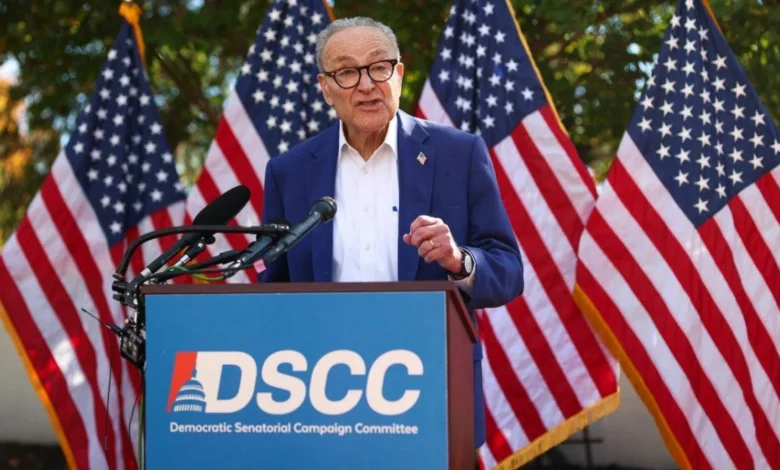
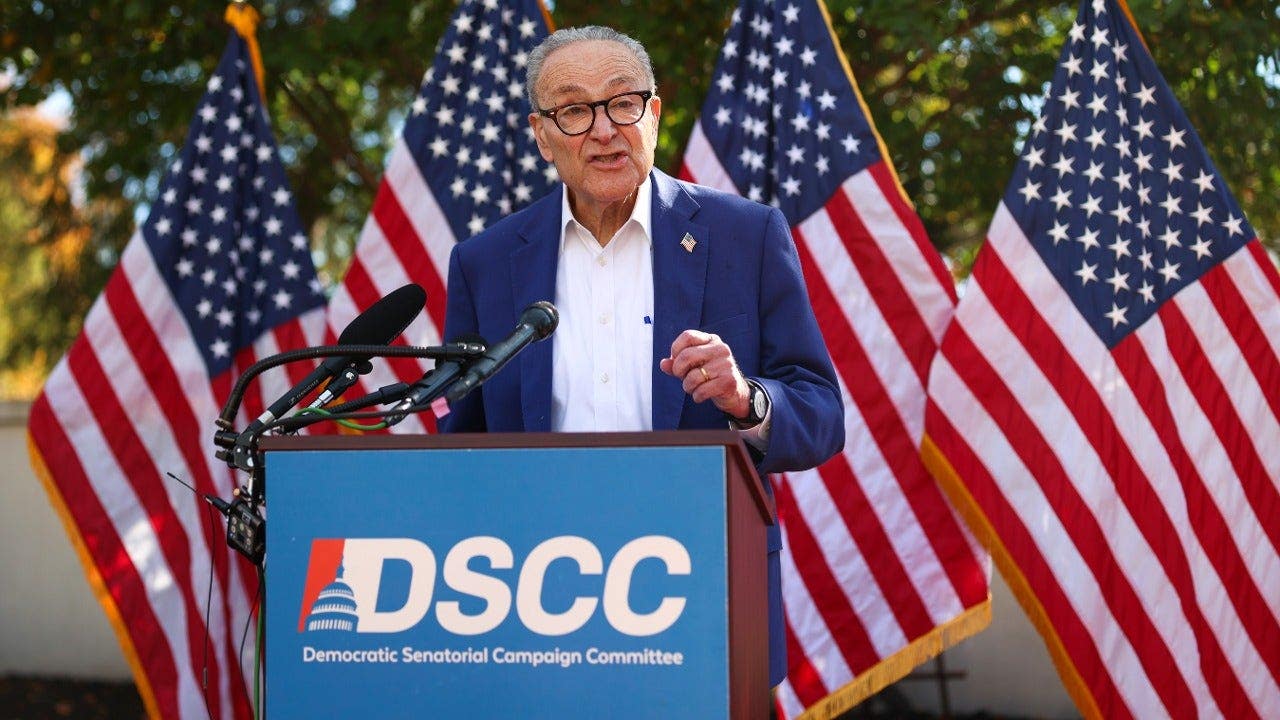
Conversely, the Democratic caucuses are facing their own internal rebellions despite their electoral triumphs. Senate Minority Leader Chuck Schumer, D-N.Y., has expressed absolute confidence in his return to the leadership post, telling reporters on Wednesday, "I’ll be re-elected as majority leader." Schumer needs approximately 29 votes—a simple majority of the expected Democratic caucus—in a secret ballot to secure the position.
However, incoming progressive senators have openly voiced reservations. Senator-elect Abdul El-Sayed of Michigan, who warned in June that he might withhold his support, reiterated his backing for Senator Chris Van Hollen of Maryland, who has not formally announced a leadership bid. Other incoming progressives, including Senator-elect Adam Hamilton of Kansas, Senator-elect Annie Andrews of South Carolina, and Senator-elect Troy Jackson of Maine, have similarly demurred or outright refused to back Schumer, pointing to an appetite among younger lawmakers for a generational shift in leadership.
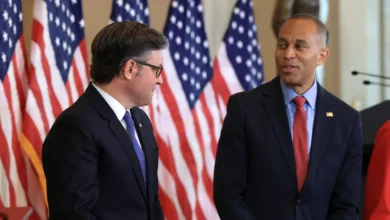
A parallel standoff is brewing in the House regarding Democratic Leader Hakeem Jeffries, D-N.Y., who is positioned to potentially become the first Black speaker in U.S. history should the Democratic majority hold firm. At least five members affiliated with the Democratic Socialists of America have pledged to withhold their votes for Jeffries unless leadership commits explicitly to their progressive platform. Because securing the speakership requires an absolute majority of the entire House—218 votes if all representatives-elect cast ballots—these defection threats carry significant weight, even though House Democrats are projected to control more than 260 seats once all outstanding races are certified.
The Legislative Agenda: Repeals, Subsidies, and Emerging Tech
With the leadership battles underway, congressional leaders must also formulate a cohesive legislative agenda to address the pocketbook issues that dominated the midterm campaigns. Unlike the historic 1994 "Contract with America" engineered by former House Speaker Newt Gingrich, the modern Democratic agenda is a mosaic of defensive maneuvers, economic adjustments, and regulatory interventions designed to check the executive branch.

Foremost among the Democrats’ priorities is rolling back key components of the previous Congress’s signature tax and economic legislation. Senator-elect Juliana Stratton, D-Ill., outlined the caucus’s immediate goals, vowing to target the tax cuts embedded in what critics dubbed "the one big ugly bill."
Additionally, Democrats intend to force votes on renewing expired Obamacare subsidies. The funding standoff over rising health insurance premiums was the central catalyst behind last year’s record-shattering, 43-day government shutdown. Schumer noted that the protracted fiscal battle successfully clarified the ideological divide between the two parties on healthcare access, making the restoration of these subsidies a non-negotiable priority for the incoming majority.
Technology policy has also rocketed to the forefront of the legislative debate. The rapid expansion of artificial intelligence and the immense power demands of data centers emerged as a surprise flashpoint during the midterms. Progressive lawmakers argue that the unchecked growth of AI threatens American employment and local energy grids.
"This revolt against data centers are just the initial tremors of a bigger AI earthquake that is upending American politics," said Representative Greg Casar, D-Texas, chairman of the Progressive Caucus. "And we have to be on the right side of this issue."
Foreign policy and trade will serve additional battlegrounds. Democrats plan to advance legislation aimed at curtailing military operations in Iran, potentially through restrictive funding riders. While the House previously approved three war powers resolutions and the Senate green-lighted one during the prior session, those measures failed to constrain executive action. Lawmakers now calculate that restricting military engagements could help stabilize global energy markets, thereby lowering gasoline and grocery prices for American consumers.

Trade policy remains another contentious arena. Congressional Republicans have largely stood by the tariff regimes implemented by President Trump, arguing that protectionist measures shield domestic manufacturing. However, Democrats believe the election results have eroded Republican lockstep loyalty to the administration’s trade strategy. Representative Greg Stanton, D-Ariz., called on the GOP to join forces with Democrats, stating, "This is the time for them to show the courage to end this irrational and self-defeating tariff regime that Trump has put in place."
The Mathematical Reality of Divided Government
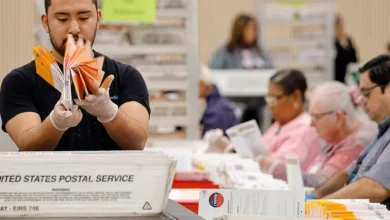
The ultimate viability of any legislative package hinges entirely on the raw math of Capitol Hill. When all remaining midterm races are officially called, Democrats are projected to command a historic majority in the House exceeding 260 seats, alongside a solid 54 Senate seats guaranteed, with contests in Alaska and Mississippi still uncalled.
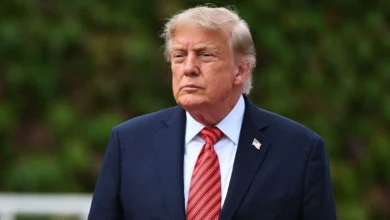
This numerical advantage creates a complex chess match with the White House. President Trump has signaled a willingness to negotiate with congressional Democrats while simultaneously preparing to wield his veto pen. To successfully override a presidential veto, the Constitution requires a two-thirds supermajority in both chambers: 290 votes in the House and 67 votes in the Senate.
While reaching 290 votes in the House appears attainable for Democrats if they maintain a caucus of over 260 members and peel away moderate or disillusioned Republicans opposed to administration policies, achieving 67 votes in the Senate presents a steeper climb. Even if Democrats secure 56 Senate seats, cobbling together 11 Republican defections will be difficult, particularly given the impending departure of prominent Republican critics of the president, including former Senate Majority Leader Mitch McConnell of Kentucky, and Senators John Cornyn of Texas, Bill Cassidy of Louisiana, and Thom Tillis of North Carolina.
As the 110th Congress approaches its January 3 convening date, the intersection of internal party friction, ambitious legislative mandates, and executive resistance ensures that Capitol Hill will remain the epicenter of American political volatility. The ability of congressional leaders to navigate these deep internal fractures will ultimately determine whether Washington can govern effectively or succumb to legislative gridlock.