Trump Taps Stephen Miller as White House Chief of Staff as Administration Prepares to Bypass Democratic-Led Congress

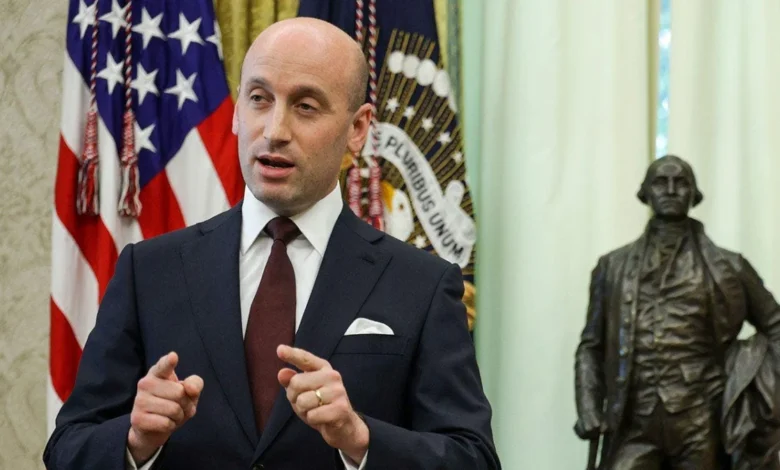
President Donald Trump has announced the appointment of Stephen Miller as White House chief of staff, succeeding Susie Wiles in a high-stakes transition that signals a strategic pivot for the administration. Wiles is set to transition to Trump’s broader political operation, while Miller—previously serving as deputy chief of staff for policy and homeland security adviser—steps into the West Wing’s top administrative post. The appointment comes at a pivotal political juncture, as the administration braces for a divided government following a challenging midterm election cycle that left Democrats poised to take control of both chambers of Congress in January.
The leadership shakeup underscores a hardening strategy within the executive branch. With a Democratic congressional majority all but guaranteed to create legislative gridlock and launch aggressive oversight investigations, Miller’s elevation highlights the administration’s heavy reliance on executive actions, aggressive administrative maneuvers, and expanded presidential authorities to advance its core policy agenda without Capitol Hill approval.
Strategic Planning for Executive Action
In the months leading up to the transition, Miller, alongside Office of Management and Budget (OMB) Director Russell Vought and a specialized team of White House attorneys, has quietly spearheaded an extensive initiative. Initiated as early as April, the task force was designed to identify, draft, and vet unilateral executive actions capable of implementing the president’s platform in the absence of new statutory legislation.
According to administration insiders familiar with the internal deliberations, these executive strategies target several foundational pillars of the Trump platform, including immigration enforcement, tariff adjustments, housing affordability initiatives, and discretionary federal spending allocations. The meticulous groundwork reflects a preemptive defense mechanism against the legislative roadblocks expected when the new Congress convenes.

The strategy of governing by executive fiat has long been a hallmark of modern American governance, but the Trump administration’s current blueprint pushes the boundaries of administrative reach. By leveraging existing statutory authorities and testing the limits of executive power, the White House aims to bypass legislative stalemates on critical issues such as border security and economic regulation.
The Judicial Anchor: Trump v. Slaughter and Presidential Power
A central pillar of the administration’s legal and tactical confidence stems from the Supreme Court’s landmark ruling in Trump v. Slaughter. Handed down in June, the decision represented a massive victory for the executive branch, fundamentally reshaping the balance of power between the presidency and independent federal agencies.
The Supreme Court ruled that the president possesses the constitutional authority to remove Rebecca Slaughter, a commissioner on the Federal Trade Commission (FTC), despite longstanding federal statutes designed to protect independent agency heads from at-will termination. Legal scholars note that the decision effectively dismantles traditional insulation mechanisms for numerous federal boards and commissions.
In recent media appearances, including a wide-ranging interview with CBS, President Trump explicitly cited the Slaughter ruling as a cornerstone of his second-term governance model. He asserted that the precedent endows the presidency with unprecedented operational latitude. "We won the Slaughter case and the Slaughter case gives the president tremendous powers that it never had before," Trump told CBS, signaling that the administration will not hesitate to restructure federal bureaucracy to align with executive directives.
Beyond administrative restructuring, Trump has repeatedly emphasized his readiness to use the presidential veto as a legislative shield. Describing himself frequently as "Mr. Veto," the president has made it clear that any bills passed by the incoming Democratic majority that conflict with his agenda will be summarily rejected, forcing lawmakers back to the negotiating table under terms dictated largely by the executive branch.

The Legislative Battlefield and Congressional Pushback
The transition of power on Capitol Hill promises a contentious final two years for the current presidential term. With Democratic lawmakers gaining subpoena power, committee gavels, and the authority to initiate wide-ranging congressional investigations, the relationship between the executive and legislative branches is expected to deteriorate rapidly.
The response from the administration has been uncompromising. "If crazed Democrats want to abuse their power and politicize their process of investigations, subpoenas, and destroying lives, they should be reminded that we still control the federal government and all of its powers," a senior White House official told Fox News Digital.
White House spokeswoman Lauren Bis echoed this sentiment, emphasizing the administration’s dual track of openness and resistance. "As the President has said, he’s willing to work with anyone to continue delivering victories for hardworking Americans," Bis stated. "If Democrats choose to pursue sham investigations and radical left policies, they are choosing to work against the American people."
Meanwhile, the appointment of Stephen Miller has elicited mixed reactions among congressional Republicans. While the conservative populist wing views Miller as a steadfast executor of the America First agenda, some traditional fiscal conservatives and institutionalists have expressed private reservations regarding the administration’s anticipated reliance on executive power.
Speaking anonymously to media outlets, one House Republican voiced long-standing anxieties regarding executive overreach. "I’ve been concerned about that for two years," the lawmaker remarked, pointing to the potential erosion of legislative primacy. The lawmaker also expressed unease that the administration might occasionally bypass traditional conservative orthodoxies through populist compromises with Democrats, further straining intra-party cohesion.

Another congressional insider bluntly summarized the prevailing outlook among executive branch loyalists: "They will continue governing without Congress, as they’ve been doing."
Implications of the Miller Appointment
Stephen Miller’s rise to chief of staff is viewed by supporters as a masterstroke of administrative alignment. Known primarily for his hardline stance on immigration and domestic security, Miller’s appointment signals that border security and interior enforcement will remain the undisputed focal points of the administration.
An administration official praised the selection, emphasizing Miller’s resonance with the political base. "A great pick," the official said. "He has the trust of millions of Americans who understand that reversing mass migration is the crisis of our time."
Beyond immigration, Miller has been instrumental in exploring novel regulatory and financial tactics to enforce administration policies, including controversial initiatives aimed at cutting off financial services to undocumented individuals—often referred to in administration circles as efforts to "debank" illegal immigrants.
Chronology of Key Events

- April: Stephen Miller, OMB Director Russell Vought, and White House lawyers begin confidential planning to identify executive actions executable without congressional approval.
- June: The Supreme Court issues its ruling in Trump v. Slaughter, affirming the president’s broad constitutional authority to remove independent agency commissioners.
- September–October: Midterm elections conclude with Democrats securing majorities in both the House and Senate, setting the stage for a divided government in the new year.
- November: President Trump announces the appointment of Stephen Miller as White House chief of staff, replacing Susie Wiles, who transitions to the administration’s political operations.
- December: Preparations accelerate for the transition of power, with the White House finalizing its administrative and executive action playbook ahead of January.
- January: Stephen Miller assumes his formal duties as chief of staff just as the new congressional term begins.
Broader Impact and Outlook for Governance
The elevation of Stephen Miller to the highest-ranking staff position in the West Wing marks a defining moment for the remainder of the presidential term. By cementing an operational philosophy centered on executive autonomy, the administration is preparing for trench warfare with a hostile legislative branch.
The coming months will test the resilience of the constitutional separation of powers. As the White House deploys executive actions on tariffs, immigration, and spending—backed by the expansive legal precedent of Trump v. Slaughter—the federal courts and Capitol Hill will undoubtedly serve as the primary arenas for resolving institutional disputes. For supporters, Miller represents an unyielding champion capable of executing a populist mandate despite political gridlock. For critics and congressional Democrats, his appointment confirms that the administration intends to push executive authority to its absolute limits.