Russell Brand Convicted of Rape and Sexual Assault in London Court, Faces Imminent Prison Sentence

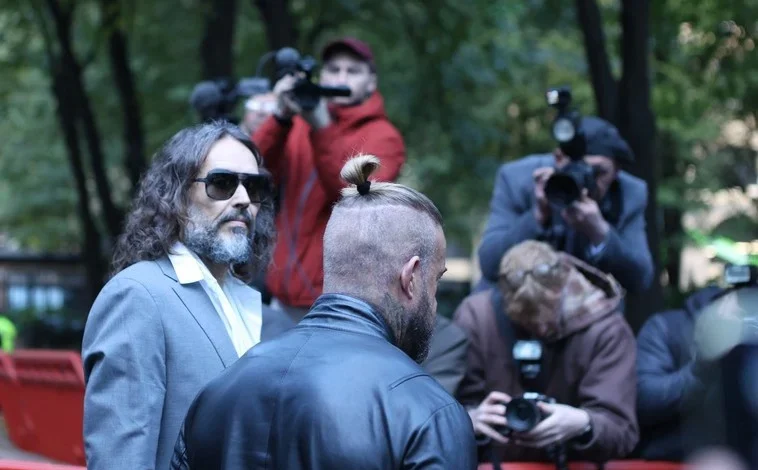
British actor, comedian, and podcaster Russell Brand was found guilty on Thursday at the Southwark Crown Court in London of multiple charges, including rape and sexual assault, following a high-profile four-week trial that closely scrutinized decades-old allegations of sexual misconduct. Brand, 51, was convicted of four criminal counts stemming from encounters with two women between 2004 and 2009.
The jury returned its verdicts after deliberating on a series of serious accusations brought forward by six different women. The trial encompassed a total of seven criminal charges alleged to have occurred between 1999 and 2009—a period during which Brand’s career as a prominent fixture in British television, radio, and Hollywood cinema was at its peak. While the jury acquitted Brand of three counts and remained undecided on others, the four convictions mark a catastrophic legal and public reckoning for the entertainer turned political commentator.
Immediately following the verdict, High Court of England and Wales Judge Joel Bennathan rejected an application for bail made by Brand’s defense counsel. The judge remanded Brand into custody, warning him that he should prepare for "a custodial sentence of some length." Brand is scheduled to return to the Southwark Crown Court on Monday to receive his formal sentence.
The Case and Trial Proceedings
The legal proceedings at Southwark Crown Court offered a meticulous examination of events spanning decades, relying heavily on historical testimony, contemporaneous communications, and the accounts of the complainants. Brand, who maintained his innocence throughout the proceedings, took the stand for approximately four hours during the trial. In his testimony, he adamantly denied all allegations of nonconsensual behavior, asserting that every sexual encounter in question was entirely consensual.
The jury ultimately convicted Brand of four specific charges. Among them was an incident from 2004 in London’s bustling Soho district, where Brand forcibly grabbed a woman’s breasts. Another major conviction involved the rape of a second woman inside Brand’s private residence in 2009. The Crown Prosecution Service argued that Brand leveraged his fame, social capital, and cultural influence to intimidate victims and deter them from coming forward sooner.
Despite the defense’s efforts to undermine the credibility of the complainants by highlighting the passage of time, the prosecution successfully demonstrated a consistent pattern of behavior. The testimonies painted a picture of an individual who operated with a sense of impunity, shielded by powerful media entities and industry stakeholders during the height of his commercial success in the 2000s.
A Chronology of the Investigations and Legal Battle
The legal reckoning faced by Russell Brand is the culmination of years of investigative journalism, institutional inquiries, and subsequent police investigations. Understanding the gravity of the Southwark Crown Court verdict requires examining the timeline of events that brought the entertainer from mainstream stardom to the defendant’s dock.
Late 1990s to Late 2000s: The Alleged Offenses
Between 1999 and 2009, Brand enjoyed a meteoric rise through the ranks of the British entertainment industry. Starting as an unorthodox stand-up comedian, he transitioned to hosting television programs for Channel 4 and the BBC, securing a flagship radio show on BBC Radio 2, and eventually crossing over into Hollywood films such as Forgetting Sarah Marshall and Get Him to the Greek. The criminal charges established during the trial date directly back to this era of peak media visibility.
2019 to 2022: Investigative Inquiries Begin
As societal attitudes toward workplace misconduct and sexual violence shifted in the wake of the #MeToo movement, investigative journalists in the United Kingdom began receiving confidential accounts from multiple women regarding Brand’s behavior during his tenure at major broadcasting networks. These preliminary findings prompted independent journalistic investigations by outlets such as Channel 4’s Dispatches and The Times of London.
September 2023: Public Allegations and Police Appeals
In September 2023, a joint media investigation broadcast detailed allegations of rape, sexual assault, and emotional abuse made by several women against Brand, spanning the years 2006 to 2013. Brand vehemently denied these claims via social media prior to their publication, characterizing them as a coordinated smear campaign designed to silence his independent political commentary and online media presence. Following the public broadcast, the Metropolitan Police Service in London issued a public appeal urging anyone with information regarding historical sexual offenses committed by Brand to come forward, leading to a surge in formal police reports.
Late 2023 to 2025: Formal Charges and Indictment
Following extensive inquiries by specialist detectives, the Crown Prosecution Service reviewed the accumulated evidence. In subsequent months, Brand was formally charged with multiple counts of rape, sexual assault, and indecent assault. The case was formally transferred to the Southwark Crown Court, where pre-trial hearings addressed legal challenges, disclosure issues, and the parameters of admissible evidence concerning historical offenses.
October 2026: The Southwark Crown Court Trial
The high-stakes criminal trial commenced in October 2026 before Judge Joel Bennathan. Over the course of four weeks, the prosecution presented testimonies from six women detailing seven distinct incidents. Brand’s defense team cross-examined the witnesses and presented Brand’s own testimony.
November 2026: Verdict and Remand
On Thursday, November 6, 2026, the jury delivered its verdict, finding Brand guilty of four counts of sexual offenses, including rape and sexual assault. Judge Bennathan denied bail, remanded Brand into custody, and scheduled sentencing for the following Monday. Meanwhile, legal authorities confirmed that Brand remains under active investigation regarding additional rape allegations made by two separate women, which could potentially result in future indictments.
Supporting Data and Context on Historical Sexual Assault Prosecution
The conviction of a major public figure for historical sex crimes highlights evolving legal standards and investigative methodologies within the United Kingdom’s criminal justice system. Prosecuting offenses that occurred decades in the past presents distinct systemic challenges, yet modern investigative frameworks have adapted to better support complainants.
According to data compiled by the United Kingdom’s Ministry of Justice and Her Majesty’s Inspectorate of Constabulary and Fire & Rescue Services (HMICFRS), historical sexual abuse cases face unique hurdles, including the degradation of physical evidence, faded memories, and difficulties in locating corroborating witnesses. Despite these obstacles, specialized units within British police forces have increasingly utilized digital forensics, preserved communication archives, and trauma-informed interviewing techniques to build robust cases.
Legal analysts note that the Crown Prosecution Service has placed heightened emphasis on prosecuting high-profile individuals accused of sexual misconduct, reflecting a broader institutional push to dismantle the perceived immunity historically afforded to celebrities and media executives. The willingness of multiple complainants to participate in a grueling four-week public trial underscores a significant shift in how victims assess the viability and safety of seeking institutional justice.
Official Responses and Institutional Implications
The verdict has triggered widespread reactions across the British media landscape, political circles, and advocacy groups dedicated to supporting survivors of sexual violence.
Advocacy organizations praised the bravery of the complainants who participated in the trial, emphasizing that convictions in high-profile historical cases send a vital message about accountability. Representatives from organizations supporting victims of rape and sexual assault stressed that the outcome demonstrates that no individual, regardless of their cultural status or media influence, is above the law.
Conversely, the verdict has prompted intense scrutiny of the institutions that facilitated Brand’s career during the period when the offenses took place. Major broadcasters, including the BBC and Channel 4, faced renewed questions regarding whether management ignored red flags, complaints, or rumors concerning Brand’s conduct while he was under contract. Media watchdogs and lawmakers have called for comprehensive internal reviews to ensure that modern safeguarding policies within creative industries adequately protect junior staff, contractors, and members of the public from predatory behavior by powerful talent.
Broader Impact and Legal Precedent
The conviction of Russell Brand carries significant implications for the intersection of celebrity culture, accountability, and the British legal system. As media landscapes fragment and high-profile figures migrate to independent digital platforms to cultivate loyal followings, traditional accountability mechanisms face new pressures.
Brand had successfully rebuilt a massive digital audience as a political commentator and wellness podcaster following his departure from mainstream television, often using his online channels to preemptively address legal scrutiny and rally his base against institutional critics. Legal scholars suggest that the Southwark Crown Court verdict reinforces the principle that digital autonomy and dedicated fan communities cannot shield an individual from the rigorous application of criminal law.
Furthermore, the case sets a notable precedent regarding the prosecution of historical offenses where the power dynamics between the accused and the complainants were heavily skewed. By securing convictions on multiple counts despite the passage of more than two decades, the prosecution demonstrated the viability of pursuing historical justice even in complex, highly contested celebrity trials.
As the legal proceedings draw to a close with Monday’s sentencing hearing, the immediate focus remains on the severity of the custodial sentence Judge Bennathan will impose. Beyond the courtroom, the cultural and institutional fallout from the trial is expected to reverberate across the British entertainment industry for years to come, forcing a permanent re-evaluation of how historical misconduct claims are handled, investigated, and prosecuted.