When Enforcement Overrides Welfare: The Transformation of America’s Migrant Shelter System

One morning this summer, a nine-year-old girl from
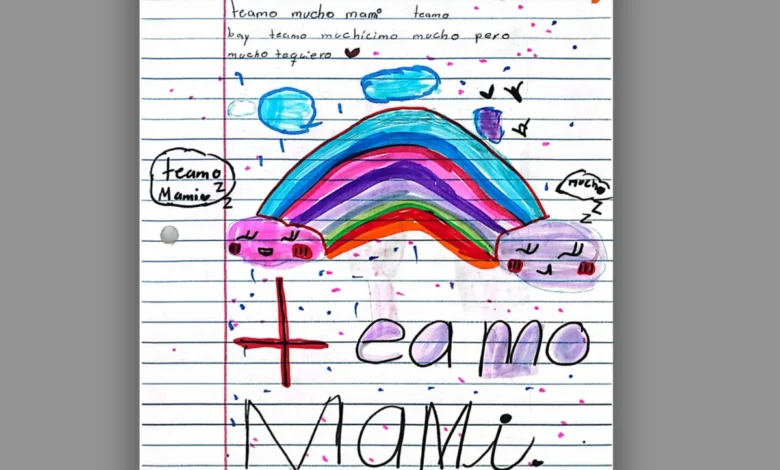
El Salvador sat at a table inside a Houston-area shelter for migrant children, carefully selecting colored markers to craft a letter to her mother. The child, identified in legal filings by her initials M.R., drew hearts, a rainbow, and a large declaration of love surrounded by pink and blue dots. In misspelled, unpunctuated Spanish, she wrote out her desperation: “I want to be with you already. I miss you a lot, mami I love you a lot mami I want to be with you.”
For more than seven months, M.R. had been held inside the government-run shelter system, a duration far exceeding the historical norms of the program. Her attorneys noted that she had grown increasingly distraught during her confinement, telling her mother over phone calls that she felt profoundly isolated, that she longed for a maternal embrace, and that the psychological toll was manifesting physically through frequent nosebleeds and somatic fears of infection.
Yet, as her mother, Carmen, diligently navigated the complex federal process to regain custody of her youngest daughter, federal immigration officials abruptly arrested her. Despite having a pending asylum case and no criminal record, Carmen was transferred to a secure detention facility in Louisiana. “Both of us are trapped,” Carmen said in an interview from detention. “She’s just a helpless little girl. The process shouldn’t be like this.” To protect against government retaliation for speaking out, KFF Health News utilized only the mother’s first name and the daughter’s initials.
A Systematic Shift in Federal Policy
As of September, the nine-year-old was one of nearly 1,900 children housed within shelters overseen by the Department of Health and Human Services’ Office of Refugee Resettlement (ORR). Established by Congress more than a decade ago, ORR was explicitly designed to look after unaccompanied minors in a child-welfare environment, legally separating their care and custody from the mechanics of immigration enforcement.
However, under the second Trump administration, the agency’s operational mandate has been fundamentally reconfigured to support broader deportation initiatives. Interviews with affected families, immigration attorneys, and child welfare advocates, alongside reviews of federal court documents, reveal a system transformed. Rather than prioritizing family reunification, the administration increasingly utilizes the shelter network to detain children and, in many cases, to apprehend family members who step forward to claim them. Many of the minors within the office’s care have fled extreme violence, extortion, or abuse in their home countries.
Jonathan White, a former federal health official who managed the ORR unaccompanied children program during part of President Donald Trump’s first term, explained that the agency historically prioritized the best interests of the child. Under federal law and established legal settlements, ORR is required to place minors in the “least restrictive setting” and release them “without unnecessary delay” to vetted parents or qualified family members.
Today, White—a licensed clinical social worker—argues that children in ORR custody have been rendered collateral damage in the pursuit of strict immigration goals. He asserts that the administration is systematically converting a humanitarian child welfare program into a de facto detention apparatus engineered to pressure families into abandoning their claims and leaving the country.
Chronology of a Journey and Detention
M.R.’s migration story began late last year when she and her older sister embarked on a perilous two-week journey to the United States. The trek culminated in wading across the Rio Grande in Texas, where they were apprehended by U.S. Border Patrol officers. The sisters were seeking refuge with their mother and an older brother who had fled El Salvador years prior and established a life in Tennessee.
The family’s history in El Salvador was marked by profound trauma. According to Carmen, gang members murdered M.R.’s father, an uncle, and a pregnant cousin, leaving the mother in constant terror for her surviving children’s safety. Compounding this trauma, M.R. later disclosed to a social worker that an elderly maternal grandmother in El Salvador had subjected her and her sister to physical abuse with a belt and open hands while acting as their caregiver.
Upon entering U.S. custody, M.R. and her sister expected a brief stay. Historically, children spent roughly a month in ORR facilities while federal officials conducted background checks on prospective sponsors. M.R.’s older brother, who arrived in the U.S. in 2024, reported being released from a shelter after just 11 days.
The operational reality shifted dramatically under the second Trump administration. Officials implemented stringent new vetting requirements for sponsors, installed a former law enforcement official to lead the resettlement office, and initiated a policy of arresting parents and caregivers who presented themselves to claim the children. Consequently, average shelter stays ballooned to nearly six months, with many children languishing for much longer despite meeting all formal sponsorship criteria.
Attorneys highlighted extreme instances of prolonged detention, such as a three-year-old child held in ORR custody for 300 days. In another case, a six-year-old girl remained institutionalized for seven months after her father was arrested during the vetting process and subsequently deported. When the child’s mother attended a scheduled appointment in March hoping to secure her release, she and her daughter were taken into custody together and transferred to the Dilley immigration family detention center in Texas—a facility repeatedly criticized by lawmakers and human rights organizations over alleged due process violations and inadequate conditions.
Legal and Medical Implications
Immigration advocates and legal experts argue that these policy shifts have dismantled essential safeguards for migrant minors while fast-tracking deportations. Due to disruptions in legal service delivery funded or permitted by the administration, unaccompanied children—including toddlers as young as one—are frequently forced to navigate complex immigration court hearings entirely unrepresented.

In some instances, federal officials have detained children after they have been successfully placed with sponsors in local communities. Furthermore, reports indicate that ORR facilities have offered financial incentives of at least $2,500 to minors, including M.R., to secure their agreement to "voluntary departure" and return to their countries of origin.
Medical professionals have raised alarms over the severe psychological toll of these prolonged detentions. Sural Shah, a pediatrician and member of the American Academy of Pediatrics who has visited multiple migrant child shelters, noted an alarming rise in mental health disorders among detained youth.
“It’s heartbreaking,” Shah said, pointing to symptoms of anxiety, depression, post-traumatic stress disorder, and developmental regression. Children frequently exhibit physical and behavioral distress, including enuresis (bed-wetting), chest pains, nighttime crying, and instances of self-harm or suicidal ideation. Mickey Donovan-Kaloust, legal services director at the Immigrant Defenders Law Center, confirmed that severely distressed children have attempted suicide while in federal custody.
Older teenagers report enduring profound emotional exhaustion from rigid institutional routines. A Venezuelan brother and sister who spent over a year in a Texas federal shelter described an environment of monotonous meals, repetitive academic instruction, and strict disciplinary measures for minor infractions like laughing loudly. When their father was detained during his sponsorship attempt, the teenage girl stopped eating for days and exhibited hallmark symptoms of PTSD, while her brother recalled feeling mentally and emotionally broken by the process.
The Breakdown of the Sponsorship and Reunification Process
For M.R., the promise of reunification turned into an administrative trap. In April, Carmen attended a scheduled DNA testing appointment at a Department of Homeland Security office, believing it to be the final administrative hurdle required to bring her daughter home. KFF Health News reviewed text message documentation confirming the appointment.
Prior to this meeting, Carmen had submitted tax and salary documents, provided fingerprints, and passed a home-visit evaluation by a social worker. Alongside her teenage children, she had prepared M.R.’s bedroom, decorating it with a Hello Kitty bedspread, Frozen curtains, and a projection lamp that cast stars and astronauts across the ceiling. They had shared video calls of the room with the nine-year-old, generating immense excitement.
Instead of facilitating reunification, immigration officers detained Carmen at the appointment without a warrant. ORR subsequently rejected her sponsorship application, citing the very detention that federal agents had engineered.
“She doesn’t have an understanding of why she’s stuck there and why the government would detain her mom instead of reuniting them,” said Alexa Sendukas, managing attorney with the Galveston-Houston Immigrant Representation Project. “Our government has completely failed them and has treated them in a way no human being should ever be treated.”
Official Responses and Defense of Policy
Federal agencies defended their operational posture regarding migrant children and sponsors. The Department of Homeland Security (DHS) stated in an unsigned email that "ICE does not separate families" and defended its efforts to locate roughly 450,000 unaccompanied minors who arrived during the prior administration. DHS asserted that many of these children were placed with unvetted individuals linked to criminal networks, smugglers, or sex traffickers—allegations that have faced public scrutiny and factual disputes from independent watchdogs. The agency cited 16 specific cases where sponsors were arrested for serious offenses, including drug trafficking, homicide, and the sexual assault of a minor.
John Fabbricatore, a senior adviser with the Office of Refugee Resettlement, maintained that the agency’s processing times and security protocols align with standard U.S. foster care practices. “ORR is not slow,” Fabbricatore stated. “We are just more careful, as we should be: children’s lives are at stake.”
An Ultimate, Painful Choice
Faced with a deportation order and the prospect of losing her youngest daughter to the long-term U.S. foster care system or enduring permanent separation, Carmen confronted an excruciating dilemma. Although official data indicates that general gang violence has declined in El Salvador, Carmen maintained that the specific individuals who murdered her family members and threatened her life remained active in her former neighborhood.
In July, after determining that she could no longer endure her daughter’s deteriorating psychological state in detention, Carmen requested a joint voluntary departure. Her daughter’s plea underscored the depth of her despair: “I don’t want to feel alone again like I did at Christmas, like I did on Mother’s Day, and for your birthday. All of those days I’ve felt so alone. I don’t want to go on like this.”
In mid-September, just three weeks shy of her tenth birthday and 281 days after she first crossed the U.S. border, M.R. was deported to El Salvador alongside her mother.
Meanwhile, her older siblings remain in Tennessee, continuing to navigate their individual asylum proceedings without their mother. Her brother, who dropped out of high school to help manage the family’s crisis, reflected on the ordeal: “I just hope other people understand that we’re all fighting for something. We were fighting to be together. It wasn’t a dream that hurt anyone.”