The Unseen Environmental Toll: Growing Concerns Over Data Center Wastewater Contamination and Regulatory Oversight

The rapid proliferation of artificial intelligence across the American landscape has catalyzed a massive construction boom, with hyperscale data centers emerging as the physical backbone of the digital revolution. However, as these facilities spread across states like Wyoming, Virginia, and Georgia, a secondary, often overlooked crisis has emerged: the management of the vast quantities of water required to sustain them. A recent incident in Cheyenne, Wyoming, where over 800,000 gallons of water discharged from a Meta data center facility were found to contain the rare and potentially hazardous bacterium Cupriavidus gilardii, has thrust the issue of data center wastewater into the national spotlight, prompting questions about environmental safety, corporate accountability, and the limits of existing regulatory frameworks.
The Cheyenne Incident: A Case Study in Oversight
The discovery of Cupriavidus gilardii in a routine water quality test conducted by Cheyenne officials earlier this year served as a jarring reminder of the industrial footprint left by Big Tech. The water in question, ejected by a contractor for the Meta data center, was part of a "fill and flush" operation designed to clear debris from the facility’s extensive piping infrastructure. While the water was never intended for human consumption, its discharge into local sewer systems—and the potential for airborne exposure through irrigation evaporation—raised immediate red flags for public health officials.
The timeline of the response illustrates the tension between rapid industrial development and municipal caution. Following the initial discovery, the Cheyenne Board of Public Utilities (BOPU) spent weeks assessing the potential risks. By July 2026, the city made the decisive move to halt all wastewater intake from the contractor, Goat Systems, citing a lack of transparency and a fundamental need for risk mitigation. Frank Strong, the water resources manager for the board, noted that the decision was rooted in a “sense of caution,” emphasizing that in the absence of comprehensive data, the city could not risk the health of its residents.
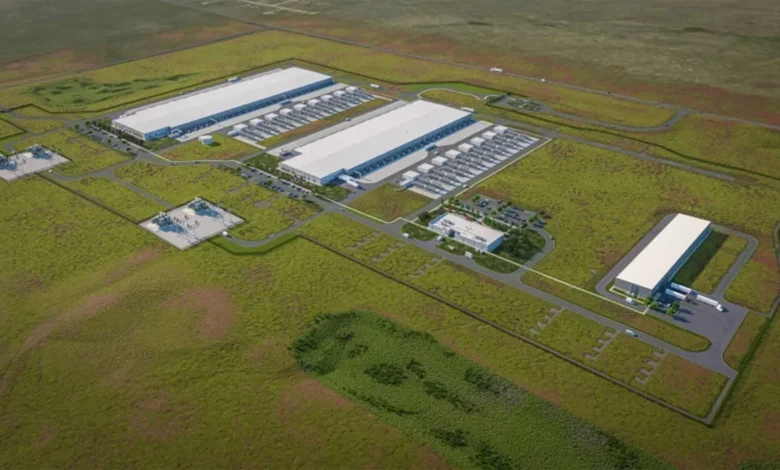
Meta, which is currently overseeing an $800 million, 960-acre campus in the area, has consistently pushed back against these findings. The company maintains that its own independent testing—conducted by third-party contractors—revealed no evidence of the bacterium, casting doubt on the validity of the city’s diagnostic procedures. A company spokesperson reiterated that Meta remains committed to being a "good neighbor," pointing to the city’s own admission that there was no immediate impact on the public water supply or the broader environment.
The Broader Landscape: Water Consumption and Toxic Discharge
The Cheyenne controversy is far from an isolated event; it is a manifestation of a growing pattern of friction between utility providers and the data center industry. While the industry frequently touts its "closed-loop" cooling systems as a marvel of efficiency, these systems require consistent chemical treatment to prevent scaling, mineral buildup, and microbial growth. When this water is eventually discharged, it often carries a chemical payload that includes heavy metals and Per- and polyfluoroalkyl substances (PFAS), commonly known as "forever chemicals."
Data centers are notoriously thirsty. A single mid-sized facility can consume upwards of 300,000 gallons of water daily, a volume that places significant strain on local aquifers and municipal water systems. Critics argue that as these facilities proliferate, they are effectively turning public water infrastructure into industrial waste disposal sites.
The scope of this issue is immense. According to the Waterkeeper Alliance, an international network of environmental advocates, at least 55 affiliated groups across the United States are currently monitoring data center activities, with roughly 80 percent of those efforts focused on the potential leaching of pollutants into local waterways. The legal ramifications are already beginning to surface:
- Georgia: The Flint Riverkeeper organization has initiated legal action against a QTS data center in Fayetteville, alleging the illegal discharge of heavy metals and sediment into the Flint River over a two-year period.
- Virginia: State authorities have launched enforcement actions against multiple data center operators for violations regarding wastewater discharge and wetland impact permits.
- West Virginia: Local residents have reported multiple instances of flooding caused by stormwater runoff from incomplete construction sites, highlighting the infrastructure failures that can accompany rapid development.
The Regulatory Void and Information Asymmetry
A recurring theme in the discourse surrounding data centers is the significant "void of information" regarding what exactly is contained in their effluent. For local municipalities, the challenge lies in obtaining transparent data from private companies that are often shielded by non-disclosure agreements or proprietary trade secrets.
This lack of transparency has led to a surge in public records litigation. In Wisconsin, environmental groups have sued the city of Racine to compel the release of detailed water usage data for a $3.3 billion Microsoft facility. Similarly, in Oregon, a prior legal battle between the city of The Dalles and local media regarding Google’s water consumption underscored the lengths to which local governments have gone to protect corporate privacy at the expense of public transparency.
"We need to know what is in this wastewater," says Chris Manganiello, water policy director at the Chattahoochee Riverkeeper in Georgia. As new data centers continue to target the Chattahoochee River as a primary water source, the anxiety among local residents is palpable. Without federal or state mandates requiring public disclosure of the chemical makeup of industrial wastewater from these sites, communities are forced to operate in the dark, relying on under-resourced local utilities to play catch-up with the industry’s rapid expansion.
Political Polarization and the "Golden Goose"
The controversy has not escaped the notice of national politics, though reactions have been notably fragmented. In Wyoming, Representative Harriet Hageman, a staunch conservative, has taken an adversarial stance, writing directly to Meta CEO Mark Zuckerberg to demand accountability. Hageman’s intervention highlights a shift among some Republicans who are increasingly viewing data centers as a potential liability rather than an economic boon, particularly when they threaten local resource security.
Conversely, the national administration has maintained a markedly different posture. President Trump has repeatedly labeled the AI infrastructure sector a "golden goose," prioritizing job creation and rapid economic growth above concerns regarding local environmental impact. His administration’s efforts to streamline data center approvals and limit the public’s ability to comment on environmental impact assessments have sparked intense criticism from environmental groups who argue that the policy effectively prioritizes "letting data reign" over the long-term sustainability of the nation’s water resources.
Analysis: The Future of Industrial Water Policy
The intersection of AI infrastructure and environmental health is poised to be one of the most critical policy debates of the coming decade. As the computational demands of AI continue to grow, the pressure on water resources will only intensify. The current "wait-and-see" approach to industrial wastewater management is increasingly untenable, as evidenced by the growing number of lawsuits and municipal bans.
For the data center industry, the path forward requires a shift from reactive PR campaigns to proactive transparency. This includes implementing real-time water quality monitoring, adopting more sustainable cooling technologies that rely less on water, and engaging in transparent, collaborative planning with the communities they occupy.
For policymakers, the challenge is to bridge the gap between economic development and environmental stewardship. The reliance on legacy wastewater regulations, which were often designed for traditional manufacturing rather than the unique chemical and thermal requirements of massive server farms, leaves significant room for error. A move toward modernized, sector-specific wastewater standards—combined with mandatory, transparent reporting—is likely the only way to mitigate the rising public backlash.
As it stands, the "cancerous" spread of facilities described by critics like Yvonne Taylor of the Seneca Lake Guardian is a direct reflection of a system that has historically favored speed over safety. Unless there is a fundamental realignment of incentives, the incident in Cheyenne, Wyoming, may prove to be a precursor to a wider, more systemic crisis in American water security. The digital future is being built on a physical foundation; if that foundation is perceived as a threat to the basic human right to clean water, the political and social cost to the tech industry may ultimately far outweigh the economic gains of the AI boom.