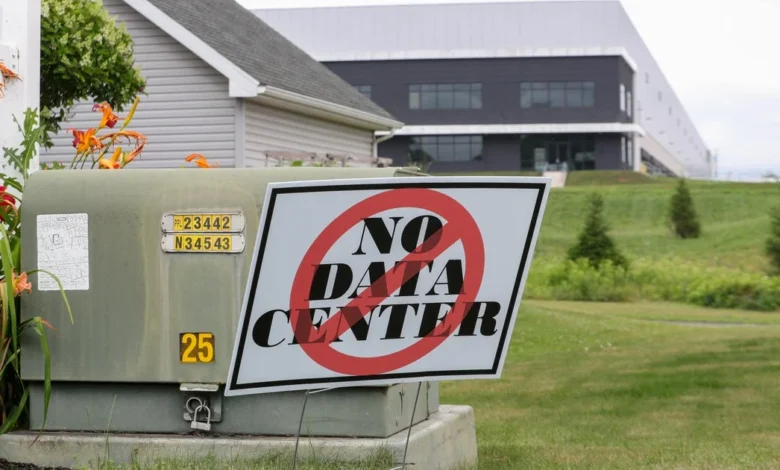
The results of the 2026 midterm elections have sent a shockwave through the technology sector, signaling a decisive shift in how the United States approaches the massive infrastructure expansion required to power the artificial intelligence revolution. As political power shifts in key states, the once-unhindered construction of high-capacity data centers is confronting a new era of regulatory scrutiny, local opposition, and administrative moratoriums. Analysts and industry experts are now recalibrating their projections, suggesting that the "gold rush" era of AI infrastructure may be entering a cooling-off period characterized by significantly longer development timelines and higher compliance costs.
The Changing Political Landscape for Infrastructure
The midterm outcomes have elevated a cohort of political leaders who campaigned on a platform of environmental stewardship, grid stability, and community preservation—factors that frequently clash with the rapid, resource-intensive nature of hyperscale data centers. According to an extensive analysis conducted by the political research firm Redbud Consulting, the 2026 election cycle saw voters in states including California, Illinois, Maine, Ohio, and New York approve 37 distinct ballot measures designed to restrict or impose stringent conditions on new data center facilities.
This wave of grassroots resistance is no longer confined to local zoning disputes. It has translated into state-level policy shifts. Perhaps the most consequential developments occurred in Texas and Georgia, two states that have historically functioned as the bedrock of American data center capacity. In Texas, the victory of Democrat Gina Hinojosa over incumbent Republican Greg Abbott has created immediate uncertainty for developers. During her campaign, Hinojosa advocated for a temporary moratorium on new construction, citing concerns over the strain placed on the state’s electrical grid and the allocation of water resources.
The Texas Pivot: A Case Study in Policy Reversal
Texas represents roughly 25% to 30% of the projected data center capacity expected to come online by 2030. The state’s reputation as an energy-abundant, business-friendly environment made it a primary target for tech giants looking to house their server farms. However, the transition in the governor’s mansion introduces a significant administrative hurdle.
Gordon Johnson, CEO and founder of GLJ Research, notes that the infrastructure for a slowdown is already in place. Because Governor Abbott had previously implemented a pause on certain approvals, the mechanism for freezing development is already operational. Governor-elect Hinojosa effectively inherits an "off" switch that she can maintain without needing to pass new, potentially contentious legislation. Analysts estimate that this change in leadership could stall as many as 13 gigawatts of planned power capacity, a figure that would represent a massive contraction in the national AI buildout pipeline.
Georgia and the Legislative Domino Effect
The implications extend to the Southeast, where Georgia’s gubernatorial race saw Keisha Lance Bottoms secure a victory centered on a promise of re-evaluating the state’s approach to infrastructure growth. Georgia, currently the third-largest market for data centers in the U.S., has long utilized tax incentives to attract tech investment.
Governor-elect Bottoms has signaled her intent to utilize executive authority to pause new construction while her administration conducts a top-to-bottom review of existing tax agreements. By targeting the financial incentives that have spurred such rapid development, the incoming administration is signaling a departure from the "growth at any cost" model. The expectation among political observers is that other states with high data center density will closely monitor the Georgia model, potentially triggering a wider regional trend of administrative oversight.
The AI-Energy Nexus: A Clash of Priorities
The fundamental tension driving this political backlash is the collision between the AI industry’s exponential energy demands and the aging electrical infrastructure of the United States. Data centers are notoriously power-hungry, requiring consistent, high-voltage energy supplies that can stress local grids, particularly in regions already facing climate-related energy volatility.
A CBS News poll conducted earlier this summer revealed that public sentiment is decisively against the proliferation of these facilities, with opposition outpacing support by a margin of more than 2-to-1. This polling data mirrors the legislative outcomes seen in the midterms. When local residents perceive that their utility bills are rising to subsidize the infrastructure needed for AI—or that their regional power reliability is being compromised—the political cost of supporting data center construction becomes prohibitive for incumbents.
Economic Implications: Cooling, Not Crashing
While the technology sector is bracing for headwinds, Wall Street analysts caution against overstating the potential for a complete economic collapse within the AI industry. Stephen Dover, chief market strategist at Franklin Templeton, suggests that a controlled slowdown might actually be a healthy correction for a sector that has been prone to speculative overinvestment.
"It is entirely possible to argue that the AI trade and the associated data center buildout were becoming overheated," Dover noted in a post-election analysis. "A tempering of unbridled expansion might reduce the risk of malinvestment—projects that may not have yielded a sufficient return on capital in the long run."
From a macroeconomic perspective, the impact is expected to be more about timing than trajectory. Analysts at Oxford Economics suggest that while the shift to a more restrictive regulatory stance will inevitably stretch the timelines for future projects, it is unlikely to negate the long-term capital spending committed to AI research and development. The economy will likely adapt to a "slower and steadier" rate of infrastructure deployment, which may prioritize efficiency and grid-integrated technology over the rapid, large-scale builds that characterized the 2023–2025 period.
Chronology of the 2026 Regulatory Shift
- Early 2026: Public opposition to data center construction reaches a peak, as evidenced by local zoning battles in the Midwest and Pacific Northwest.
- Summer 2026: CBS News polling confirms a significant public disapproval rating regarding local data center builds, providing political ammunition for candidates advocating for stricter regulations.
- November 3, 2026: Midterm elections take place, resulting in 37 approved ballot measures nationwide that restrict or regulate data center development.
- November 4, 2026: Industry analysts begin reporting that the election outcomes have fundamentally altered the investment landscape for AI infrastructure, with a specific focus on the potential for moratoriums in Texas and Georgia.
- Post-Election Outlook: Incoming state administrations begin drafting executive orders to pause permit processing, signaling a transition toward a more cautious, high-regulation environment for the remainder of the decade.
Looking Toward the Future
The 2026 midterm results serve as a clear indicator that the "AI Revolution" is no longer operating in a vacuum. As the industry matures, it must reconcile its massive physical footprint with the political and environmental realities of the communities in which it operates. The current trend toward regulation is a natural byproduct of the industry’s rapid, sometimes disruptive, growth.
For investors, the mandate is clear: the era of assuming automatic approval for data center development is over. Future project success will depend not only on technical and financial viability but on the ability of developers to engage in meaningful community partnership and to align their infrastructure needs with the broader goals of regional grid stability. While this may result in a slower rollout of AI hardware, it may ultimately produce a more resilient and sustainable foundation for the next generation of digital infrastructure. As the political dust settles, the focus will likely shift toward "smart growth" policies—where data centers are incentivized to invest in renewable microgrids and community-beneficial infrastructure, rather than simply drawing from the existing public pool of resources.