NASA’s Neil Gehrels Swift Observatory Reenters Earth’s Atmosphere Following Historic Two-Decade Mission

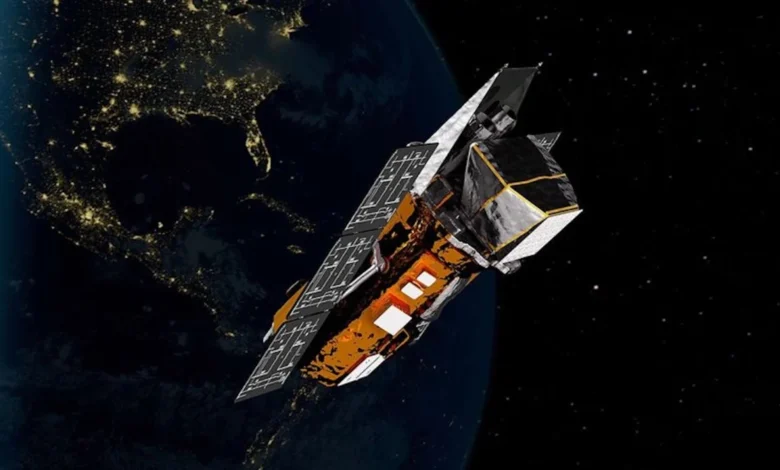
The fiery descent of NASA’s venerable Neil Gehrels Swift Observatory marks the conclusion of one of the most productive and enduring missions in the history of space-based astrophysics. Weighing approximately 2,500 pounds, the orbital telescope succumbed to Earth’s gravitational pull, completing a catastrophic atmospheric reentry monitored closely by the United States Space Force. Originally designed as a short-term reconnaissance tool to study some of the most violent phenomena in the universe, Swift far outlived its initial engineering estimates, operating continuously for nearly 22 years. While the satellite’s physical journey has ended in the upper atmosphere, the unprecedented wealth of multiwavelength data it collected guarantees that its scientific legacy will endure for generations.
A Legacy Forged in the Study of Cosmic Explosions
Launched in November 2004, the Swift Observatory was conceived with a singular, highly ambitious purpose: to solve the enduring mystery of gamma-ray bursts (GRBs). These sudden, highly energetic flashes of gamma radiation are the most luminous electromagnetic events known to occur in the universe, typically associated with the catastrophic collapse of massive stars or the merger of neutron stars. Before Swift, detecting and localizing these fleeting cosmic flares was a monumental challenge for astronomers, as they often faded from view within seconds or minutes.
Swift revolutionized this field of study through its rapid-response capability. Equipped with an onboard Burst Alert Telescope, an X-Ray Telescope, and an Ultraviolet/Optical Telescope, the observatory was engineered to autonomously detect a GRB, calculate its coordinates within seconds, and pivot its primary instruments toward the source before the afterglow dissipated. This automated agility allowed the scientific community to capture critical data regarding the birth of black holes and the lifecycle of dying stars.
Throughout its nearly 22-year career, Swift vastly expanded its observational portfolio beyond gamma-ray bursts. The observatory cataloged more than 2,000 GRBs, monitored over 1,400 supernovae, and captured rare tidal disruption events—dramatic astronomical occurrences in which unwary stars pass too close to supermassive black holes and are systematically devoured. In its final operational phases, the telescope even proved instrumental in tracking comet 3I/ATLAS, providing vital data on only the third interstellar object ever confirmed to pass through our solar system.
Chronology of the Mission: From Conception to Final Orbit
The historical trajectory of the Swift Observatory is characterized by repeated instances of resilience, technological triumph, and ultimately, an unyielding natural law of orbital decay.
In the late 1990s and early 2000s, NASA, alongside international partners in the United Kingdom and Italy, developed the Swift mission to address critical gaps in high-energy astrophysics. The satellite was launched successfully in November 2004 from Cape Canaveral Air Force Station on a Delta II rocket, entering low-Earth orbit with a baseline mission plan spanning just two years.
As the spacecraft consistently exceeded its performance benchmarks, mission planners repeatedly extended its operational lifespan. Year after year, Swift continued its vigil, outliving numerous contemporary space missions and adapting to emerging fields of multi-messenger astronomy.
By mid-2025, however, the inexorable drag of Earth’s upper atmosphere began to lower the satellite’s orbital altitude. Recognizing the impending end of the mission, NASA explored innovative methods to preserve the asset. In July 2026, the space agency partnered with private aerospace firm Katalyst in an ambitious rescue attempt. A specially designed robotic servicing satellite was dispatched to dock with Swift and propel it into a higher, safer orbit. Unfortunately, an unexpected technical malfunction crippled the robotic vehicle en route, rendering the rescue impossible and forcing mission engineers to abandon the intervention.
Despite the failed rescue, the telescope’s operators maintained its scientific schedule. Astronomers continued to extract valuable observations from Swift’s instruments well into the autumn of 2026, bidding a gradual farewell to the hardworking observatory before final decommissioning procedures were initiated in October. By early November, U.S. Space Force tracking data confirmed that the spacecraft’s orbital decay had reached its final stages, culminating in atmospheric entry.
Unprecedented Scientific Productivity and Data Archives
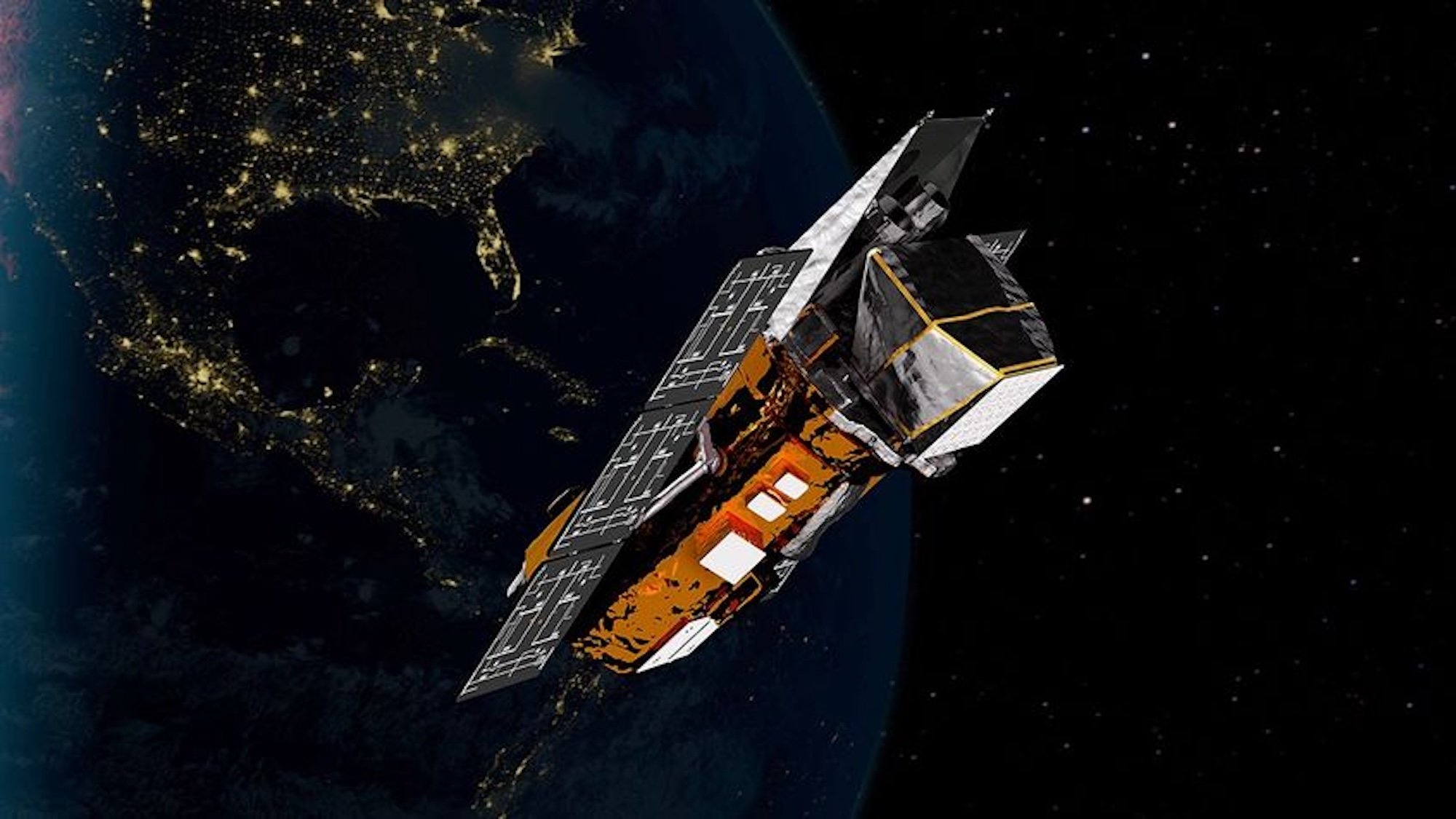
The quantitative impact of the Swift Observatory on modern astrophysics is staggering. Over the course of its mission, data gathered by the telescope contributed to approximately 7,000 published peer-reviewed scientific papers. This productivity rate averages out to roughly six new academic studies published every single week for nearly 22 years—a testament to the versatility and reliability of the spacecraft’s instrument suite.
Astrophysicists emphasize that the termination of the physical mission does not signify an end to Swift’s scientific contributions. Because the observatory recorded data across multiple wavelengths simultaneously—spanning gamma rays, X-rays, ultraviolet light, and optical spectrums—it has left behind an exhaustive, high-resolution digital archive.
"Swift leaves us with an extraordinary archive of multiwavelength observations that will fuel new discoveries for decades more," noted Shawn Domagal-Goldman, director of NASA’s Astrophysics Division, during mission closure evaluations.
Researchers anticipate that data-mining techniques, machine learning algorithms, and future generations of astrophysicists will continue to extract novel insights from the Swift archive, utilizing its historical baseline to contextualize new discoveries made by contemporary instruments like the James Webb Space Telescope and the Vera C. Rubin Observatory.
The Physics of Low-Earth Orbital Decay
The reentry of the Swift Observatory underscores the fundamental physical reality governing all satellites operating in low-Earth orbit (LEO). At altitudes ranging from a few hundred to a couple of thousand kilometers, tenuous traces of Earth’s atmosphere still linger. While imperceptible to human senses, these residual gas molecules exert a continuous, minute drag force on orbiting spacecraft.
Over extended periods, this atmospheric drag robs satellites of their orbital velocity, causing them to gradually spiral downward. Without propulsion systems capable of periodically boosting the spacecraft back to higher altitudes—and with onboard fuel reserves eventually exhausted—reentry becomes inevitable.
John Nousek, a Pennsylvania State University astronomer and the lead for Swift’s control operations, contextualized the event with philosophical realism during interviews with media outlets. "We’ve known this day would come since before Swift was launched," Nousek remarked. "At least in low-Earth orbit, what goes up must come down. And that end is catastrophic."
For spacecraft of Swift’s size and composition, atmospheric friction generates intense heat during descent, typically causing the main body and structural components to disintegrate and vaporize well before reaching the Earth’s surface. Aerospace monitoring agencies, including the U.S. Space Force, maintain rigorous tracking protocols for reentering hardware to ensure public safety and verify that any surviving fragments pose a negligible risk.
Broader Implications for Future Astrophysics Missions
The conclusion of the Swift mission closes a vital chapter in transient astronomy—the study of objects in the universe that change rapidly or unpredictably. As the astronomical community reflects on Swift’s enduring legacy, planning is already underway for next-generation facilities designed to build upon its framework.
Future space-based observatories intend to incorporate even faster automated response mechanisms, wider fields of view, and deeper sensitivities to capture transient cosmic events in real time. However, engineers and mission architects frequently cite Swift as the gold standard for operational longevity and return on investment in medium-class Explorer missions.
As the remnants of the Neil Gehrels Swift Observatory disperse harmlessly across the upper atmosphere, the scientific community is left to celebrate a mission that transformed transient astrophysics from a game of chance into a precise, systematic science. The data streams have ceased, but the echoes of Swift’s celestial gaze will resonate through astrophysical literature for generations to come.