The Remarkable Journey of an Essex Engineer Who Built His Own Four-Seater Aircraft During Lockdown

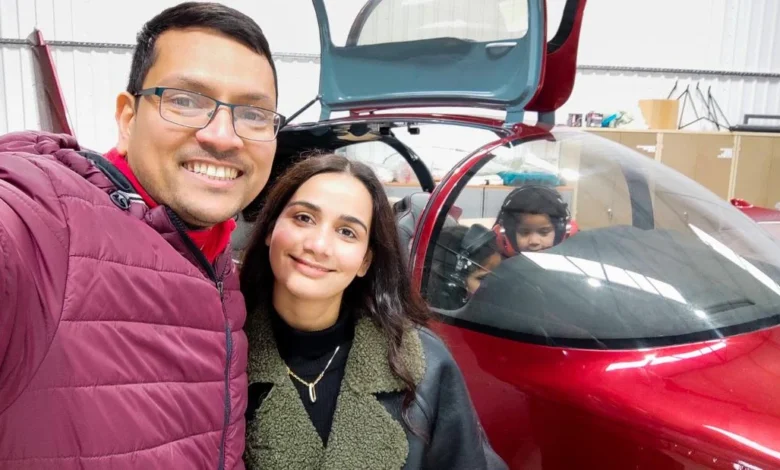
When Ashok Aliseril Thamarakshan, a mechanical engineer based in Essex, England, moved near a local airfield over a decade ago, the distant hum of light aircraft served as little more than background noise. It was not until his wife, Abhilasha, gifted him a 30-minute flight experience for his birthday several years later that the seed of aviation was truly planted. That brief, exhilarating flight to the Isle of Wight transformed a casual curiosity into a profound passion for flight, setting the stage for one of the most ambitious home-engineering projects of the pandemic era.
By 2019, Aliseril had earned his private pilot’s license. However, as he began hiring aircraft for weekend trips with his growing family, he encountered a practical hurdle: the standard rental fleet, largely comprised of two-seater planes, was no longer sufficient for his needs. The search for a suitable four-seater aircraft led him to a realization that many hobbyist pilots face—the market for older, used aircraft was prohibitively expensive, and the prospect of flying his young family in decades-old machinery left him with lingering safety concerns.
Instead of compromising, Aliseril made a life-changing decision: he would build his own.
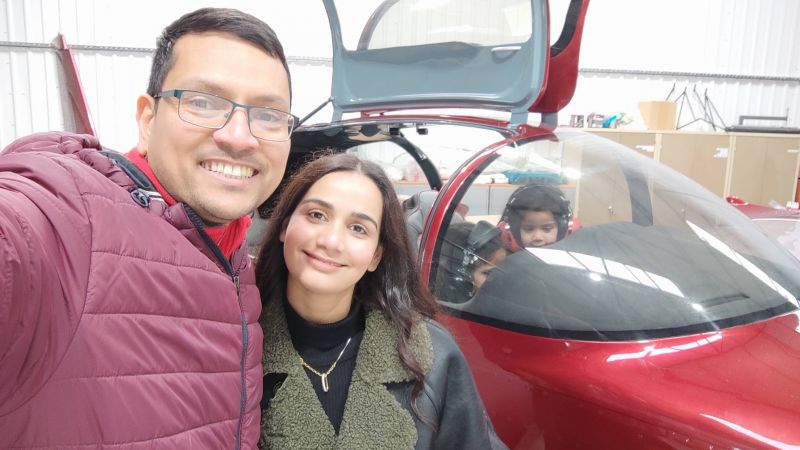
The Genesis of a Lockdown Project
The decision to construct an aircraft from a kit is not one taken lightly. It requires thousands of hours of labor, a high level of technical precision, and a deep understanding of aeronautical regulations. Aliseril’s background as a mechanical engineer provided a foundational advantage, but he credits his experience with home improvement projects as being equally vital. "These aircraft kits are designed for any amateur to build, provided you are a bit hands-on and you have experience working with some specialist tools," he noted.
In January 2020, shortly before global travel restrictions were implemented, Aliseril traveled to Johannesburg, South Africa, to visit the factory of Sling Aircraft. After testing the Sling TSi, a high-performance four-seater kit aircraft, he was convinced. He ordered the first shipment of parts, expecting to build the plane in a local workshop with the help of colleagues. When the kits arrived in the UK, however, the country was in the grip of a national lockdown. With his social circle restricted and commercial hangars closed, Aliseril pivoted, constructing a custom shed in his back garden to serve as his primary assembly line.
A Rigorous Path to Certification
The construction of an aircraft in the UK is a highly regulated endeavor. The Light Aircraft Association (LAA) serves as the primary governing body for amateur-built aircraft, operating under the oversight of the UK Civil Aviation Authority (CAA). Unlike mass-produced commercial aircraft, which must meet strict type-certification standards, home-built planes fall under an "experimental" or "permit-to-fly" category.
For Aliseril, this meant that the project was not merely a construction job but a series of rigorous inspections. Over the course of 18 months, LAA inspectors conducted approximately 12 formal sign-offs. Each phase—from the tail and wings to the fuselage and engine installation—had to meet exacting safety standards before he could proceed to the next stage. This regulatory framework ensures that even non-commercial, hobbyist-built planes are structurally sound and airworthy.

Chronology of the Build
The project followed a disciplined, modular timeline:
- January 2020: Test flight in South Africa; initial kit order placed.
- April 2020: Construction begins in the Essex garden shed following the lifting of initial severe movement restrictions.
- Summer 2020: The tail and wing sections are completed.
- October 2020: Construction of the fuselage commences.
- Late 2021: Components are transported to a hangar near Cambridge for final assembly and engine integration.
- January 2022: The aircraft, registered as G-Diya in honor of his youngest daughter, is cleared for its inaugural test flight.
- May 2022: Final permit to fly is issued by the CAA.
The emotional weight of the project was significant. For the duration of the build, the machine was referred to as a "project." The psychological transition from "project" to "aircraft" occurred only after the maiden flight, a moment Aliseril describes as a profound relief. The test pilot, pushing the machine to its design limits to ensure it could handle rigorous maneuvers, eventually returned to the tarmac with a thumbs-up, validating 18 months of meticulous labor.
Economic and Practical Implications of Home-Built Aviation
The financial barrier to entry for private aviation is notoriously high. To mitigate costs, Aliseril adopted a shared-ownership model. By splitting the aircraft with three other pilots, the financial burden became comparable to the cost of maintaining a luxury SUV. Furthermore, the efficiency of the modern Rotax engine used in the Sling TSi offers impressive performance. Consuming roughly 20 liters of unleaded fuel per hour, the operating costs are surprisingly competitive with long-distance road travel, while providing drastically reduced transit times.
The total cost of the build, including the initial kit, avionics, engine, and propeller, reached approximately £180,000 (roughly $203,000). While this represents a substantial investment, it provided the family with a bespoke, reliable machine that has since logged over 300 flight hours. From short weekend trips to the Isle of Wight to a landmark international flight to Bergerac, France, and even journeys as far north as Norway, G-Diya has proven the viability of the home-built model for personal travel.

Broader Impact and the Future of General Aviation
Aliseril’s experience highlights a growing trend in general aviation: the rise of the "prosumer" pilot. By bypassing the traditional route of buying used, legacy aircraft, individuals are gaining access to modern avionics, improved fuel efficiency, and a deeper understanding of their machine’s maintenance requirements.
Industry analysts point out that the success of projects like Aliseril’s could encourage a new generation of engineers and aviation enthusiasts to enter the space. The collaborative nature of these projects—which often involve family members in assembly tasks and foster community among local pilots—serves to demystify the complexities of aviation. Aliseril has become an advocate for this path, frequently documenting the family’s travels on social media to demonstrate that the sky is more accessible than many assume.
However, the path is not without challenges. The requirement for specialized tools, the necessity of having a space for assembly, and the long-term commitment to mandatory, recurring inspections act as filters that ensure only the most dedicated builders complete their aircraft.
A Lasting Legacy
As of 2024, the aircraft remains a focal point of the family’s life. The construction of a dedicated hangar at an Essex airfield in 2023 further cemented the project’s permanence. What began as a birthday gift has evolved into a masterclass in engineering, project management, and perseverance.

The story of G-Diya serves as a case study for the intersection of personal ambition and rigorous engineering standards. It proves that with the right combination of technical aptitude, regulatory compliance, and family support, the dream of flight is not reserved for the wealthy or the professional elite, but is a tangible reality for those willing to put in the work. As Aliseril often notes, the friendships formed with fellow pilots and the shared experiences with his wife and daughters have provided a value that far exceeds the monetary investment in the aircraft itself. In the quiet of a hangar in Essex, a man who once lived near an airfield now commands his own slice of the sky, proving that the most rewarding journeys are those that begin with the first turn of a wrench.