Georgia Crossroads: The High-Stakes Battle Over Medicaid Pathways and the Future of State Healthcare


For Trey Wright, a 27-year-old resident of the rural southeastern Georgia city of Jesup, finding affordable healthcare was a multi-year ordeal that ended only when he discovered Georgia Pathways to Coverage. As a part-time worker at a local law enforcement training facility, Wright’s income placed him squarely in the coverage gap—earning too much to qualify for traditional, unexpanded Medicaid under the state’s legacy rules, yet earning far too little to easily afford private insurance premiums.
The state’s limited Medicaid alternative changed his daily reality. By tying his eligibility to his part-time employment and mandated community activities, Georgia Pathways allowed Wright to visit a primary care doctor on a regular basis for the first time in his adult life. More critically for his immediate physical well-being, the program covered weekly allergy shots that would have otherwise cost him an exorbitant $1,700 out-of-pocket annually.
Yet Wright’s newfound medical stability is now hanging in the balance. Launched in 2023 by outgoing Republican Governor Brian Kemp as a conservative alternative to the Affordable Care Act’s full Medicaid expansion, Georgia Pathways is slated to expire automatically at the end of the year unless it receives official legislative renewal or a federal financial rescue. This impending expiration coincides directly with the conclusion of Kemp’s final gubernatorial term, leaving his successor to navigate a complex labyrinth of federal mandates, fierce ideological debates, and severe state budget pressures.
The future of healthcare for hundreds of thousands of low-income Georgians now rests on the outcome of a fiercely contested gubernatorial race. On one side is Democratic candidate Keisha Lance Bottoms, the former mayor of Atlanta who has campaigned on a platform of fully expanding Medicaid eligibility to bring the state in line with 40 other states and Washington, D.C. On the other side is Republican candidate Rick Jackson, a billionaire healthcare staffing executive who has publicly championed an undefined concept he calls "intelligent Medicaid expansion," though his campaign has consistently declined to offer concrete policy specifics or comment on the operational future of Pathways.
The Legislative and Legal Genesis of Georgia Pathways
The creation of Georgia Pathways was not a simple administrative pivot; it was the product of a protracted political and legal war. While the Affordable Care Act (ACA), passed in 2010, incentivized states to expand Medicaid to all adults with incomes up to 138% of the federal poverty level, conservative leadership in Georgia steadfastly resisted. Governor Kemp and Republican lawmakers argued that traditional expansion was fiscally irresponsible, created dependency, and lacked the personal responsibility metrics they favored.
Instead, Kemp pursued a Section 1115 Medicaid demonstration waiver to craft Georgia Pathways. The program was designed to target non-elderly adults with incomes at or below the federal poverty level—amounting to $33,000 per year for a family of four in 2026—who satisfy a strict work requirement. Enrollees must document at least 80 hours per month of work, education, job training, or community service to maintain their benefits.
The road to implementation was far from smooth. Although Georgia submitted its initial application for the waiver in 2019, a series of protracted legal battles and bureaucratic delays with the federal government stalled its rollout. When the program finally launched in 2023, state projections were exceptionally optimistic, anticipating an initial enrollment of more than 25,000 people within the first year.
However, operational realities quickly dampened those projections. According to state data obtained through public records requests, the combined state and federal expenditure on the Pathways program has surpassed $128 million over its lifespan. Despite these substantial investments, enrollment lagged significantly behind expectations. As of October, more than three years into the program’s lifecycle, only 20,606 individuals were actively enrolled—falling well short of initial participation goals.
Administrative Bottlenecks and Digital Hurdles
Health policy researchers and consumer advocates attribute the sluggish enrollment figures not to a lack of need among low-income populations, but rather to formidable administrative barriers. Navigating the application and recertification process has proven exceedingly difficult for many vulnerable residents.
Central to this administrative friction is Georgia Gateway, the state’s online portal used by residents to apply for various social safety-net programs, including Medicaid and the Supplemental Nutrition Assistance Program (SNAP). The portal has a documented history of technical glitches, processing errors, and frustratingly slow wait times. Critics argue that the complex monthly reporting requirements for work hours, combined with digital red tape, have effectively locked out thousands of eligible Georgians who struggle to maintain compliance amidst unstable employment schedules.
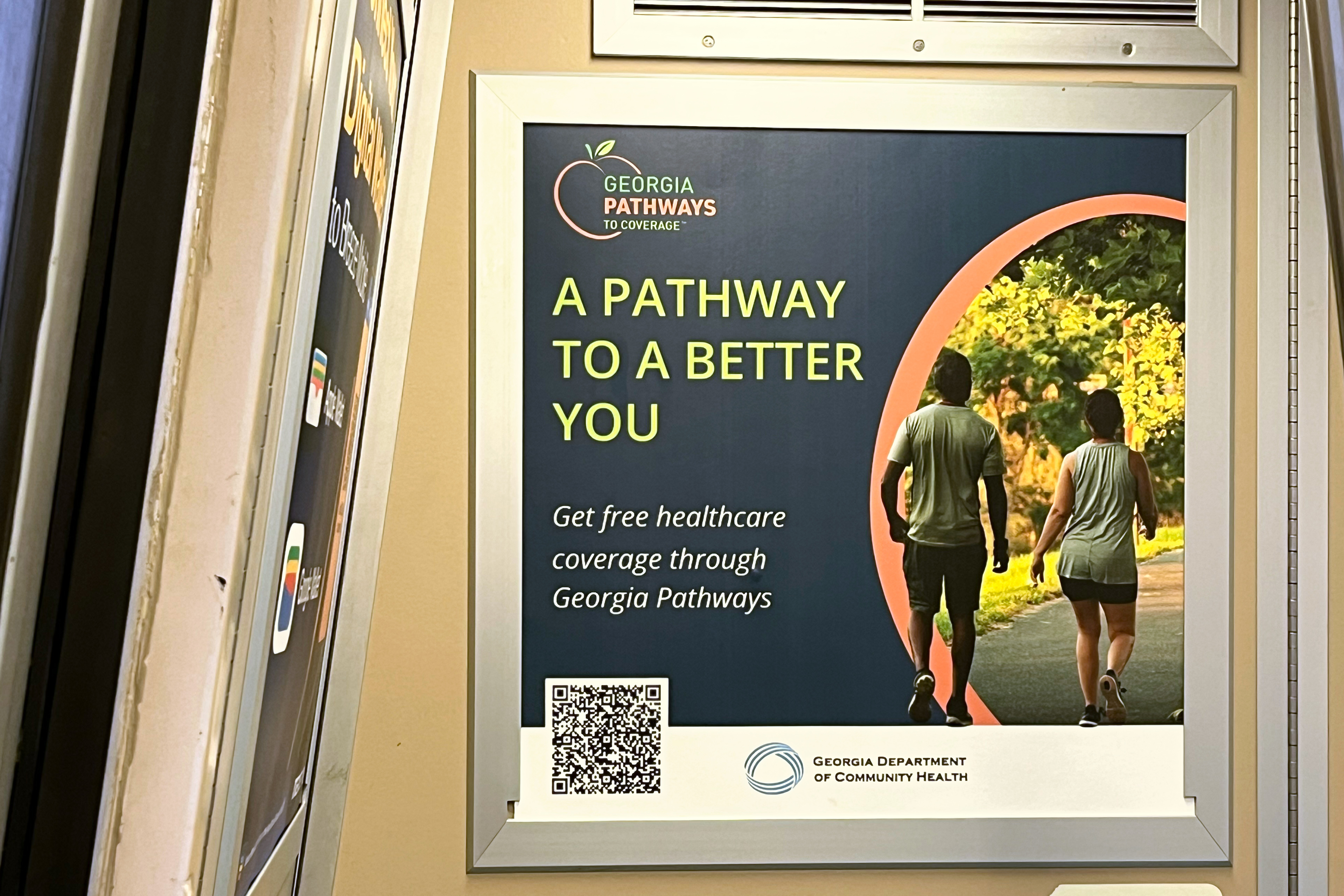
"There’s a lot of opportunity for the next governor to implement changes that are rooted in the realities of Georgians who for so long have been locked out of the ability to achieve optimal health," said Leah Chan, director of health justice at the Georgia Budget and Policy Institute.
Advocates point out that even if the state wanted to rapidly expand its health programs, the underlying infrastructure remains ill-equipped to handle a sudden influx of applicants without substantial modernization.
The Looming Federal Mandate and Fiscal Crisis
The immediate crisis facing Georgia Pathways stems from a collision between state policy and evolving federal regulations. Under President Donald Trump’s signature One Big Beautiful Bill Act, new federal guidelines are scheduled to roll out nationwide starting January 1. These federal rules establish standardized work requirements across state Medicaid programs but mandate significantly broader exemptions than those currently recognized under Georgia’s state-specific model.
Under the impending federal framework, individuals who can prove they are medically frail or "too sick to work" are entirely exempt from reporting work hours. Additional mandatory exemptions apply to vulnerable populations, including individuals battling substance use disorders and primary caretakers of people with disabilities.
Georgia state officials have calculated that incorporating these mandatory federal exemptions into Pathways would dramatically expand the eligible pool, bringing an estimated 100,000 additional residents into the program. State analysts project that this influx would generate an additional $1.4 billion in state spending by mid-2028. Consequently, the Georgia Department of Community Health informed federal authorities that the program will become fiscally unsustainable without substantial financial assistance from Washington.
In a formal funding request submitted to the Centers for Medicare & Medicaid Services (CMS), state officials petitioned the federal government to pick up a larger share of the financial burden for this expanded group of exempt individuals. The state made a similar request for enhanced federal matching funds when it originally designed Pathways, but that appeal was denied.
"The state will have no alternative but to make decisions that imperil health policy goals around personal responsibility and healthy choices," state Medicaid agency officials warned in their formal funding request to CMS.
Carter Chapman, a spokesperson for Governor Kemp, reiterated that the administration firmly supports the Department of Community Health’s request for enhanced funding, emphasizing that the governor remains "committed, as he always has been, to ensuring Georgians have access to quality healthcare while maintaining fiscal discipline for the state." CMS officials have declined to comment on the pending funding application.
If federal regulators approve Georgia’s request, it could establish a powerful national precedent, encouraging other states with limited Medicaid alternatives to seek enhanced federal subsidies. Health policy experts warn that such a move could fundamentally alter the national healthcare landscape.
"It’s an attractive fiscal offer for states," said Joan Alker, executive director at the Georgetown University Center for Children and Families. Alker and other researchers note that this dynamic could reduce financial incentives for states to pursue full ACA Medicaid expansion and might even incentivize some existing expansion states to scale back their programs.
The Gubernatorial Face-Off: Bottoms Versus Jackson
With the expiration date looming and federal officials yet to signal their intentions, the incoming governor will inherit an immediate fiscal and administrative crisis. The candidates offering differing philosophies on how to proceed.
Keisha Lance Bottoms has proposed a multi-pronged approach if she wins the governorship. Her campaign has stated that she would initially "restructure" Pathways to cut through bureaucratic red tape and prevent eligible residents from losing coverage due to simple paperwork errors, while simultaneously pushing the state legislature to enact full Medicaid expansion.
"As governor, she will make meaningful improvements to Georgia’s eligibility and enrollment systems to ensure people can get enrolled and prevent people from being denied simply because of paperwork barriers," said TaNisha Cameron, a campaign spokesperson for Bottoms.
However, executing full Medicaid expansion would require legislative approval. Under a 2014 Georgia law championed by conservatives, the governor cannot unilaterally expand Medicaid; the initiative must pass through a Republican-controlled state legislature that has adamantly rejected full expansion for over a decade. Full expansion would extend healthcare coverage to an estimated 347,000 uninsured Georgians, according to data from the Center on Budget and Policy Priorities, raising the income threshold for eligibility to 138% of the federal poverty level ($45,540 a year for a family of four by 2026 standards).
Opponents of full expansion argue that moving hundreds of thousands of low-income residents from subsidized Affordable Care Act marketplace plans into a government-run Medicaid system is misguided. Individuals whose incomes sit just above the Pathways threshold—up to 150% of the federal poverty level—currently qualify for robust federal ACA subsidies that cost state taxpayers nothing.
Chris Denson, director of policy and research with the right-leaning Georgia Public Policy Foundation, argued that even limited private marketplace plans are often preferable to traditional Medicaid participation. "It still hopefully gives them better access to see a primary care physician and other specialists than being on Medicaid," Denson contended.
Meanwhile, the campaign of Republican candidate Rick Jackson has offered few specifics on how he plans to manage the transition or resolve the impending funding shortfall. His campaign website vaguely outlines a strategy to "use better technology" to "transform healthcare," but details regarding the immediate fate of Pathways or the federal work-rule mandate remain unaddressed. Jackson’s campaign did not respond to direct inquiries from health policy reporters.
The Irony of the Georgia Model
Policy analysts point out a striking irony in the ongoing political standoff. Georgia’s pioneering work-requirement framework has effectively served as a blueprint for national conservative health policies, with several elements adopted into federal rules taking effect in January. Yet, state lawmakers continue to maintain a defensive posture against broader health reforms.
"It’s almost kind of silly that our lawmakers continue to hold it at arm’s length when really the federal version is shaped or has been shaped by the Georgia model," said Laura Colbert, executive director of the consumer advocacy group Georgians for a Healthy Future.
For everyday citizens caught in the crossfire, policy debates and fiscal maneuvers translate into deep personal uncertainty. Trey Wright remains largely unaware that the program keeping his medical costs manageable is scheduled to expire in a matter of weeks. He worries about the prospect of losing his insurance and being forced to pay out-of-pocket for the weekly allergy shots and primary care visits that have transformed his health.
While Wright works part-time at a law enforcement training facility and believes he could theoretically meet work requirements under a fully expanded system, a seamless administrative transition is far from guaranteed given the state’s historical technological hurdles. Having cast his early ballot for Keisha Lance Bottoms, Wright can only hope that state leaders find a viable bipartisan solution before his healthcare lifeline disappears.