Virginia Lawmaker Demands Investigation After Deceased Beagle Receives Official State Voting Rights Restoration Certificate From Governor Spanberger

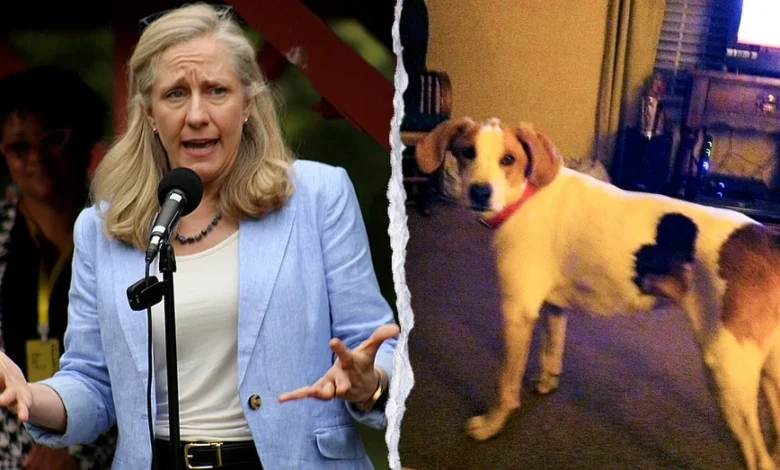
The political landscape in the Commonwealth of Virginia has taken a bizarre and contentious turn following revelations that an official state-issued rights-restoration certificate was granted to a deceased beagle-hound mix named Biscuit. The incident, which has swiftly escalated into a major political flashpoint, highlights growing concerns over the administrative rigor and database integrity of the executive vetting process. Coming just days before a consequential statewide election involving an automatic voting-rights ballot measure, the episode has energized Republican critics and prompted urgent calls for an independent, comprehensive audit of the administration’s civil rights restoration protocols.
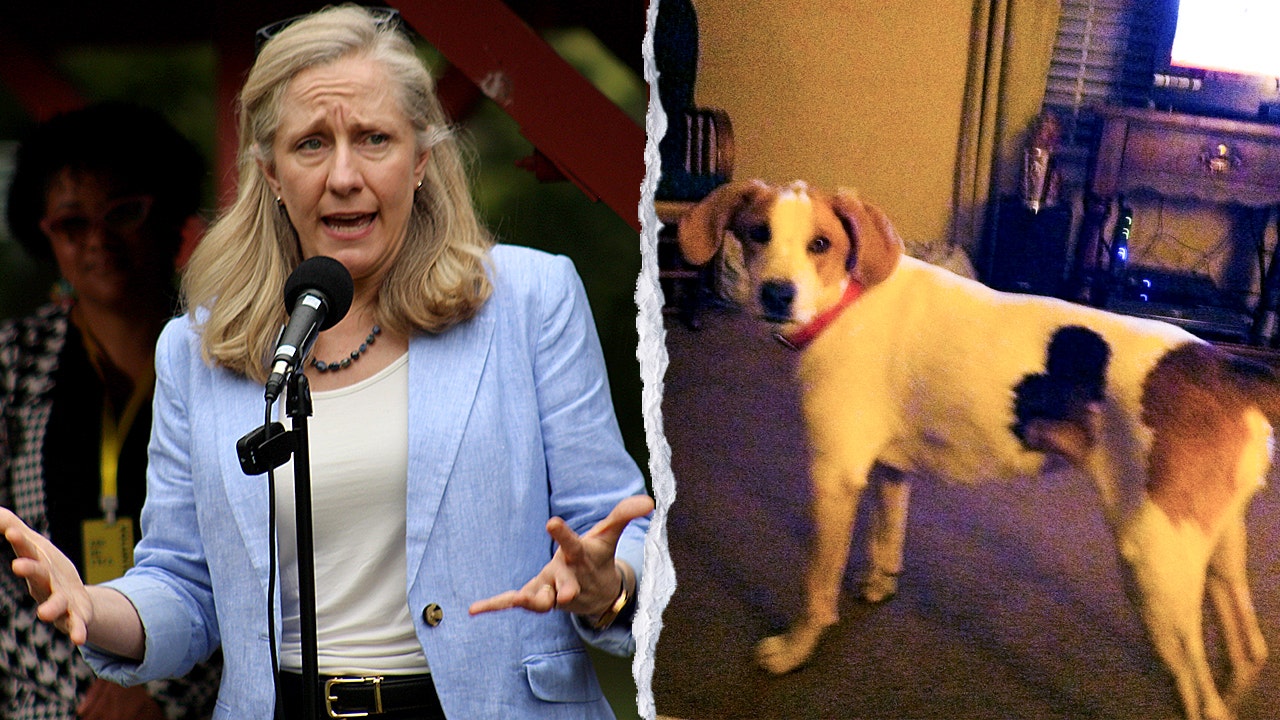
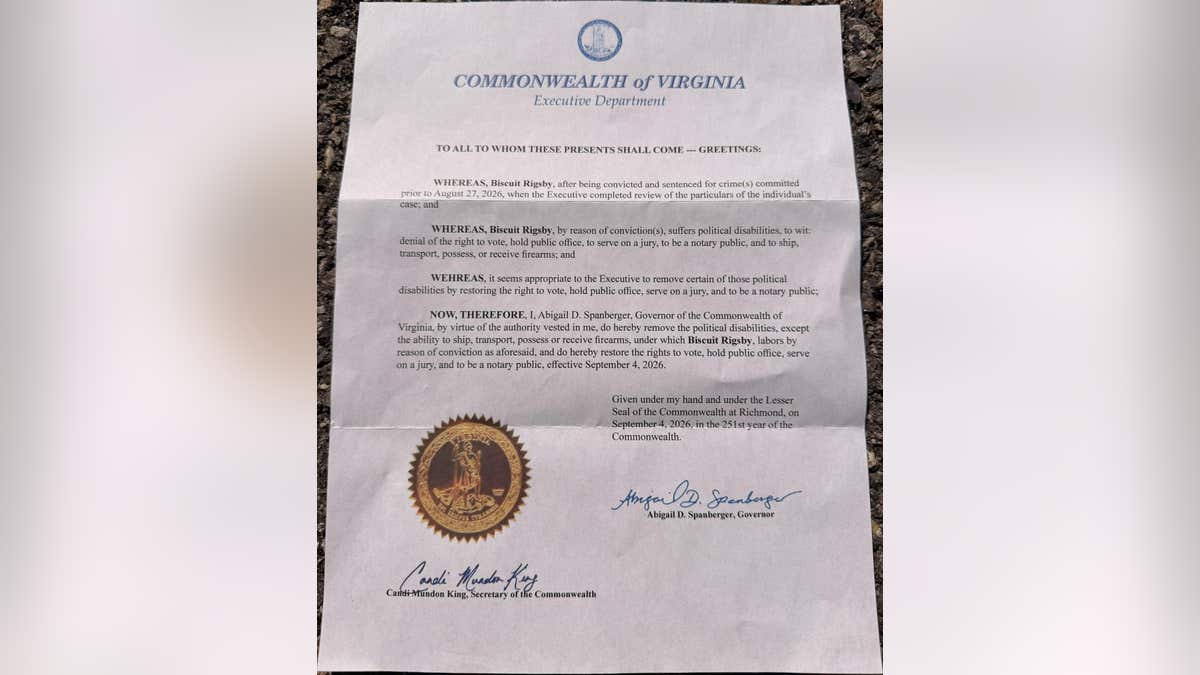
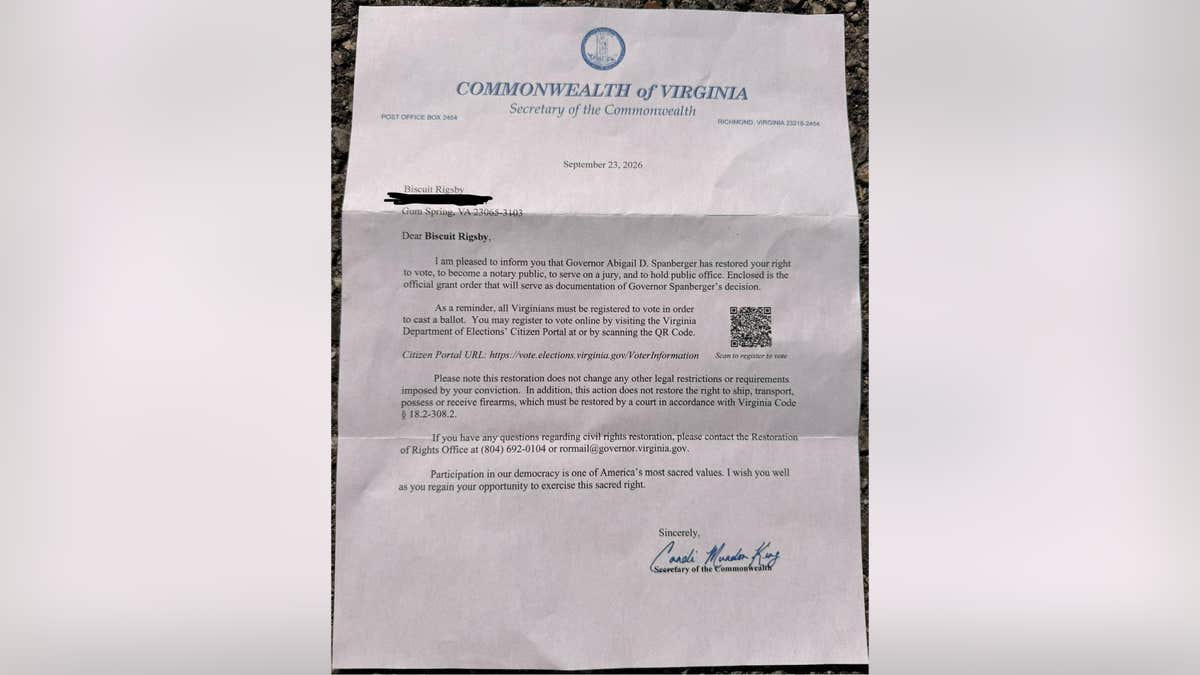
The controversy centers on an official document bearing the signature of Virginia Governor Abigail Spanberger. The certificate formally declares that the executive branch reviewed the particulars of a criminal case and determined that a Goochland County canine named Biscuit Rigsby—who passed away approximately five years ago—was eligible to have her voting and jury-service rights restored. The discovery was brought to light by Southside Virginia lawmaker Delegate Tom Garrett, a Republican representing Buckingham, who received the astonishing paperwork from the pet’s bewildered owner.
The Discovery and the Background of Biscuit Rigsby
According to details confirmed by Delegate Garrett’s office, the owner of the deceased beagle received the official packet through standard administrative channels. Wishing to remain anonymous to avoid unwanted political blowback or local harassment, the owner verified the authenticity of the paperwork to legislative officials and media outlets.
In a brief statement regarding the incident, the owner offered a mixture of humor and bewilderment, noting that Biscuit was a "good dog and is greatly missed." Furthermore, the owner dryly confirmed, "To my knowledge, she was never convicted of a felony, nor did she ever show any interest in voting."
The owner further clarified that the animal had never been processed through a local animal shelter, faced criminal charges, or had any institutional contact with the city of Richmond that could have erroneously placed her name into a governmental database. While the owner acknowledged that a family sibling is currently incarcerated, legal experts and state officials agree that such a personal connection is entirely irrelevant to the governor’s civil rights restoration initiative, which explicitly targets human citizens who have completed their sentences.
The appearance of Biscuit on the state’s active restoration rolls immediately follows another high-profile administrative error known as the "Betty No Last Name" controversy in Chesapeake. In that prior incident, an administrative paperwork review purportedly restored civil rights to an individual lacking a surname entirely, leaving local election observers and state legislators questioning the quality control measures implemented by executive branch agencies.
Chronology of the Civil Rights Restoration Push
To understand the context surrounding the Biscuit Rigsby incident, it is essential to examine the timeline of Governor Spanberger’s administrative initiatives and the broader legislative push regarding felon disenfranchisement and voter access in Virginia.
- January: Governor Abigail Spanberger assumes office, signaling a major policy shift toward streamlining and accelerating the civil rights restoration process for individuals with past felony convictions who have served their time.
- July: The Spanberger administration publicly announces that the Secretary of the Commonwealth, Candi Mundon-King, is actively and proactively identifying Virginians who have lost their voting and civic rights. The administration assures the public that state officials are manually confirming the eligibility of these individuals before issuing restoration documents.
- August: Governor Spanberger’s office releases milestone figures, proudly announcing that the number of restored individuals has surged from an initial baseline of roughly 66,000 to an unprecedented 100,000 citizens since the beginning of the gubernatorial term.
- Late October: Questions mount as local election watchdog groups and Republican lawmakers flag administrative inconsistencies, including the Chesapeake "Betty No Last Name" case.
- Early November: Delegate Tom Garrett receives the whistleblower document regarding Biscuit the beagle, prompting an immediate public outcry and formal demands for a statewide investigation just days before a major midterm election cycle.
Political Repercussions and Official Demands for Accountability
Delegate Garrett, a former U.S. Congressman and practicing attorney in Fluvanna County, reacted swiftly to the disclosure. In formal statements and video addresses shared across social media platforms, Garrett emphasized that the issue transcends routine partisan bickering, touching instead upon the fundamental competency and constitutional duties of state government.
"This is not a question of whether people who have served their sentences deserve a second chance," Garrett stated. "This is a question of whether the Commonwealth is exercising one of the Governor’s constitutional powers with even the most basic level of review."
Garrett continued, "Biscuit was a dog. Biscuit has been dead for five years. Yet an official document bearing the governor’s signature says the executive reviewed the particulars of Biscuit’s criminal case and determined her rights should be restored. Virginians deserve an explanation for how that is possible."
The lawmaker has formally requested an immediate, independent audit of all civil rights restoration actions taken by the Spanberger administration. Specifically, Garrett is demanding that the executive branch disclose:

- The underlying database records and matching algorithms that led to "Biscuit Rigsby" being flagged as a convicted felon.
- A precise definition of what constitutes the administration’s claimed "review of the particulars" for individual cases.
- The total number of certificates, citations, and official notices erroneously issued to deceased individuals, pets, fictitious entries, or duplicate humans.
- An immediate preservation order for all relevant data logs, algorithmic software files, and inter-agency communications.
Thus far, the office of Governor Abigail Spanberger has not issued a formal, on-the-record response addressing the specific circumstances of the Biscuit Rigsby restoration certificate, though political pressure continues to mount from both legislative chambers and civic watchdog organizations.
Broader Implications for Election Integrity and Ballot Measures
The timing of the Biscuit incident could not be more sensitive for the Virginia executive branch. The discovery lands mere days before voters head to the polls to decide a pivotal statewide ballot measure. Supported heavily by Richmond Democrats and championed by executive leadership, the proposed constitutional amendment seeks to make the restoration of voting and jury-service rights for released felons entirely automatic upon their release from incarceration, bypassing the traditional executive review model.
Proponents of automatic restoration argue that removing bureaucratic hurdles reintegrates former offenders into society more smoothly and rectifies historical disparities in the criminal justice system. However, opponents and election integrity advocates contend that rapid, large-scale administrative processing—exemplified by the surge from 66,000 to 100,000 processed individuals in a matter of months—inevitably compromises data hygiene.

Critics point out that systemic errors allowing a deceased domestic pet to pass through multi-layered executive vetting procedures underscore deep vulnerabilities in state databases. If an animal can be mistakenly classified as a convicted felon and granted civic privileges, skeptics argue, voter registration rolls and active civic lists may harbor undetected flaws that could undermine public trust in election outcomes.
As voters prepare to cast their ballots on the automatic restoration referendum, the Biscuit Rigsby case serves as an unprecedented case study in bureaucratic oversight. Whether the administration will launch the requested independent audit or provide a comprehensive accounting of its database verification methods remains to be seen. In the interim, a beloved beagle from Goochland County has unexpectedly found herself at the center of a high-stakes debate over administrative competence, executive authority, and the sanctity of the electoral process in the Commonwealth of Virginia.