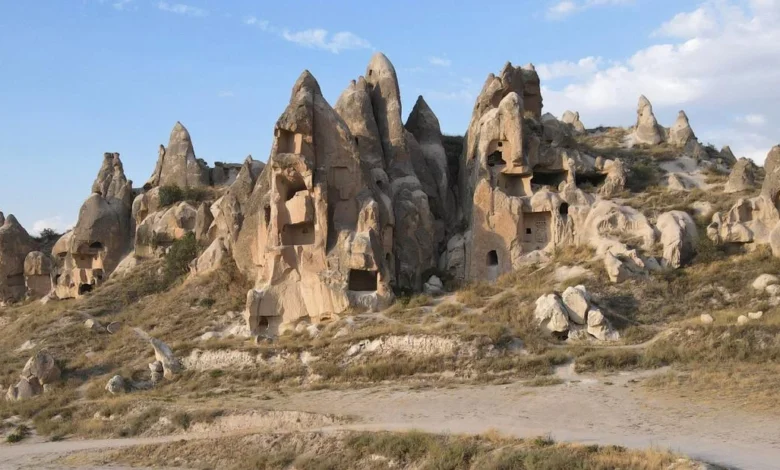
Across the heart of central Turkey lies a geological marvel that defies the conventional boundaries of time and geography. A rich, undulating palette of shimmering caramel swirls, ochers, creams, and dusty pinks unfolds across the Anatolian plateau like an enormous, handwoven carpet. This is Cappadocia, a region defined not just by its iconic skyline—often crowded with the vibrant silhouettes of hot air balloons—but by the subterranean history and volcanic legacy that have sustained human civilization for over a millennium. While the aerial view offers a breathtaking introduction to the area’s "fairy chimneys," the true essence of this UNESCO World Heritage site is found at ground level, where history is literally carved into the earth.
The Geological Genesis of a Surreal Landscape
The formation of Cappadocia’s otherworldly terrain began millions of years ago, when the eruptions of three extinct volcanoes—Erciyes, Hasan, and Melendiz—blanketed the region in thick layers of ash. Over time, this ash compressed into a soft, porous rock known as tufa. While remarkably easy to carve, tufa possesses a unique chemical property: it hardens significantly upon exposure to air.
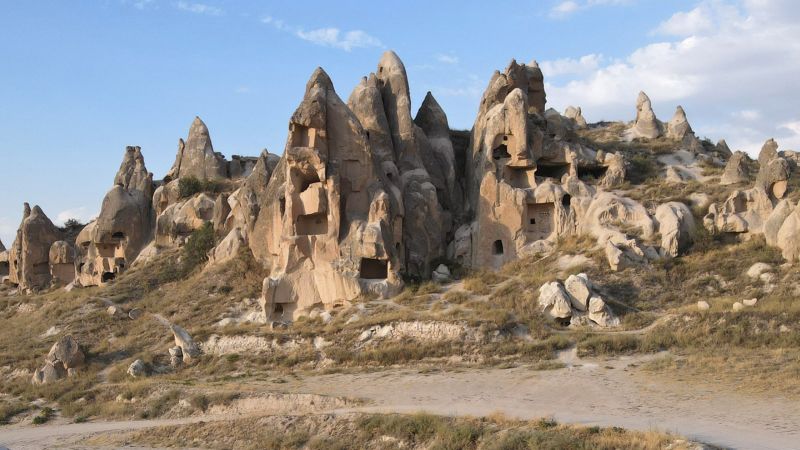
This duality allowed ancient inhabitants to transform the landscape into a sprawling, multi-story civilization. Erosion by wind and water sculpted the tufa into the conical "peribacaları," or fairy chimneys, that characterize the valleys today. These structures served as the foundation for an extraordinary architectural tradition. Until the 1950s, a significant portion of the local population continued to live in these rock-hewn dwellings, maintaining a lifestyle that had remained largely unchanged since the Byzantine period.
Zelve: A Chronicle of Human Adaptation
To understand the scale of this historical integration, one must look to the Zelve Open Air Museum. This site serves as an essential archaeological treasure trove, providing a clear window into how rural communities thrived within the rock faces. Unlike modern cities that expand outward, the people of Cappadocia expanded inward, carving out kitchens, stables, storage chambers, and elaborate monastic complexes directly into the stone.
Tolga Uyar, a medieval art historian at the nearby Nevşehir Hacı Bektaş Veli University, notes that Zelve was under continuous occupation from the sixth century until the 20th century. "That is more than 1,400 years of habitation," Uyar explains. "It stands as a testament to the resilience of a rock-carved civilization that navigated the transitions from early Christian Byzantine times through the medieval period and into the modern Turkish Republic."
The site serves as a model for architectural evolution, as living spaces were frequently repurposed, re-carved, and expanded to meet the changing needs of successive generations. Visitors today can traverse well-marked paths that offer a glimpse into this layered history, where the lines between religious life and agricultural survival were blurred by the very walls that sheltered both.
The Ecological Corridor of Ihlara Valley
While much of the central plateau appears arid during the summer months, the Ihlara Valley provides a stark, verdant contrast. Stretching along the banks of the Melendiz River, this canyon is a crucial ecological corridor and a favorite destination for those seeking to engage with the region’s natural beauty.

The valley offers an eight-mile hiking route that connects Ihlara Village to the imposing Selime Monastery. The monastery, carved into a massive cliffside, dates back to the eighth or ninth century BCE and remains one of the most significant religious structures in the region. The climb of 300 steps to the summit of the monastery is an arduous but essential endeavor for those wishing to examine the interior murals and the architectural ingenuity of its creators.
In the spring, the valley floor comes alive. Birdwatchers frequently spot the hoopoe—distinguishable by its distinctive "oop oop" call—while nightingales populate the dense foliage. The presence of water and shade in the valley supports a microclimate that allows for the cultivation of orchards and vineyards, creating a lush corridor that has sustained human life for centuries.
The Role of Local Stewardship and Guided Exploration
For the modern traveler, navigating the vast network of valleys and abandoned cave churches can be a daunting task. Many of the most historically significant sites remain locked or hidden from the casual observer. Consequently, the role of local guides has evolved into a vital profession that balances tourism with the preservation of cultural heritage.
Mehmet Güngör, a veteran guide who has operated "Walking Mehmet" since 1998, represents a growing movement of locals dedicated to sustainable, foot-based exploration. Living in a home partially carved from rock in the town of Göreme, Güngör has spent a quarter-century documenting the changing landscape. He notes that the shift from traditional farming to a tourism-based economy has had measurable environmental impacts. "Cleansed of heavy agricultural additives, the land is recovering," Güngör observes. "We are seeing the return of flora and fauna that were once considered vanished."

Güngör’s expertise allows him to lead hikers to rare botanical specimens, such as the Iris galatica, which blooms in the narrow rock crevices during the spring. Furthermore, his knowledge of the local history allows for access to centuries-old churches that are otherwise inaccessible to the general public. His work highlights a broader shift in the region: moving away from mass-market, high-speed tourism toward an immersive, slow-travel approach that emphasizes the "positive energy" of the natural environment.
Horseback Traditions and the Legacy of the Yılkı
Cappadocia’s historical connection to horses runs as deep as its connection to the rock. Known historically as the "land of beautiful horses," the region maintains a strong equestrian culture. This tradition is rooted in the history of the yılkı—horses that were once released into the wild by farmers during the winter months when agricultural work ceased.
In the modern era, the mechanization of agriculture rendered the working horse obsolete, but the bond between the people and the animals remains. Cemal Koksal, a native of the town of Ortahisar, continues this legacy through the operation of the family-run Cemal Ranch.
"The peace and naturalness of horse riding in such a unique landscape helps me stay close to my family roots," Koksal explains. The ranch facilitates small group tours that offer a different perspective on the terrain, particularly in the Rose and Red valleys. By operating these tours, local families are not only preserving the heritage of horse breeding but are also providing an alternative, low-impact way for visitors to experience the sunset shifts in light that transform the iron-rich tufa into a vibrant, glowing red.

Implications for Future Preservation
The rise of Cappadocia as a global tourist destination presents a complex challenge for local authorities and conservationists. The fragile nature of the tufa rock, combined with the increasing number of visitors, necessitates a careful balance between economic growth and the preservation of the site’s historical integrity.
Data from the Turkish Ministry of Culture and Tourism indicates that the region consistently attracts millions of visitors annually, with a notable increase in interest for "adventure and cultural" tourism. This trend suggests a move toward more specialized experiences, such as the guided hiking and equestrian tours currently offered.
The long-term implication is a shift toward "managed access," where the physical protection of the cave churches—many of which feature delicate frescoes—becomes the primary objective. The ongoing collaboration between academic institutions like the local university and tourism operators ensures that the history being shared with the public is accurate and that the sites remain protected for future generations.
As the region continues to evolve, the narrative of Cappadocia remains one of profound adaptation. From the ancient inhabitants who sought shelter in the volcanoes to the modern guides and riders who seek to preserve the integrity of the landscape, the region serves as a living museum. It is a place where the geological past and the human present exist in a delicate, symbiotic relationship, inviting those who visit to step off the beaten path and into the heart of the stone.