Hilton Worldwide Repositions Itself as a Tech-Powered Giant Under CEO Christopher Nassetta

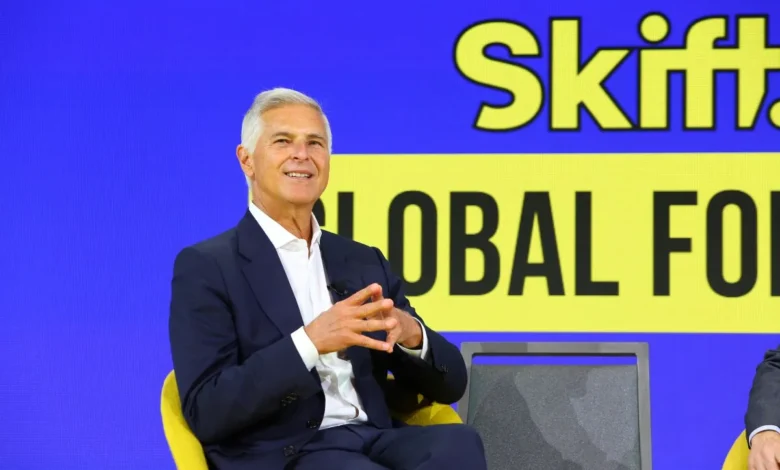
Hilton Worldwide is undergoing a profound corporate evolution, deliberately redefining its brand identity from a traditional hospitality powerhouse into what President and Chief Executive Officer Christopher Nassetta describes as a "people-led, tech-powered" enterprise. This strategic pivot, unfolding rapidly through a series of high-profile executive appointments, major financial maneuvers, and an aggressive embrace of artificial intelligence, signals a new era for one of the world’s premier lodging networks.
The transformation is not merely cosmetic; it represents a fundamental recalibration of how Hilton intends to compete in an increasingly digital global marketplace. By aligning its operational philosophy with the ethos of Silicon Valley, Hilton is signaling to Wall Street, its franchise owners, and millions of travelers worldwide that technological innovation is now central to its core business strategy.
A Calculated Shift to the Nasdaq
The most visible symbol of Hilton’s technological ambitions came with the announcement that the company will transition its stock listing to the Nasdaq. While corporate leadership initially downplayed the operational impacts of the move—insisting that day-to-day hotel management, guest experiences, and franchise relations would remain uninterrupted—the symbolic weight of the decision is immense.
During Hilton’s third-quarter earnings call, Nassetta elaborated on the strategic rationale behind the relocation. By joining the Nasdaq, Hilton places itself shoulder-to-shoulder with the world’s premier technology titans, including Apple, Microsoft, and Nvidia. For years, hospitality companies have traded alongside traditional consumer discretionary stocks or real estate investment trusts. By moving to the Nasdaq, Hilton is explicitly inviting investors to value the company not just on room nights and RevPAR (Revenue Per Available Room), but on its technological scalability, proprietary software infrastructure, and digital ecosystem.
Nassetta emphasized that the Nasdaq represents a marketplace synonymous with cutting-edge innovation. For an industry historically slow to modernize its legacy reservation and property management systems, Hilton’s stock exchange migration serves as a loud declaration that technology is now the primary driver of its future valuation and competitive advantage.
Bringing Silicon Valley Talent In-House: The Appointment of Jeff Moore
To back up its "tech-powered" rhetoric, Hilton has bolstered its executive leadership team with top-tier digital talent. Earlier in October, the company announced the appointment of Jeff Moore as its new Chief Technology Officer.
Moore brings a formidable pedigree to the hospitality sector, having previously served at Uber, where he managed a massive global engineering organization consisting of 2,500 professionals. His background in scaling hyper-growth, real-time logistical platforms makes him uniquely qualified to address the complex digital plumbing required by a global hotel chain spanning thousands of properties across more than 100 countries. Before his tenure at Uber, Moore accumulated extensive experience in software engineering and enterprise architecture, positioning him to overhaul Hilton’s digital infrastructure.
According to internal communications and executive briefings, Moore’s mandate is to "give tech more oxygen" within the organization. This entails modernizing customer-facing applications, streamlining back-end operations for property owners, and integrating advanced data analytics to personalize the guest journey at scale. The recruitment of a tech executive of Moore’s caliber underscores a broader trend within the hospitality industry: traditional hotel brands are increasingly looking to ride-sharing, e-commerce, and fintech sectors to fill critical digital leadership roles.
Embracing the Era of AI Agents and Next-Generation Distribution
Beyond executive hires and stock exchange relocations, Hilton is racing to future-proof its distribution channels against the disruptive wave of artificial intelligence. During recent investor presentations, Nassetta revealed that the hotel group is actively integrating its systems with the emerging ecosystem of AI travel assistants and autonomous booking agents.
In the modern travel landscape, consumer behavior is shifting rapidly away from traditional online travel agencies (OTAs) and direct brand websites toward conversational AI interfaces. These AI agents—whether built by tech giants or nimble travel startups—will soon handle complex itinerary planning, flight bookings, and hotel reservations on behalf of users.

Hilton’s leadership disclosed that the company is already plugged into "each and every one" of these nascent AI agents. By ensuring seamless API connectivity and real-time inventory synchronization, Hilton aims to prevent intermediaries from owning the customer relationship. If an AI agent recommends a hotel to a user, Hilton wants its properties to be front and center, backed by accurate pricing, immediate booking capabilities, and loyalty program integration. This proactive stance protects Hilton’s direct-booking margins and ensures the brand remains discoverable in an algorithmic marketplace.
Background and Context: The Post-Pandemic Hospitality Renaissance
To understand the weight of Hilton’s current digital pivot, one must examine the broader trajectory of the hospitality industry over the past half-decade. The COVID-19 pandemic nearly brought global travel to a standstill in 2020, forcing hotel chains to slash costs, freeze digital projects, and navigate unprecedented liquidity crises.
As travel demand rebounded sharply between 2021 and 2023, hotels enjoyed a massive surge in average daily rates (ADR) and occupancy. However, this post-pandemic honeymoon period also exposed deep-seated vulnerabilities. Labor shortages, rising operational costs, and mounting competition from alternative accommodations like short-term rentals forced legacy hoteliers to rethink their business models.
Furthermore, shifting consumer demographics—dominated by tech-savvy Millennials and Generation Z travelers—demanded frictionless, contactless experiences. From digital key cards on mobile phones to AI-powered concierge services, guests increasingly expect the same digital convenience in a hotel that they experience on food delivery apps or ride-sharing platforms. Hilton’s multi-pronged tech push is a direct response to these evolving consumer expectations.
Chronology of Recent Strategic Milestones
The acceleration of Hilton’s transformation can be mapped through a precise timeline of events over recent months:
- September 23, 2026: CEO Christopher Nassetta takes the stage at the Skift Global Forum in New York City, outlining Hilton’s vision for the future and emphasizing the critical intersection of human hospitality and digital enablement.
- Early October 2026: Hilton formally announces the appointment of Jeff Moore as Chief Technology Officer, signaling a shift toward aggressive software scaling and engineering excellence.
- Mid-October 2026: The company makes waves across financial markets by announcing its planned stock listing transition to the Nasdaq.
- Late October 2026: During the third-quarter earnings call, Nassetta doubles down on the "people-led, tech-powered" narrative, confirming deep integration with emerging AI travel booking agents and outlining the strategic parallels between Hilton and premier tech stocks.
Industry Reactions and Market Implications
Financial analysts and hospitality experts have largely responded favorably to Hilton’s aggressive rebranding as a technology-forward enterprise. Wall Street has increasingly rewarded companies that demonstrate pricing power combined with scalable digital infrastructure. By positioning itself alongside tech giants on the Nasdaq, Hilton is attempting to capture a higher valuation multiple traditionally reserved for software and platform businesses.
However, industry observers also note that executing this vision will not be without challenges. Hotel operations are fundamentally decentralized. While corporate leadership can mandate software upgrades and API integrations, thousands of individual franchise owners ultimately bear the cost of implementing new property-level technologies. Balancing corporate tech ambitions with franchise owner profitability will require delicate diplomacy from executive leadership.
Moreover, as AI agents take on a larger role in travel planning, customer data privacy and cybersecurity will become paramount. With Jeff Moore at the helm of engineering, Hilton will need to fortify its data governance frameworks to protect millions of Hilton Honors member profiles against increasingly sophisticated cyber threats.
Fact-Based Analysis of the Broader Impact
Hilton’s strategic maneuvers are likely to trigger a ripple effect across the broader hospitality sector. Competitors such as Marriott International, Hyatt Hotels Corporation, and IHG Hotels & Resorts will undoubtedly monitor Hilton’s Nasdaq migration and AI integration strategies closely. If Hilton successfully commands a premium valuation and captures a larger share of AI-driven bookings, rival hotel groups will be forced to accelerate their own digital transformation roadmaps.
The traditional boundaries dividing Silicon Valley tech companies and multinational hospitality giants are rapidly dissolving. As software increasingly dictates guest loyalty, distribution efficiency, and operational margins, the hotel of the future will look less like a traditional real estate holding and more like a high-tech platform enterprise. Through its bold repositioning under Christopher Nassetta, Hilton is betting its future that the hotelier of tomorrow must master code just as well as customer service.
Reporting contributed by Luke Martin from London, covering global hospitality trends, major corporate developments, and executive strategies shaping the travel sector.