James Gunn Defends the DC Universe Strategy Against Criticisms of Interconnectedness and Crossover Expectations

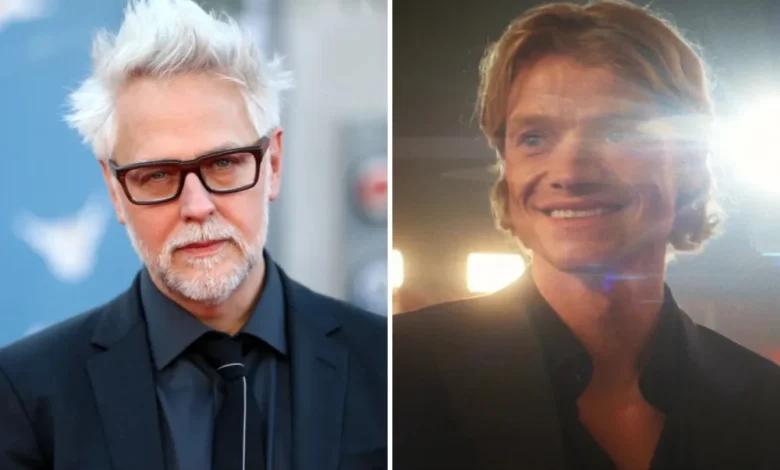
In the rapidly evolving landscape of modern superhero cinema, the definition of a "cinematic universe" is currently undergoing a significant paradigm shift. James Gunn, the co-head of DC Studios, took to the social media platform Threads this past Saturday to address a persistent critique regarding the studio’s output: the perceived lack of a cohesive, linear path toward a singular, massive crossover event. As the DC Universe (DCU) expands its footprint, Gunn’s comments have provided much-needed clarity on the studio’s philosophy, which prioritizes thematic depth and character-driven narratives over the "puzzle-piece" approach that has defined the genre for the better part of the last decade.
The discourse began when a social media user questioned the structural intent of the current DC slate—specifically citing upcoming and recent projects like Superman, Peacemaker, Supergirl, Creature Commandos, Lanterns, and the newly released Clayface. The user’s inquiry, "What is this building towards???" echoed a sentiment held by some segments of the audience who have been conditioned by the Marvel Cinematic Universe’s "Infinity Saga" model, which relied heavily on the anticipation of team-up films to provide narrative payoff for individual entries.
The Philosophy of Narrative Autonomy
Gunn’s response was immediate and emphatic, signaling a departure from the industry standard. "I couldn’t agree more," Gunn stated in response to a supporter who argued that interconnectedness is not a prerequisite for quality storytelling. "DCU is just an alternate universe; we can enter at any location or time and tell THAT story. I dislike the idea that individual stories aren’t meaningful unless they lead to something else."
Gunn’s comparison to the Star Wars franchise provides a compelling framework for understanding this strategy. For half a century, the Star Wars brand has successfully expanded across various media—films, television series, novels, and video games—without being tethered to a singular, escalating crossover event. While these stories share a common lore and world-building foundation, each entry is designed to function as a standalone experience. Gunn noted that while the DCU will maintain a level of tonal variety that Star Wars occasionally lacks, the core principle of allowing a story to exist on its own merits remains the primary objective.
Chronology of the DCU Expansion
The current DCU rollout represents a calculated attempt to balance world-building with standalone creative freedom. Since taking the helm at DC Studios, Gunn and his co-CEO, Peter Safran, have focused on a "Chapter One: Gods and Monsters" slate that aims to reintroduce iconic characters while also dipping into the deeper, more obscure corners of the DC mythos.
- 2024–2025: The foundation was laid with the introduction of new interpretations of Superman and the release of Supergirl, setting the stage for a universe where these characters coexist but do not necessarily share the screen in every instance.
- 2026: The release of Clayface represents a bold pivot toward genre-specific storytelling. By focusing on a character traditionally relegated to the background of Batman’s rogues’ gallery, DC is signaling that it is willing to invest in character studies that deviate from the standard superhero template.
- 2027: The upcoming Superman: Man of Tomorrow, scheduled for July 9, 2027, serves as the next major anchor point for the universe. It is expected to further integrate the established lore, yet it is not framed as a "finale" to a series of preceding films, but rather as a natural progression of the character’s arc.
Box Office Performance and Critical Reception
The recent success of Clayface provides empirical data to support Gunn’s approach. Despite the character’s relative obscurity compared to A-list staples like Batman or Wonder Woman, the film secured the No. 1 spot at the North American box office, generating $24 million from 3,458 theaters in its opening weekend.
Directed by James Watkins, Clayface stars Tom Rhys Harries as Matt Hagen, a struggling actor whose life is irrevocably altered by a disfiguring accident and subsequent experimental medical intervention. The film, which also features performances by Naomi Ackie, David Dencik, Max Minghella, and Eddie Marsan, has been lauded for its departure from traditional comic-book tropes. Variety’s critic Guy Lodge highlighted this in his review, noting that the film succeeds precisely because it functions as "its own ugly animal." Lodge observed that the film’s specific conflicts might lose their impact if stretched across a larger franchise framework, suggesting that the "fresh and ickily enjoyable" nature of the film is a direct result of its autonomy.
Industry Implications and Strategic Analysis
The industry at large has been watching the DCU’s development closely. For years, the "shared universe" model was the gold standard for profitability, driven by the success of massive team-up events. However, audience fatigue regarding "homework-heavy" viewing—where viewers feel obligated to watch multiple films to understand a single plot—has become a documented trend in market research.
Gunn’s pivot toward individual, high-quality genre films is a hedge against this fatigue. By prioritizing the "Clayface" model—where a project is judged by its success as a "fun horror movie" rather than its utility as a teaser for a future project—DC Studios is attempting to foster a more sustainable model of engagement.
However, this approach is not without its risks. The lack of an overarching "Event" narrative can sometimes lead to a sense of aimlessness for casual viewers who look to the studio to define the "main" story. The challenge for DC Studios will be to maintain the "DCU" label’s prestige while simultaneously convincing audiences that these disparate stories are, in fact, part of a larger, coherent tapestry.
The Role of Connectivity
Despite his emphasis on standalone stories, Gunn has clarified that the DCU is not a collection of entirely isolated islands. Connectivity, he argues, is a tool to be used sparingly and organically rather than a mandatory plot device.
"The Superman saga begins with ‘Superman’ and extends into ‘Man of Tomorrow,’ and contains many characters we’ve introduced in other stories," Gunn explained. "But that doesn’t mean those other stories only exist to set up what’s happening there."
This represents a "light-touch" connectivity. Characters may cross paths, and the world will grow, but the narrative pressure to link every project to a central nexus is being intentionally removed. This allows directors and writers to pursue specific genre interests—such as horror, noir, or comedy—without being restricted by the "canon" requirements of a massive shared universe.
Future Outlook
As the DCU moves toward its 2027 releases, the studio is effectively testing a hybrid model. It aims to satisfy fans who crave a shared, lived-in world, while simultaneously appealing to the broader, more casual audience that simply wants to see a compelling film.
If the success of Clayface is any indicator, the market is currently receptive to this strategy. By treating characters like Clayface or the ensemble of Creature Commandos as subjects for unique, high-quality filmmaking, James Gunn is attempting to broaden the definition of what a comic book movie can be. Whether this strategy will eventually culminate in a massive, universe-defining event remains to be seen, but for now, the message from the top of the DC hierarchy is clear: the story comes first, and the universe serves the story, not the other way around.
The industry will continue to monitor the performance of upcoming titles, particularly as the distinction between "standalone genre film" and "interconnected DCU entry" becomes further blurred in the coming years. For now, Gunn’s stance provides a clear directive for the studio’s future: focus on the craft of the individual film, and the universe will build itself.
Related posts: