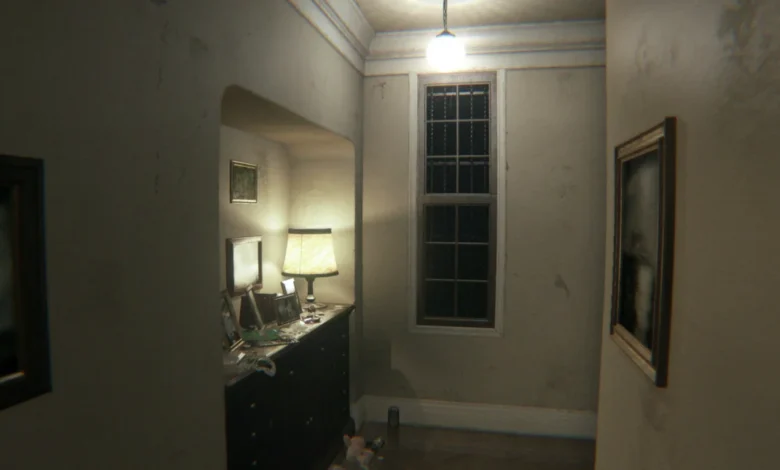
The elusive and legendary "Playable Teaser" for the canceled Silent Hills project, better known to the gaming community simply as P.T., has long served as a cautionary tale regarding digital media preservation. Released as a free download on the PlayStation 4 in 2014, the demo was pulled from the PlayStation Store just a year later following the public falling out between publisher Konami and director Hideo Kojima. Since that time, the software has become a ghost of the gaming industry, existing only on the hard drives of consoles that have remained connected to the internet since 2015. However, a recent, meticulously crafted PC port by a solo developer named Xavier has once again brought this seminal horror experience into the spotlight, sparking conversations about the role of artificial intelligence in software preservation and the fragility of digital media.
The Genesis of a Digital Artifact
P.T. was never intended to be a standalone title; it was a cryptic, interactive marketing tool designed to tease a new entry in the Silent Hill franchise. Yet, its impact was seismic. Players spent weeks decoding its obscure puzzles, creating a global community effort that eventually revealed a trailer for Silent Hills. When Konami cancelled the project, the demo’s removal from digital storefronts created a vacuum. Because P.T. was never released on physical media, its accessibility became tied to the physical survival of PS4 hardware.
For years, the gaming community has attempted to reverse-engineer or recreate the experience. While many have succeeded in creating "clones"—games that mimic the mechanics and atmosphere of the original—few have successfully ported the exact code of the original demo. Xavier’s project stands out not because it relies on the current trend of using automated AI decompilation tools, but because it represents a labor-intensive, manual reconstruction of the original’s engine logic.
Methodology and the Role of Artificial Intelligence
In an era where coding agents and Large Language Models (LLMs) are frequently used to rapidly reverse-engineer legacy software, Xavier has distinguished his process as one grounded in traditional development. On social media, the developer clarified that his workflow involved years of studying the intricacies of P.T. and the proprietary Fox Engine—the same engine that powered Metal Gear Solid V.
While Xavier admits to utilizing AI tools, he frames their involvement as a support system rather than a primary creator. According to his statements, these tools were restricted to debugging, troubleshooting, and investigating complex code conflicts. This distinction is critical in the context of software preservation. Relying solely on AI to decompile legacy code often results in "hallucinated" logic or broken assets that do not reflect the developer’s original intent. By keeping the core development human-centric, Xavier ensures that the port remains as faithful to the source material as possible, preserving the specific timing, lighting, and physics that defined the original’s claustrophobic horror.
"I’m a solo developer making a free P.T. port because I love the game," Xavier stated. "Nobody hired me or asked me to spend countless hours on this. I’m sharing something I worked incredibly hard on, simply because I want other people to enjoy it."
A Chronology of P.T. Preservation
The history of P.T. is marked by a series of high-stakes moments that highlight the volatility of modern digital distribution:
- August 12, 2014: P.T. is released on the PlayStation Network as a free download.
- April 26, 2015: Konami announces the cancellation of Silent Hills and the removal of the P.T. demo from the PlayStation Store.
- April 29, 2015: The demo is officially removed, rendering it impossible to download for new users.
- 2015–2020: Various fan-made remakes, such as "Allison Road" and others, attempt to capture the P.T. aesthetic, while enthusiasts explore methods to re-download the game via proxy servers and specialized network configurations.
- 2021–2023: The rise of AI-assisted reverse engineering tools accelerates the potential for accurate ports, leading to a surge in preservation efforts.
- 2024: Xavier’s port surfaces, representing one of the most accurate technical recreations of the original game logic to date.
The Preservationist’s Dilemma
The broader implications of this project extend far beyond a single horror demo. The gaming industry is currently facing a "preservation crisis." Unlike physical film or literature, digital games are often locked behind proprietary ecosystems, server-side authentication, and hardware-specific limitations.
Henry Lowood, curator for the History of Science & Technology Collections and Film & Media Collections at Stanford University Libraries, has long warned about the vulnerability of digital culture. In 2015, Lowood noted that hardware-specific solutions are effectively "dead ends" for true preservation. Because the hardware itself—the PlayStation 4, its proprietary motherboard, and its internal storage controllers—is subject to entropy, the only way to preserve the software for the long term is to ensure it can run on modern, future-proof platforms like the PC.
"The kinds of equipment and hardware we have, the way they’re manufactured, just have a very small likelihood of surviving for super long periods of time," Lowood told Ars Technica. By porting P.T. to the PC, Xavier is effectively decoupling the software from its dying host, ensuring that even if every original PS4 console ceases to function, the data itself remains accessible.
Technical Analysis and Implications
From a technical standpoint, the Fox Engine is notoriously difficult to work with outside of its intended environment. The engine relies on specific memory management techniques and asset streaming protocols that are highly optimized for the PS4’s architecture. Recreating these functions on Windows requires a deep understanding of low-level programming.
The use of AI in this context serves as a "force multiplier" for the developer. By automating the identification of memory leaks or translating specific shader code, Xavier is able to achieve in months what would have taken a team of developers years in the pre-AI era. However, the success of the project still rests on the developer’s ability to verify the accuracy of the AI-generated code. This hybrid approach—human intuition combined with machine efficiency—could become the gold standard for software preservation moving forward.
The Broader Impact on Intellectual Property
While the technical and preservationist benefits are clear, the legal landscape remains fraught with ambiguity. Konami, as the copyright holder of the Silent Hill franchise, has historically been protective of its intellectual property. While the developer is distributing the port for free, and there is no commercial motive, the distribution of proprietary code still falls into a gray area of intellectual property law.
Historically, companies have taken varying approaches to fan projects. Some, like Sega, have embraced fan-made revivals, while others, like Nintendo, have aggressively pursued legal action to shut down unauthorized ports. The status of P.T. is further complicated by the fact that the original product was free; however, the assets and engine code belong to a multi-billion dollar corporation. The community’s decision to continue pursuing these ports suggests a philosophical shift: players increasingly view the history of gaming as a collective heritage that should not be erased by corporate disputes or business restructuring.
Conclusion: Securing Gaming History
The release of this P.T. port by a solo developer is a testament to the dedication of the gaming community. It highlights a critical intersection between technical ingenuity and the cultural necessity of preserving digital history. By utilizing modern tools to bypass the limitations of aging hardware, Xavier has provided a blueprint for how other "lost" games might be saved from the digital void.
As technology continues to evolve, the reliance on human expertise will remain the final gatekeeper for quality and accuracy in preservation. While AI can assist in the heavy lifting of code translation, it cannot replace the years of research and passion required to understand the soul of a project like P.T. For now, the hallways of the looped house in the demo remain open to players, serving as a reminder that even when a product is erased from the market, the community’s drive to remember and play those experiences will endure. The preservation of digital artifacts is not merely a technical challenge; it is an act of cultural stewardship, ensuring that the interactive art of our time remains accessible to future generations.