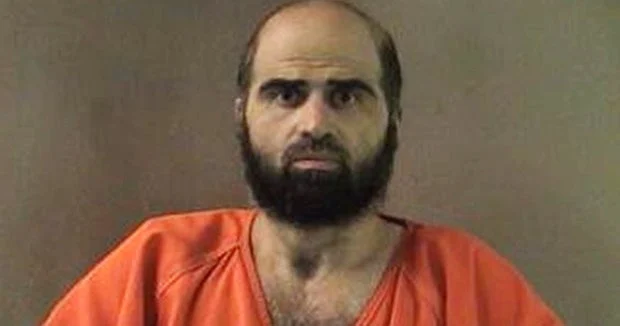
The Trump administration has officially authorized the execution of former U.S. Army Major Nidal Hasan by firing squad, marking a historic and highly controversial shift in military justice policy. The decision, confirmed by Pentagon spokesman Sean Parnell on Monday, October 5, 2026, brings a definitive end to one of the most protracted legal sagas in the history of the United States military. Hasan, a former Army psychiatrist, was convicted in 2013 for the 2009 mass shooting at Fort Hood, Texas, an act of domestic terrorism that claimed the lives of 13 people and left more than 30 others wounded.
The order, which follows a recommendation from Defense Secretary Pete Hegseth, signals a departure from the military’s long-standing reliance on lethal injection—or the rare historical use of hanging—in capital cases. According to Pentagon officials, the Secretary of the Army is now tasked with finalizing the logistical arrangements, including the specific time and location for the execution.
A Chronology of the 2009 Fort Hood Attack
The events that precipitated this unprecedented decision unfolded on November 5, 2009, at the Soldier Readiness Processing Center at Fort Hood. Hasan, then a major and a psychiatrist, walked into the facility armed with a FN Herstal semi-automatic pistol equipped with a laser sight. Over the course of a harrowing, chaotic afternoon, he opened fire on soldiers who were preparing for deployment to Iraq and Afghanistan.
By the time law enforcement officers managed to subdue him, 12 soldiers and one civilian employee had been killed. The victims included pregnant Private First Class Francheska Velez and a range of personnel from junior enlisted ranks to officers. Hasan himself was paralyzed during the exchange of gunfire with civilian police officers, leading to his reliance on a wheelchair throughout his subsequent legal proceedings.
In the aftermath, it was revealed that Hasan had been in communication with Anwar al-Awlaki, a radical cleric associated with Al-Qaeda in the Arabian Peninsula. These interactions fueled the government’s characterization of the shooting as an act of "homegrown violent extremism," a designation that complicated the legal path toward a death sentence.
The 2013 Court-Martial and Legal Strategy
The military trial of Nidal Hasan, which commenced in 2013, was characterized by its unconventional nature. In a move that shocked legal observers, Hasan elected to act as his own lead counsel. Throughout the trial, he remained largely passive, refusing to cross-examine witnesses or mount a meaningful defense. Instead, he acknowledged his culpability, justifying the massacre as a protective measure for Islamic insurgents fighting against American military presence in the Middle East.
His court-appointed standby attorneys repeatedly attempted to steer a more traditional defensive course, but they were frequently stymied by Hasan’s insistence on his own strategy. This dynamic led to prolonged disputes within the courtroom, as his legal team expressed grave concerns that Hasan was intentionally engineering his own conviction and death sentence—a concept often referred to in legal circles as "suicide by state." Ultimately, the jury found him guilty on all counts of premeditated murder and attempted premeditated murder, sentencing him to death on August 28, 2013.
Historical Context of Military Executions
The military justice system in the United States has not carried out an execution since 1961, when Army Private John A. Bennett was hanged at the U.S. Disciplinary Barracks at Fort Leavenworth for the rape and attempted murder of an 11-year-old girl. Since that time, the military death row has seen a slow accumulation of inmates, but the path to execution has been blocked by exhaustive appellate reviews and evolving constitutional standards regarding capital punishment.
The transition to a firing squad as the preferred method of execution for Hasan represents a significant change in federal and military policy. Historically, firing squads have been viewed as a vestige of the 19th and early 20th centuries, yet they have seen a resurgence in interest among some state governments facing difficulty in sourcing the chemicals required for lethal injection. In 2025 and 2026, states like South Carolina reignited the debate by employing firing squads, arguing that the method is more reliable and less susceptible to the complications that have plagued lethal injection protocols.
Implications of the Trump Administration’s Policy
The authorization of a firing squad for Hasan is reflective of the Trump administration’s broader push to accelerate the implementation of the death penalty for high-profile capital cases. Earlier in 2026, the Department of Justice issued updated guidance suggesting that federal authorities should broaden their toolkit for capital punishment, explicitly mentioning electrocution, lethal gas, and firing squads as viable alternatives to lethal injection.
Legal analysts suggest that this shift is designed to circumvent the ongoing litigation surrounding the constitutionality and efficacy of lethal injection drugs. However, the move is expected to trigger a new wave of legal challenges. Human rights organizations and anti-death penalty advocates have already signaled their intent to contest the move, arguing that the use of a firing squad constitutes "cruel and unusual punishment" under the Eighth Amendment of the Constitution.
The Finality of the Appeals Process
Hasan’s path to the execution chamber has been marked by a series of legal maneuvers that tested the limits of military justice. In 2024, his case reached the Supreme Court of the United States. Hasan’s petition argued that his Sixth Amendment rights were violated when the military judge cleared the courtroom during specific pretrial proceedings, allegedly preventing the public from observing a critical portion of the trial. The Supreme Court declined to grant a writ of certiorari, effectively exhausting his primary avenues for appeal.
With the legal hurdles cleared, the focus now shifts to the U.S. Army and the Department of Defense. The logistical requirements for a military firing squad are extensive, requiring the selection of personnel, the construction of a secure site, and the establishment of rigorous protocols to ensure the process remains within the bounds of military regulation.
Institutional and Political Reactions
The announcement has been met with polarized reactions. For the families of the victims of the Fort Hood shooting, the decision is often framed as a long-overdue closure. For years, these families have waited for the sentence of 2013 to be carried out, viewing the persistent delays as a denial of justice.
Conversely, some legal scholars and military ethics experts have expressed concern over the precedent this sets. There is a fear that the use of a firing squad—a method inherently more violent in its imagery than pharmaceutical execution—could undermine the perceived legitimacy of the military justice system. Moreover, the political nature of the decision, coming directly from the Executive Branch’s current leadership, raises questions about the separation of powers and the independence of the military judiciary.
Future Outlook
As the Secretary of the Army prepares to designate the time and place for the execution, the case of Nidal Hasan serves as a grim milestone in American military history. It forces a reckoning with the nature of military service, the threat of domestic radicalization, and the ongoing moral debate surrounding the state’s authority to take a human life.
While the administration positions this move as a commitment to justice for the fallen soldiers of Fort Hood, the shadow of the legal challenges to come suggests that the final chapter of this case may not yet be written. For now, the Department of Defense continues its preparations, moving forward with a process that has remained dormant for over six decades, signaling a definitive and perhaps permanent shift in the administration of military capital punishment in the United States.