Lucid Motors Struggles Through Production Cuts and Restructuring as Third-Quarter Output Plummets

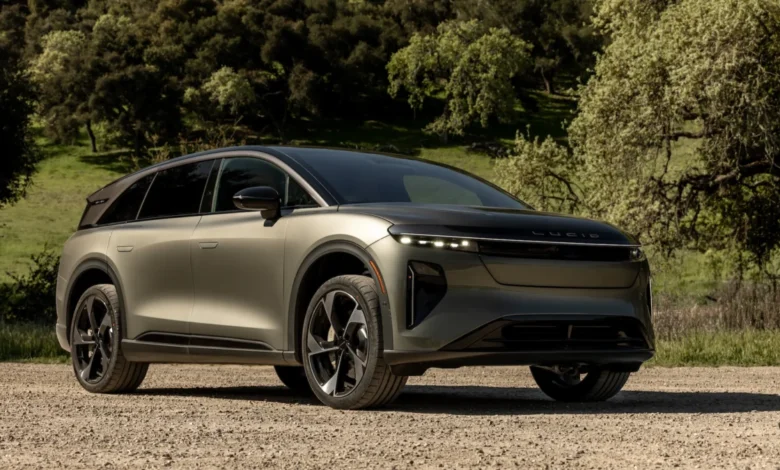
Lucid Motors reported a significant contraction in its manufacturing output for the third quarter, producing 2,954 electric vehicles—a steep 54% decline compared to the same period in the previous year. This latest data marks the third consecutive quarter of falling production numbers for the luxury electric vehicle manufacturer. The slowdown is a deliberate strategy by company leadership to align manufacturing volumes more closely with actual market demand, as the firm grapples with persistent challenges in finding a stable and expansive buyer base for its high-end lineup.
The newly released figures highlight an ongoing period of operational and strategic recalibration under the guidance of Chief Executive Officer Silvio Napoli. As the company attempts to stabilize its financial footing and streamline operations, the broader electric vehicle market is showing starkly divergent trajectories, with competitors successfully capturing market share in more affordable segments while Lucid recalibrates its long-term roadmap.
A Chronology of Production Retrenchment and Strategic Pivots
The downward trend in manufacturing began to take shape late last year following the commercial rollout of Lucid’s second vehicle, the Gravity SUV. While the launch was intended to diversify the company’s product offerings beyond its flagship sedan, the market response failed to generate the sustained volume anticipated by executives.
During the first quarter of the year, output dipped to levels not seen since the initial manufacturing phases of the Gravity SUV. By the third quarter, production volume had fallen to 2,954 units. Concurrently, delivery numbers remained stagnant, with the company shipping 3,806 vehicles—roughly flat compared to the preceding quarter and slightly lower than the third quarter of the previous year.
This persistent gap between supply and demand has plagued the company for an extended period. In five of the past six quarters, Lucid’s manufacturing output has outpaced its delivery totals, leading to inventory accumulation and mounting capital pressures. The company’s inability to scale sales stands in sharp contrast to the ambitious projections made when Lucid first entered the public markets in 2021 through a merger with a special purpose acquisition company (SPAC). At the time of the transaction, which yielded $4 billion in gross proceeds, executive leadership projected manufacturing volumes reaching up to 90,000 vehicles by 2024 alone.
Leadership Restructuring and Cost-Saving Initiatives
Faced with mounting financial headwinds and sluggish market adoption, Lucid initiated a comprehensive corporate restructuring program under CEO Silvio Napoli, who stepped into the role to execute a turnaround strategy centered on corporate simplification. Over the past several months, the executive team has implemented deep operational cuts designed to achieve $1.4 billion in total cost savings.
These measures included a workforce reduction of approximately 1,500 employees, representing roughly 18% of the company’s total staff. Leadership layers have been streamlined to accelerate decision-making processes, and manufacturing operations at the company’s facility in Casa Grande, Arizona, were scaled back by eliminating a second shift.
Furthermore, the company altered its product rollout schedule by delaying the introduction of its planned third vehicle, informally designated as the Cosmos. Unlike Lucid’s initial luxury offerings, the Cosmos was conceived as a mass-market alternative with an anticipated starting price below $50,000. While a more affordable model is viewed as essential for capturing broader consumer interest, management has chosen to postpone its debut to ensure rigorous quality control and manufacturing readiness.
Industry Divergence: Rivian’s Momentum and Market Realities
Lucid’s production contraction unfolds against a backdrop of intensifying competition within the domestic electric vehicle sector. While established and emerging players navigate fluctuating consumer demand and shifting regulatory landscapes, the divergence in execution has become increasingly pronounced.
Just prior to Lucid’s Q3 earnings disclosure, rival EV manufacturer Rivian announced its strongest sales quarter in corporate history. Bolstered by the market introduction of the R2, its newly launched and more accessibly priced SUV, Rivian shipped nearly 20,000 vehicles during the third quarter—a significant jump from the 12,194 units delivered in the second quarter. Although Rivian withheld granular delivery breakdowns specific to the R2 model, the broader sales volume underscores a robust consumer appetite for lower-priced electric utility vehicles, a market segment Lucid has yet to successfully penetrate.
The stark contrast between Rivian’s scaling trajectory and Lucid’s ongoing retrenchment highlights the challenges faced by premium EV brands that targeted high-income demographics before establishing scalable manufacturing and distribution networks.
Official Assessments and Corporate Accountability
Addressing shareholders and analysts during the company’s second-quarter earnings call in August, CEO Silvio Napoli offered a candid evaluation of the strategic missteps that contributed to Lucid’s current market standing. His remarks underscored a departure from previous corporate messaging, acknowledging systemic execution flaws that hindered commercial success.
“While there is no question that Lucid brought leading innovations and outstanding products to the market, we have disappointed on several fronts, and for far too long,” Napoli stated during the call. He pointed to inconsistent operational execution, missed strategic commitments, prematurely launched product cycles, insufficient investment in customer service infrastructure, and a delayed response to initial quality control complaints. Furthermore, he noted that organizational complexity had previously bogged down critical decision-making processes.
Addressing the timeline for the upcoming Cosmos model, Napoli emphasized that management is committed to avoiding past miscalculations. While acknowledging that a lower-priced vehicle is vital for accessing a larger addressable market, he cautioned stakeholders against rushing the development process.
“We will not repeat the mistakes of the past by bringing a product to market before it is ready,” Napoli affirmed.
Financial Implications and Future Outlook
The strategic decision to artificially constrain production to match organic demand reflects a broader maturation phase within the electric vehicle industry. As capital markets become increasingly cautious regarding cash burn and profitability timelines, automakers are pivoting away from volume-driven projections toward disciplined capital allocation and operational efficiency.
For Lucid, the immediate priority remains preserving liquidity while executing the remainder of its $1.4 billion cost-reduction target. The company’s ability to successfully navigate this transition depends heavily on stabilizing its current inventory levels, reinforcing consumer trust through improved service and quality assurance, and eventually bringing the lower-cost Cosmos platform to market without schedule overruns or engineering setbacks.
As the transportation sector continues to transition toward electrification, Lucid’s ongoing turnaround effort serves as a case study in the complexities of scaling automotive manufacturing against entrenched competition and shifting macroeconomic conditions. Whether the current measures will successfully position the brand for sustainable long-term growth remains a central question for industry analysts and investors alike.