The Unvarnished Perspective of Justice Samuel Alito on the Supreme Court and the American Legal Landscape

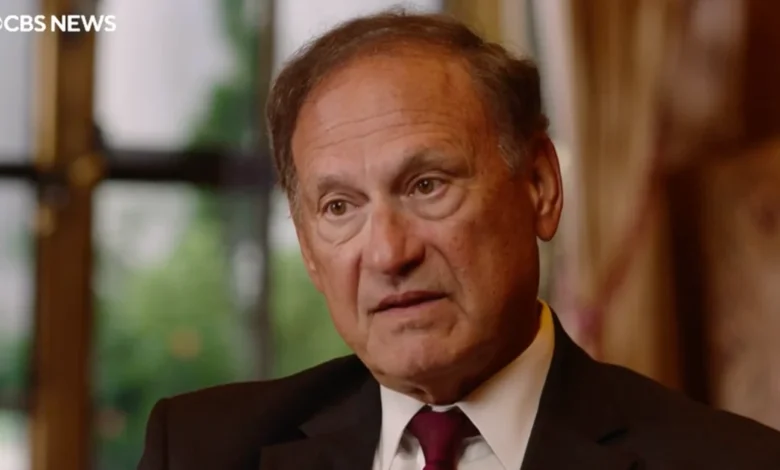
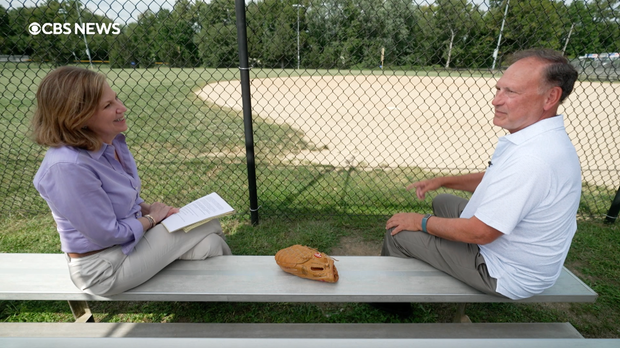
Returning to the worn, gritty infield of a baseball diamond in Hamilton Township, New Jersey, Supreme Court Justice Samuel Alito pauses to inspect the terrain. To the casual observer, it is merely a neighborhood park, but for the 76-year-old jurist, it is a site of formative memories. Alito, who served as his high school’s valedictorian and student council president decades ago, notes that the surface is less uneven than he recalls from his youth. Standing in a simple polo shirt and khakis, far removed from the solemnity of the Supreme Court chambers, he remains largely unrecognized by passersby. Yet, this man—the primary architect of modern conservative jurisprudence—has steered the Court through its most seismic shifts in a generation.
A Career Defined by Consistent Originalism
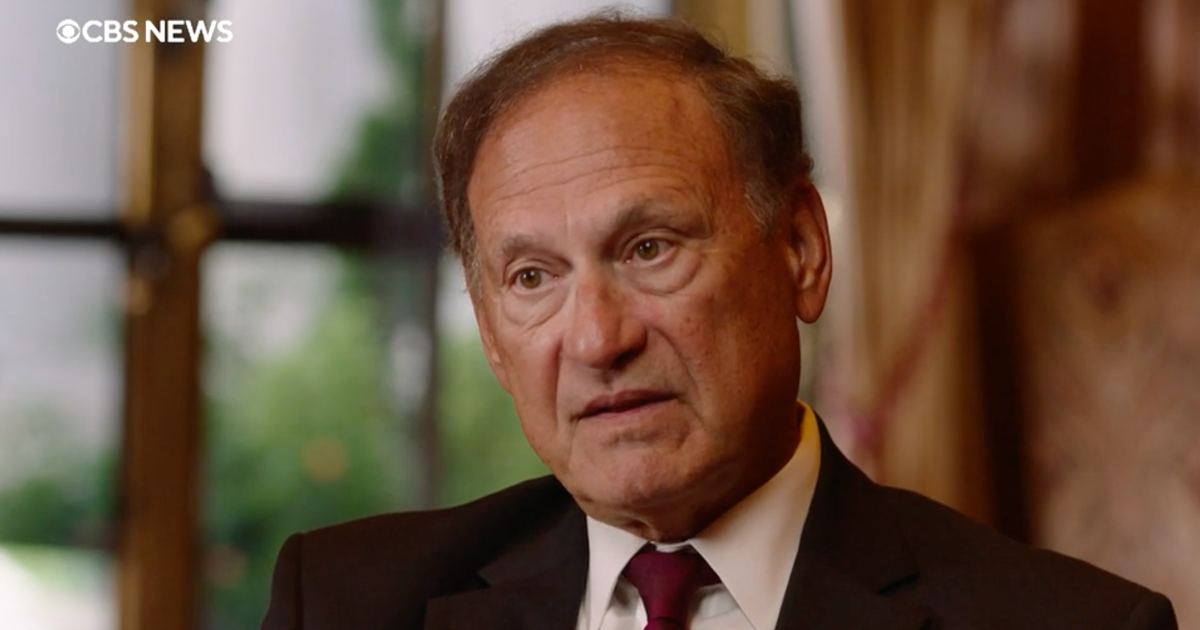
Justice Alito’s tenure, spanning two decades since his 2006 confirmation, has been marked by a steadfast commitment to originalism. While the Court is frequently referred to as the "Roberts Court," legal scholars increasingly identify Alito as its ideological engine. His influence is evident in the landmark reversals of established precedents, most notably the 2022 decision in Dobbs v. Jackson Women’s Health Organization. By overturning Roe v. Wade, Alito effectively dismantled the constitutional protection for abortion, returning the authority to regulate or ban the procedure to individual state legislatures.
This shift was not a sudden pivot but the culmination of a long-term legal strategy. Critics argue his rulings on religious liberty, voting rights, and administrative power represent an effort to unwind decades of liberal progress. Alito, however, characterizes these accusations as a "caricature." He maintains that his role is not to impose a political agenda but to interpret the Constitution according to the original intent of its framers.
The Anatomy of a Majority
Behind the scenes, Alito operates with a quiet, strategic focus that contrasts sharply with his public image as an inflexible ideologue. His colleagues and clerks describe a jurist who excels at the "math" of the Court—the essential, often grueling process of counting to five. Unlike justices who seek the spotlight through bold solo dissents, Alito prioritizes the construction of a durable majority opinion.
This skill was put to the test during the drafting of the Dobbs opinion. While five justices—Alito, Clarence Thomas, Neil Gorsuch, Brett Kavanaugh, and Amy Coney Barrett—agreed that Roe was wrongly decided, reconciling their varying legal rationales required immense diplomatic effort. Alito emphasizes that he views himself not as a writer for his own ego, but as a lead architect for the Court’s institutional position. His approach involves circulating drafts, assimilating extensive feedback from peers, and refining language to ensure the majority remains intact despite differing nuances among the conservative bloc.
The Leak: A Breach of Institutional Trust
The sanctity of the Supreme Court’s deliberative process was irrevocably altered in May 2022 when a draft of the Dobbs opinion was leaked to the media. For Alito, the event was a "shock" that introduced an element of existential risk to the justices. He notes that the breach did not merely jeopardize the internal trust necessary for collegial work; it transformed the justices into tangible targets for violence.
The subsequent summer saw the attempted assassination of Justice Brett Kavanaugh, an event Alito cites as a direct, predictable consequence of the leak. He remains adamant that the identity of the leaker is a persistent, haunting question. Furthermore, the leak ushered in an era of heightened security, with justices now routinely traveling with protective details and facing threats against their families and homes—a reality that has fundamentally changed the social and professional fabric of the Court.

Navigating the Emergency Docket and Executive Overreach
A significant portion of the Court’s current workload involves the "shadow docket"—emergency applications that bypass the traditional, slow-moving process of briefing and oral argument. Alito attributes this surge in emergency filings to a failure in the constitutional design, specifically the legislative paralysis in Congress. As presidents increasingly rely on executive orders to bypass a gridlocked legislature, the resulting policies are frequently challenged in lower courts, leading to a constant stream of urgent requests for Supreme Court intervention.
Alito admits that this volume of emergency cases is a strain on the institution. While the Court has attempted to provide more thorough explanations or grant full oral arguments where possible, the pressure to resolve these disputes quickly often limits the depth of the Court’s review. This, he notes, is a symptom of a broader breakdown in the intended function of the executive and legislative branches.
Philosophical Foundations and Personal Legacy
Despite the controversies and the intense public scrutiny regarding ethics, including reports of his wife’s flag displays and travel disclosures, Alito maintains that he is motivated by a duty to the Constitution. He rejects the notion that he is partisan, noting that he has frequently dissented in cases involving former President Donald Trump when he felt the legal arguments did not align with constitutional constraints.
His personal history, rooted in the immigrant experience of his parents, continues to inform his judicial philosophy. He keeps a copy of his father’s Italian birth record on his desk, a reminder of the humble beginnings that led him to the highest court in the land. This, he argues, is the essence of the "American dream"—a concept he believes is worth defending through a strict, originalist interpretation of the law.
The Future of the Court and Collegiality
As Alito reaches the age of 76, questions regarding his retirement have inevitably surfaced. While he acknowledged considering the decision during the current term, he ultimately concluded that he could "still make a contribution." He remains dismissive of concerns about his legacy, arguing that justices should focus on the case at hand rather than how history might record their tenure.
His relationship with retired Justice Stephen Breyer serves as a poignant example of the Court’s changing dynamics. Despite their profound ideological differences, the two maintained a warm, often humorous friendship. Alito recalls Breyer’s frequent, unannounced visits to his chambers—often compared by staff to a sitcom character’s entrance—as a highlight of his time on the bench. He suggests that while external pressures and political polarization have made such friendships more difficult to maintain, the fundamental respect for colleagues across the aisle remains a vital, if currently strained, component of the Court’s health.
Broader Implications
The impact of Justice Alito’s jurisprudence is undeniable. From the expansion of religious freedom to the narrowing of voting rights protections, his work has reshaped the legal landscape of the United States. As the Court continues to navigate a period of intense public skepticism and political volatility, Alito remains a central, often controversial figure. Whether viewed as a guardian of constitutional fidelity or a catalyst for institutional instability, his influence will continue to define the trajectory of American law for decades to come.
As he prepares for the next term, Alito’s focus remains singular: the application of the law as it was understood when the Constitution was ratified. For him, the "practical originalist" approach is not a pursuit of political victory, but an attempt to ensure that the judiciary remains a tether to the foundational principles of the nation, even as the world outside the Court’s marble walls continues to change.