Bill Withers Estate Sues Major Record Labels Over Copyright Infringement Alleging Olivia Dean Hit Copied Soul Classic Just the Two of Us

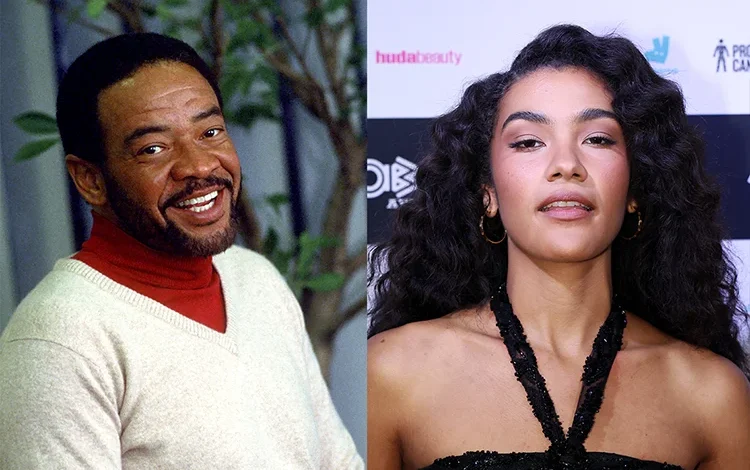
The music publishing entity representing the estate of the late legendary R&B and soul icon Bill Withers has initiated high-stakes federal litigation against several prominent record labels and distributors, claiming that British singer-songwriter Olivia Dean’s contemporary track unlawfully appropriates elements of a generation-defining masterpiece.
The lawsuit, spearheaded by the Mattie Music Group—operating commercially as Bleunig Music—was formally lodged on Thursday in a California federal court. The legal action targets corporate giants including Capitol Records, Universal Music Group, and Sony, alleging that Dean’s song "I’ve Seen It" bears an unauthorized and infringing resemblance to "Just the Two of Us," the enduring 1981 smash hit co-written by Withers alongside Ralph MacDonald and William Salter.
While Dean herself, alongside co-writers Bastian Langebaek and Max Wolfgang, is identified as a creator of the disputed work in the court filings, they are notably absent from the roster of direct corporate defendants. The complaint instead focuses the legal and financial liability on the major publishing and distribution apparatuses responsible for bringing "I’ve Seen It" to a global commercial market.
According to the legal filing, representatives for the Withers estate discovered the alleged infringement after undertaking a careful comparative listening analysis. The complaint outlines that these representatives arrived at what they characterize as an "obvious and inescapable conclusion" that the contemporary composition misappropriates substantial, protectable elements of the original work. Specifically, the lawsuit contends that "I’ve Seen It" features the repeated, unauthorized replication of the distinctively protectable melody that forms the structural and emotional core of "Just the Two of Us."
The Legacy of Just the Two of Us
To understand the gravity of the litigation, one must examine the storied history and cultural footprint of "Just the Two of Us." Released in February 1981, the song was a crown jewel of Grover Washington Jr.’s critically acclaimed album Winelight, featuring the unmistakable, velvety lead vocals of Bill Withers. The track quickly transcended jazz and soul boundaries to become a mainstream phenomenon.
Propelled by its instantly recognizable, rolling bassline and infectious harmonic progression, "Just the Two of Us" climbed to No. 2 on the U.S. Billboard Hot 100 chart, where it remained a commercial staple for months. Its cultural resonance was further cemented at the 24th Annual Grammy Awards in 1982, where Withers, MacDonald, and Salter took home the prestigious Grammy Award for Best R&B Song. Over the ensuing decades, the track has maintained an extraordinary streaming footprint, been sampled by numerous hip-hop and R&B artists, and remained a foundational standard of late 20th-century American popular music.
Because of its enduring commercial viability and cultural stature, the copyright held by the Mattie Music Group represents a lucrative and fiercely guarded asset. The publishing entity maintains exclusive rights to exploit, license, and protect the musical composition, setting the stage for aggressive legal recourse when those rights are perceived to be compromised.
Anatomy of a Modern Controversy: Olivia Dean and The Art of Loving
The subject of the litigation, Olivia Dean’s "I’ve Seen It," emerged as a standout track on the singer’s critically praised sophomore studio album, The Art of Loving, which was released to global audiences in September 2025. Dean, an ascending star in the British soul and pop landscape, has garnered widespread acclaim for her emotive vocal delivery and classic songwriting sensibilities, earning nominations and accolades such as a prominent appearance at the 2026 MOBO Awards in Manchester, England.
However, the inclusion of "I’ve Seen It" on the album has now drawn legal scrutiny that threatens to cast a shadow over her recent artistic milestones. Co-written by Dean alongside production and songwriting talents Bastian Langebaek and Max Wolfgang, the track was distributed and promoted under the umbrella of major industry players named in the California lawsuit.
In intellectual property disputes of this nature, plaintiffs typically utilize a combination of musicological expert analysis and comparative listening to demonstrate two fundamental legal criteria: access to the original work and substantial similarity between the protectable elements of the two compositions. Given the ubiquitous nature of "Just the Two of Us" within the global music canon, establishing legal access is widely considered by industry attorneys to be a relatively straightforward hurdle for the plaintiffs to clear. The core of the courtroom battle will inevitably hinge on whether a judge or jury determines that the overlapping melodic motifs cross the threshold from standard genre tropes or coincidental convergence into unlawful copying.
Chronology of the Legal Challenge
The timeline leading up to the federal filing underscores a methodical approach by the Withers estate’s legal and administrative representatives:
- February 1981: "Just the Two of Us" is officially released, eventually peaking at No. 2 on the Billboard Hot 100 and securing a Grammy Award for Best R&B Song.
- September 2025: Olivia Dean releases her studio album The Art of Loving, which includes the track "I’ve Seen It," written by Dean, Bastian Langebaek, and Max Wolfgang.
- Late 2025 to Early 2026: Representatives for the Mattie Music Group conduct listening sessions and musicological evaluations of "I’ve Seen It," concluding that the song constitutes a major infringement on their copyrighted property.
- Thursday, October 2, 2026: The Mattie Music Group formally files a copyright infringement lawsuit in a California federal court, naming Capitol Records, Universal Music Group, and Sony as defendants.
- Immediate Aftermath: As of late Thursday, representatives for the involved major record labels and publishers have declined or failed to respond to initial press and legal inquiries seeking comment on the litigation.
Broader Industry Implications and Legal Trends
This high-profile legal challenge arrives amid an era of heightened scrutiny and increased litigation regarding music copyright infringement. In the wake of landmark legal battles—most notably the high-stakes "Blurred Lines" verdict involving Marvin Gaye’s estate and Robin Thicke—songwriters, publishers, and estates have become increasingly aggressive in policing the boundaries between creative inspiration and unlawful appropriation.
Historically, copyright law has drawn a sharp distinction between a musical composition (the underlying notes, rhythms, and lyrics protected by publishing rights) and a sound recording (the specific master audio track protected by master rights). By targeting the major publishing and distribution umbrellas associated with Capitol Records, Universal Music Group, and Sony, the Mattie Music Group is directly challenging the corporate entities responsible for the commercial exploitation and monetization of the allegedly infringing composition.
For major record labels, navigating these disputes requires a delicate balance between risk management and defending their artists’ creative output. If the plaintiff successfully demonstrates that "I’ve Seen It" unlawfully incorporates the protected melody of "Just the Two of Us," the financial and structural consequences could be severe. Remedies in such federal copyright cases typically include statutory or actual damages, a permanent injunction preventing further distribution or performance of the infringing work, and, in many cases, a negotiated retroactive songwriting credit and royalty-splitting arrangement.
Furthermore, this lawsuit highlights the precarious nature of contemporary pop and soul songwriting, where artists frequently draw inspiration from the sonic textures, cadence, and melodic frameworks of classic decades. As modern creators lean heavily into retro aesthetics—particularly the warm, organic arrangements of late 1970s and early 1980s R&B—the legal friction between legacy copyright holders and contemporary hitmakers is expected to escalate.
Next Steps in the Litigation
As the case makes its way through the U.S. District Court in California, the immediate procedural steps will involve the formal service of process to the corporate defendants, followed by the filing of answers or motions to dismiss from the record labels’ legal teams. Simultaneously, both sides are expected to retain independent musicologists to conduct exhaustive forensic analysis of the two tracks, dissecting tempo, key signatures, melodic contours, and harmonic structures.
Neither Olivia Dean nor her co-writers have been named as personal defendants in the current federal complaint, leaving open questions regarding how indemnification clauses within her recording and publishing agreements will handle the financial and legal fallout. For now, the global music community watches closely as another classic legacy catalog stands firm to defend its historical and commercial integrity against the backdrop of modern chart success.
Related posts: