The Erosion of Academic Autonomy: How Fossil Fuel Interests and Political Pressure are Reshaping American Higher Education

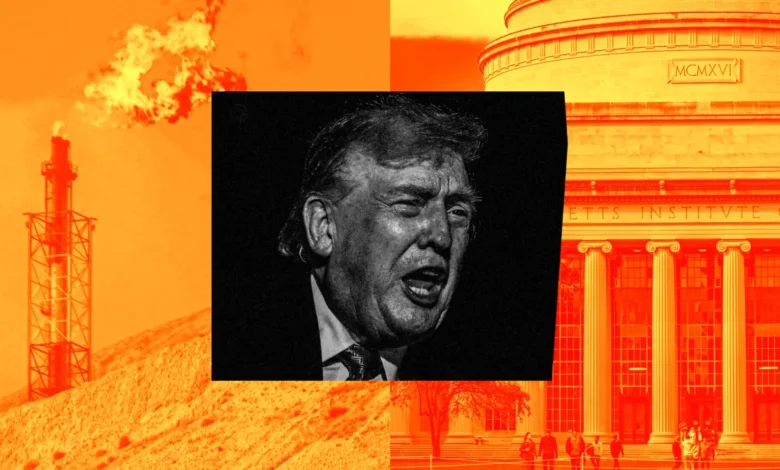
The landscape of American higher education is undergoing a profound transformation as a convergence of political pressure and corporate influence fundamentally alters the autonomy of the nation’s universities. A comprehensive new study published in the journal Energy Research & Social Science reveals that the independence of academic institutions—long considered a cornerstone of democratic inquiry—is being systematically dismantled. According to the research, a combination of aggressive federal oversight, targeted legislative interference, and deep-pocketed donor influence has created a climate where scientific research, particularly regarding climate change and energy policy, is increasingly beholden to the interests of the fossil fuel industry and its political allies.
The findings highlight a precipitous decline in the Academic Freedom Index, which measures the ability of scholars to teach and conduct research without external interference. In the United States, this index plummeted from a score of 3.3 in 2019 to just 1.7 in 2025, on a scale of zero to four. This decline suggests that the American academic environment is moving toward a model of centralized political control and corporate alignment that was previously more common in authoritarian regimes than in democratic societies.
A Chronology of Institutional Capture
The modern crisis of academic autonomy did not emerge in a vacuum; it is the culmination of nearly a century of strategic efforts to influence university governance. The historical precedent for this encroachment dates back to the 1920s, when electric utility companies began funding academic departments to defend their monopoly positions and counter public interest regulations. By the 1950s, the fossil fuel industry had refined this strategy, investing heavily in academic research to introduce scientific uncertainty regarding the public health impacts of carbon emissions and pollution.
In recent years, this influence has shifted from subtle lobbying to structural integration. The following timeline outlines the acceleration of these trends:
- 2010–2020: A decade of significant capital infusion saw six major fossil fuel corporations contribute over $700 million to various US universities. These agreements frequently included provisions that allowed donors to weigh in on curriculum development and faculty appointments.
- 2016: The Arizona state legislature pioneered the creation of publicly funded "libertarian academic centers," a model that bypassed traditional faculty governance in favor of oversight by state political appointees.
- 2021–2023: State legislatures across the country introduced more than 150 bills aimed at weakening tenure, limiting the scope of diversity, equity, and inclusion (DEI) initiatives, and restricting faculty participation in legal challenges against state policies.
- 2025: The Trump administration instituted a federal freeze on specific research grants, launched probes into 75 institutions, and mandated that colleges adopt administrative policies aligned with federal energy agendas to secure funding.
- 2025–2026: The expansion of state-funded ideological centers reached an estimated $50 million in annual taxpayer investment, further solidifying a shift toward state-controlled academic programming.
The Mechanism of Self-Censorship
The most insidious impact of this shifting environment is not always the direct banning of speech, but the culture of fear it fosters among researchers. Lead author Noel Healy, of Salem State University, notes that the current administrative environment forces young academics to weigh the professional cost of their inquiries. When federal grants are conditioned on alignment with administration policy, the incentive structure for scientific inquiry is fundamentally warped.
"If you are a young researcher, you might think twice about asking a question that could cost you your funding," Healy explained. "Climate policy is only as good as the evidence behind it. When the industry being regulated gets to shape the questions researchers ask, it ends up shaping the policy too."
Evidence of this "chilling effect" is increasingly visible. Scientists have reported removing specific terminology—such as "climate change" or "sustainability"—from grant applications to avoid automatic rejection by federal agencies. Furthermore, many university administrators, seeking to insulate their institutions from political retribution, have begun proactively shuttering research programs or limiting public-facing events before any formal government directive is even issued. This form of "anticipatory compliance" effectively achieves the goals of censorship without the need for explicit legal prohibitions.
Corporate Influence and the "Donor-Model" University
The influence of wealthy donors on university governing boards represents a significant departure from the traditional model of academic governance, where faculty and peer-review bodies held primary authority over curriculum and research agendas. A prominent example cited by researchers is the long-standing relationship between the Massachusetts Institute of Technology (MIT) and the late David Koch. Koch, a titan of the fossil fuel industry, donated over $185 million to the university and held a position on its highest governing body.
While institutions like MIT maintain that such contributions do not dictate research findings, critics argue that the mere presence of these interests on governing boards creates a structural conflict of interest. The "donor-influence" model has been further codified into state law, particularly through the establishment of academic centers that answer to state legislators rather than the faculty senates that typically oversee academic rigor. These centers operate as ideological outposts within the public university system, often receiving substantial taxpayer support to promote specific economic or political theories that align with the interests of the fossil fuel sector.
Implications for Public Trust and Scientific Integrity
The ongoing erosion of institutional autonomy poses a critical threat to the credibility of higher education. As tuition costs rise and student debt reaches record levels, the public perception of universities has become increasingly cynical. When research is perceived to be a product of corporate or political interests rather than objective, evidence-based inquiry, the role of the university as a neutral arbiter of facts is compromised.
The authors of the study argue that the path forward requires a radical reassertion of faculty control over university governance. They suggest that transparency measures, such as the public disclosure of all donor agreements, are a necessary but insufficient step. True reform, they argue, requires empowering faculty committees with the authority to veto major gifts that carry restrictive conditions or undermine the public mission of the university.
Some institutions have begun to explore protective frameworks, such as those promoted by the "UnKoch My Campus" movement. These model policies advocate for:
- Mandatory Faculty Review: Giving faculty a seat at the table when negotiating major research gifts.
- Public Disclosure: Ensuring that the terms of all major corporate donations are accessible to the public and the university community.
- Independence Clauses: Explicitly barring donors from having a say in faculty hiring, curriculum development, or the publication of research findings.
The International Perspective
The study’s authors warn that the United States is currently following a path seen in other nations where attacks on the legitimacy of universities served as a prelude to more severe political consolidation. In historical cases where academic institutions were successfully brought under state or industry control, the progression often began with the delegitimization of the faculty, followed by the purge of dissenting voices, and eventually, the total alignment of campus research with the interests of the ruling power.
"Universities came under attack before those governments had full control, not after," Healy warned. The current state of American higher education, characterized by a rapid decline in institutional autonomy and a rising fear of retribution, suggests that the sector is at a pivotal crossroads. Whether universities can reclaim their role as independent centers of critical thought depends on their ability to resist the dual pressures of corporate capture and political homogenization.
Ultimately, the integrity of climate research and the quality of future energy policy depend on the independence of the people conducting the work. If the current trajectory of interference continues, the ability of American universities to serve the public interest—and to provide the robust, objective analysis required to address the global climate crisis—may be permanently diminished.