The Trump Administration Repeals Biden-Era Power Plant Carbon Rules as Coal Demand Sees Unlikely Resurgence

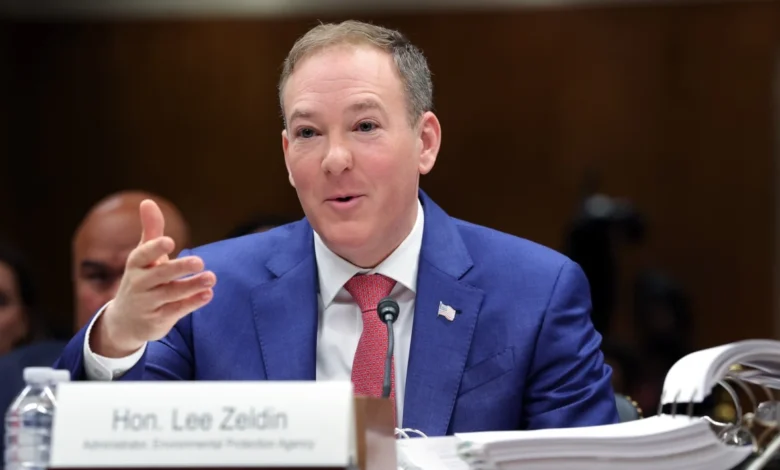
The Environmental Protection Agency (EPA) has officially moved to rescind federal carbon emission regulations for the electricity sector, marking a definitive pivot in U.S. climate policy. This decision, announced by EPA Administrator Lee Zeldin, effectively dismantles the framework established by the Biden administration in 2024, which had sought to compel electric utilities to either retire coal-fired power plants or implement carbon capture technology by the 2030s. The rollback underscores a broader administrative effort to prioritize energy deregulation, citing economic growth and grid reliability as the primary drivers for this shift.
A History of Regulatory Whiplash
The American approach to coal-fired electricity has been defined by two decades of extreme policy instability. This cycle of reversal began during the Obama administration, which sought to address the power sector’s outsized contribution to national greenhouse gas emissions. According to the EPA, coal remains the most carbon-intensive energy source, emitting approximately 2,200 pounds of carbon dioxide for every megawatt-hour of electricity produced, compared to roughly 900 pounds for natural gas.
In 2015, the Obama administration introduced the Clean Power Plan, which aimed to incentivize a shift toward cleaner energy. However, the plan faced immediate legal challenges from industry groups and states, culminating in a Supreme Court stay. When the Trump administration took office in 2017, it formally repealed the regulation. Following the 2022 Supreme Court decision in West Virginia v. EPA, which limited the agency’s authority to force a systemic shift away from coal, the Biden administration attempted a narrower regulatory path in 2024. That rule focused on plant-specific standards, providing utilities with compliance pathways rather than broad sector-wide mandates. The current EPA, under Administrator Zeldin, has now opted to remove even those targeted requirements, effectively removing federal oversight of power plant carbon output.
Economic and Environmental Rationale
During an international energy summit in Texas, Administrator Zeldin framed the repeal as a necessary step to secure the nation’s energy future. "For over 15 years, the Obama and Biden administrations implemented a war on coal to destroy reliable and affordable energy," Zeldin stated. "We are working to go even further so that American energy can be fully unleashed. Realizing the full potential of American energy means more jobs, lower prices, and a more prosperous America."
The EPA’s justification for the repeal mirrors arguments used earlier this year when the agency moved to weaken vehicle emissions standards. The agency contends that the scientific certainty surrounding the urgency of climate change is open to debate and that the compliance costs associated with emission controls impose an undue burden on consumers. By removing these mandates, the administration argues that it is protecting the grid from the potential price volatility that might result from premature plant closures.
The Impact of the AI Boom on Energy Demand
While federal policy shifts dominate the headlines, market forces are creating a complex landscape for the energy sector. A significant, unexpected factor in the resurgence of coal is the meteoric rise in energy consumption driven by data centers and artificial intelligence. These facilities require massive, constant, and reliable power loads, often outpacing the speed at which renewable energy projects can be brought online.
Data centers in states like Georgia, Virginia, and Mississippi have prompted utilities to reconsider their retirement schedules for legacy coal plants. Southern Company, for instance, which previously intended to shutter a major Mississippi coal facility by 2028, has publicly cited the growing needs of AI-driven data infrastructure as the reason for extending the plant’s operational lifespan into the 2030s.
This trend has created a conflict between the long-term decarbonization goals of environmental advocates and the immediate, high-growth energy demands of the technology sector. Environmental groups have criticized these extensions, arguing that companies are using the "AI boom" as a convenient rationale to prolong the life of aging assets that would otherwise be decommissioned for economic or environmental reasons.
Public Health and Environmental Consequences
The repeal of the 2024 rule carries significant public health implications. Beyond carbon dioxide, coal-fired power plants are significant sources of mercury, sulfur dioxide, nitrogen oxides, and fine particulate matter (PM2.5). These pollutants are linked to a host of respiratory and cardiovascular issues, including asthma, chronic bronchitis, and premature death.
Economic analysis provided by the EPA during the drafting of the 2024 rule estimated that the regulations would have prevented more than 1,200 premature deaths annually by 2035, while avoiding hundreds of thousands of asthma-related incidents. The total economic value of these health benefits—when combined with climate change mitigation—was projected to reach approximately $370 billion. By striking down these rules, the current administration is opting to forego these projected health gains in favor of maintaining the status quo for legacy energy producers.
Expert Analysis: Can Regulation Still Influence the Market?
Despite the regulatory uncertainty, the long-term trend in the U.S. power sector has been a steady move away from coal. Over the last two decades, coal’s share of U.S. electricity generation has plummeted, largely due to the "shale boom," which made natural gas significantly cheaper and more efficient than coal.
Kenneth Gillingham, a professor of environmental economics at Yale University, notes that while the repeal is a setback for climate policy, market dynamics may be difficult to reverse entirely. "The reason to have a target is that it sends a clear signal to decision-makers in companies," Gillingham said. "If you’re on the fence between choosing two things, you might as well choose the one that’s in line with the target. That’s been undermined. There has to be some teeth behind it."
However, Gillingham also suggests that the current reprieve for coal may be temporary. Many of the nation’s coal plants are reaching the end of their operational lives, and the capital investment required to keep them compliant with other non-carbon regulations, such as mercury and air toxics standards, remains high. "We have more electricity demand than we did before, which is, on the margins, going to make it easier for a coal plant to stay on," Gillingham added. "But the trend is pretty clear, and you can only fight markets so much."
Legal and Future Outlook
The legal battle over the EPA’s authority is far from settled. While the Supreme Court has limited the agency’s ability to impose sweeping mandates, the administration’s recent orders to keep certain coal plants online—bypassing standard retirement procedures—have already faced judicial pushback. Earlier this month, a federal court ruled against the Department of Energy’s attempts to force the continued operation of specific coal units, signaling that the executive branch’s authority to bypass market-driven retirements is not absolute.
As the nation moves forward, the "coal challenge" remains a central tension in American politics. Successive administrations have treated the sector as a political lever, with one side seeking to force an exit and the other attempting to preserve a legacy industry. Meanwhile, the power sector is being forced to reconcile these political signals with the realities of an aging fleet, volatile demand from the tech sector, and the ongoing influx of renewable alternatives like wind and solar, which continue to benefit from subsidies under the Inflation Reduction Act.
For the climate, the regulatory reversal represents a significant delay in the federal government’s ability to enforce carbon limits. Whether this leads to a sustained increase in emissions or merely slows the inevitable decline of coal remains the critical question for the next decade of American energy policy.
Related posts: