California Environmental Reparations Bill Moves to Address Long-Term Health Impacts of Urban Oil Drilling

California is on the verge of a significant policy milestone that seeks to bridge the gap between industrial accountability and community health. Assembly Bill 1661, currently awaiting Governor Gavin Newsom’s signature, proposes a landmark mechanism for “environmental reparations” by directing $5 million in penalties collected from the Inglewood Oil Field toward direct cash assistance for 1,000 nearby households. This legislation marks a pivotal shift in how the state addresses the legacy of urban oil extraction, particularly in Black neighborhoods that have historically borne the brunt of environmental degradation.
The Historical Context of Urban Extraction
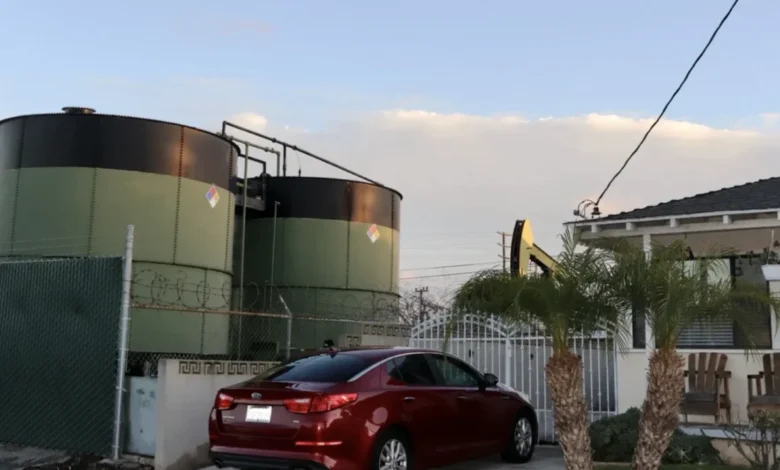
The Inglewood Oil Field, one of the largest urban drilling sites in the United States, has operated for over a century, situated in close proximity to predominantly Black communities including Inglewood, Baldwin Hills, and Ladera Heights. For decades, residents like Regina Martin grew up in the shadow of industrial pumpjacks, often internalizing the sulfurous odors and health struggles as a standard facet of daily life.
Scientific research has long established a link between proximity to oil and gas extraction sites and adverse health outcomes. Studies from the University of Southern California and various environmental health agencies have consistently correlated living near active drilling sites with elevated rates of respiratory illness, including asthma, as well as birth complications, endocrine disruption, and higher incidences of certain cancers. For these communities, the physical presence of the oil field has functioned as a constant, invisible tax on their well-being, manifesting in medical bills, lost productivity, and diminished property values.
Chronology of Legislative Action
The push for AB 1661 is the culmination of years of grassroots organizing and legislative maneuvering led by Assemblymember Isaac G. Bryan, who represents the 55th District. The timeline of this effort highlights a growing legislative appetite for holding fossil fuel companies accountable for their local footprint:
- 2020–2022: Community groups, including Black Women for Wellness and local environmental justice organizations, intensified calls for the decommissioning of urban oil wells, citing systemic health inequities.
- 2024: Governor Newsom signed AB 2716, a foundational piece of legislation that mandated the closure of the Inglewood Oil Field by 2030. This law introduced a penalty structure for low-producing wells, which are notoriously prone to methane leaks and chemical off-gassing.
- Late 2024–2025: Lawmakers refined the strategy for the revenue generated by these penalties. Recognizing that merely closing the wells does not heal the residents, AB 1661 was introduced to repurpose these fines into direct relief.
- September 2026: The legislature passed AB 1661, sending the bill to the Governor’s desk with an expected signing date by October.
Financial Structure and Distribution
The mechanics of the $5 million fund represent a novel approach to environmental litigation. Under the current penalty structure, operators of low-producing wells are charged $10,000 per well each month. This revenue is sequestered into a community repair and reinvestment fund.
The $5 million earmarked for the initial phase of the aid program will provide grants of up to $5,000 per household for up to 1,000 families. Eligibility is tied to documented respiratory or reproductive health impacts, though the specific criteria for verification remain under development by Los Angeles County officials. To ensure that these payments remain impactful, California has concurrently passed legislation shielding such reparations from state income taxation, ensuring that recipients retain the full value of the assistance.
Perspectives on Environmental Reparations
The concept of “environmental reparations” has been met with broad support among community advocates. Tianna Shaw-Wakeman, the environmental justice program director for Black Women for Wellness, views the legislation as a vital template for the rest of the nation.
“My hope has always come at the community level,” Shaw-Wakeman noted. “We see how grassroots organizing has created long-term change, and this provides a model that can be replicated wherever industrial sites have prioritized profit over public health.”
Assemblymember Bryan has been equally vocal, framing the bill as an overdue settlement of an environmental debt. “The company has essentially just been extracting from the community with no investments in the community, no care in the community, and what feels like no regard at times for the broader community,” Bryan stated. His position reflects a growing consensus that the traditional regulatory approach—fines that go into the general state coffers—fails to provide restitution to the specific people whose lives have been shortened or complicated by nearby pollution.
Analytical Implications and Future Challenges
While the bill is a victory for the communities surrounding the Inglewood field, it faces significant logistical and ethical hurdles.
The Challenge of Verification:
The current plan requires households to demonstrate health impacts to qualify for aid. Advocates, however, warn that this could inadvertently exclude the most vulnerable residents. Many low-income families may suffer from chronic health conditions that have never been formally diagnosed due to a lack of access to quality healthcare or health insurance. Consequently, groups are pushing for “self-attestation” protocols to avoid the burdensome medical documentation that often acts as a barrier to government assistance.
Scale and Scope:
With tens of thousands of households living within the 2.5-mile radius of the field, the 1,000-household limit is widely acknowledged as a pilot program rather than a comprehensive solution. The question remains whether this program will be expanded as more revenue is collected from the penalty system or if it will be seen as a one-time gesture.
The Risk of Gentrification:
A critical, often overlooked implication is the impact of environmental remediation on real estate markets. As California works to close urban oil wells, the subsequent “greening” of these neighborhoods often leads to rising property values and rents. This creates a paradox: the removal of the toxic industry could potentially displace the very residents who have suffered under its operation for decades. Environmental justice groups are now calling for a holistic approach that includes land-use protections and affordable housing mandates to ensure that “closing the wells” does not lead to “clearing the people.”
Broader National Significance
California’s experiment with AB 1661 serves as a high-stakes test case for environmental policy in the United States. If successful, it demonstrates that states can move beyond the binary of “pollute and pay fines” to a model of “pollute and provide restitution.”
The legislative success of this bill suggests a growing political maturity regarding environmental justice. It moves the conversation from vague goals of sustainability to specific, tangible, and localized financial accountability. By treating industrial harm as a compensable injury, California is positioning itself as a leader in a new era of climate and environmental policy.
As the state prepares for the transition away from urban oil, the focus will likely shift to how these funds are distributed and whether they can successfully reach those most in need without the interference of bureaucratic gatekeeping. The eyes of environmental activists nationwide are currently on Inglewood, waiting to see if this model of direct cash aid will become a standard tool in the fight against environmental inequality. For now, the bill stands as a testament to the power of persistent community advocacy, proving that even after a century of extraction, the residents of Inglewood have successfully demanded a seat at the table where the costs of their health are finally being calculated.
Related posts: