Airbnb CEO Brian Chesky Credits Paris Success for Fueling Global Relaunch of Experiences Business


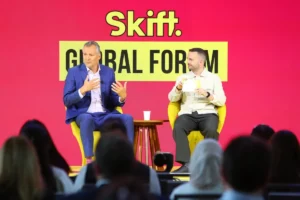
Airbnb is charting a new course for its long-struggling experiences division, banking on an unexpected demographic to drive future growth: local residents. Speaking at the Skift Global Forum, Airbnb Co-Founder and Chief Executive Officer Brian Chesky revealed that the company’s revamped experiences platform is experiencing explosive momentum, largely driven by people booking tours and activities in their own backyards. Following years of false starts, strategic pivots, and internal debate, the home-sharing giant appears to have finally found a winning formula in the competitive tours and activities sector, utilizing a hyper-localized strategy that challenges traditional tourism paradigms.
The strategic shift marks a notable departure from Airbnb’s historical playbook. When the company first introduced "Airbnb Experiences" more than a decade ago, the primary focus was firmly anchored on out-of-town travelers looking for authentic, host-led activities distinct from mass-market tourism. However, after struggling to gain sustained traction and facing pandemic-related setbacks, the company temporarily pulled back to re-evaluate the product-market fit. The pivot back to the market in 2025 initially faced sluggish adoption before a targeted rescue mission in the French capital transformed the trajectory of the entire division.
A Decadelong Evolution: From False Starts to Strategic Resets
To understand the current resurgence of Airbnb Experiences, it is necessary to examine the turbulent history of the product line. Launched originally in 2016, the initiative was designed to expand Airbnb’s footprint beyond accommodations into the broader travel itinerary. The vision was compelling: empower local hosts to offer unique excursions, ranging from truffle hunting in Tuscany to artisanal craft workshops in Tokyo, thereby capturing a larger share of the tourist wallet.
Despite early enthusiasm, the division encountered significant friction. Scaling a peer-to-peer marketplace for services proved vastly more complicated than managing a platform for lodging. Quality control issues, inconsistent host reliability, and the sheer operational overhead required to vet thousands of unique activities created a bottleneck. Furthermore, Airbnb faced internal resistance regarding whether it should list high-demand, mainstream tourist attractions—such as guided tours of the Eiffel Tower or the Louvre—fearing that doing so would dilute the platform’s unique, off-the-beaten-path brand identity.
By the early 2020s, compounded by the disruptions of the global pandemic, the experiences business had stalled. Leadership recognized that a fundamental redesign was required. Rather than merely tweaking the existing interface, Airbnb chose to sunset certain aspects of the legacy platform, refine its quality standards, and rethink its core value proposition. This culminated in the official relaunch of the experiences vertical in 2025, supported by a more pragmatic approach that relaxed historical resistance to mainstream, iconic landmarks.
The Paris Blueprint: How Focusing on One City Sparked Sixfold Growth
When the newly redesigned experiences platform debuted in 2025, adoption figures were initially modest. Recognizing the risks of spreading resources too thin across global markets—a pitfall that plagued the initial rollout a decade prior—CEO Brian Chesky made a calculated strategic decision. He directed the product and marketing teams to abandon a scattershot global launch and instead concentrate all their efforts on mastering a single market: Paris, France.
The single-city focus has yielded dramatic results. Appearing on stage at the Skift Global Forum, Chesky reported that year-over-year growth for the experiences segment in Paris had skyrocketed by six times. According to the CEO, this hyper-focused strategy allowed the company to rigorously test features, streamline user interfaces, and closely monitor supply and demand dynamics without the noise of simultaneous global expansions.
Yet, the most surprising takeaway from the Paris experiment was not just the volume of bookings, but who was making them. For a company historically built to serve international tourists and travelers away from home, the discovery that residents were embracing the platform was a watershed moment.
"One of the reasons they’re growing is we’ve now started to crack locals," Chesky told the audience at the Skift Global Forum. "Locals in Paris are booking experiences in Paris, something we never thought would happen, so now we’re taking that playbook to New York and other cities. And I think we’re not even close to that happening in 1,000 cities, but I think that will happen soon."
Unlocking the Local Market: Implications for the Tours and Activities Sector
The revelation that residents are utilizing Airbnb to book local excursions turns conventional wisdom within the travel industry on its head. Traditionally, the tours and activities sector—dominated by established giants like Viator, GetYourGuide, and various local destination management companies—has catered almost exclusively to inbound tourists seeking orientation, transportation, and entertainment in unfamiliar environments.
By successfully marketing to locals, Airbnb is tapping into a massive, recurring revenue stream that traditional travel platforms largely ignore: staycations, weekend leisure, anniversary celebrations, and corporate team-building events. Residents often look for novel ways to experience their home cities, whether through specialized culinary tours, historical deep-dives, or exclusive access to cultural institutions. By positioning itself as a lifestyle and local discovery app rather than strictly a travel utility, Airbnb is attempting to integrate itself into the daily or weekly habits of urban consumers.
Industry analysts note that this domestic engagement strategy could dramatically lower customer acquisition costs. While acquiring a first-time international traveler requires significant global marketing spend and relies heavily on seasonality, retaining and capturing local residents provides year-round transactional velocity, insulating the platform against macroeconomic shocks or geopolitical events that typically disrupt international travel patterns.
Scaling the Playbook: New York and Beyond
Buoyed by the success in the French capital, Airbnb is wasting no time operationalizing its new strategic framework. The company has officially begun rolling out the Paris playbook to New York City, targeting one of the world’s most competitive and dense urban tourism markets.
The expansion into New York serves as the next major stress test for the platform. Unlike Paris, which boasts a deeply centralized tourism core and a distinct urban layout, New York presents a fragmented landscape spread across five boroughs, each with distinct regulatory environments and consumer preferences. Success in New York will require careful navigation of local municipal guidelines, particularly concerning commercial activities hosted in residential areas—a historical friction point for Airbnb’s core lodging business.
Despite these operational hurdles, leadership remains bullish on the broader rollout roadmap. Chesky indicated that while the company is currently focusing on major metropolitan hubs, the long-term vision encompasses scaling the model to a thousand cities globally. However, management has emphasized a measured, deliberate approach, prioritizing market-by-market profitability and supply quality over rapid, uncontrolled expansion.
Industry Reaction and Competitive Landscape
The revitalized push by Airbnb into experiences has not gone unnoticed by competitors. The tours and activities market is estimated to be worth over $200 billion globally, representing one of the last major untapped frontiers in digital travel booking. Competitors such as Booking.com, Expedia, and TripAdvisor-owned Viator have all invested heavily in expanding their own inventory of tours, excursions, and attractions.
However, Airbnb’s unique brand equity—rooted in community connection and distinctive, host-led storytelling—gives it a distinct advantage in differentiating its offerings from the commoditized ticket-selling models of traditional online travel agencies. By combining mainstream anchors like the Eiffel Tower with hyper-local, artisan-led workshops, Airbnb is attempting to build a hybrid ecosystem that appeals simultaneously to the bucket-list tourist and the curious local resident.
As the company prepares for its next phase of global rollout, the central question for investors and industry observers is whether the momentum generated in Paris and New York can be successfully replicated across vastly different cultural and economic landscapes. If Chesky and his team can maintain rigorous quality controls while unlocking the local consumer mindset at scale, Airbnb may finally realize the ambitious vision for its experiences business that it first set out to achieve a decade ago.