The Debate Over Counting Measles Deaths and the Legacy of Pandemic-Era Mortality Definitions

During the height of the COVID-19 pandemic, a phrase emerged in public discourse that frequently challenged the way health officials recorded mortality: "They died with COVID, not from it." This shorthand, often used to question the validity of official death counts, has resurfaced with renewed intensity in 2026, this time centered on a cluster of measles-associated deaths in Pennsylvania. The controversy highlights a fundamental tension between medical certification, public surveillance, and the public’s struggle to understand how clinicians distinguish between incidental infection and an underlying cause of death.
On August 25, 2026, the Pennsylvania Department of Health confirmed two deaths associated with a measles outbreak in Lancaster County. The incident quickly became a flashpoint for national debate when a county commissioner publicly echoed the sentiment popularized during the pandemic, suggesting that one of the deceased—an infant—had died "with measles, but not from measles." While the coroner attributed that specific death to a ruptured spleen, the lack of public access to full medical records has left the medical community and the public to debate the intersection of viral infection and terminal events.
A Chronology of the Pennsylvania Outbreak and National Reporting
The reporting of these deaths has been marked by a shifting landscape of federal data integration. Following the initial reports from Pennsylvania, the Centers for Disease Control and Prevention (CDC) notably omitted the two deaths from its national measles tracker, inserting an asterisk in the mortality column to denote a discrepancy in classification.
As of late September 2026, Pennsylvania has reported a total of four measles-associated deaths. The CDC’s engagement with these figures has been cautious; the agency added one of the four deaths to its national database on September 23, while the remaining three remain excluded from the official federal tally. This delay has fueled criticism from public health advocates who argue that inconsistent reporting standards undermine the perceived severity of the current measles resurgence.
The ambiguity reached the national stage on September 16, when CDC Director Erica Schwartz addressed the agency’s methodology during her first major interview in the role. When questioned about the exclusion of the Pennsylvania deaths, Dr. Schwartz invoked the "bus" analogy—a common, albeit controversial, trope from the COVID-19 era. She posited that if a patient testing positive for a virus were struck by a vehicle, the death might be erroneously categorized as viral-related. She emphasized that definitions matter, implying that the CDC is currently working to refine its surveillance standards to ensure that only deaths where the virus is the primary driver are counted in national statistics.
The Anatomy of a Death Certificate: Distinguishing Cause from Condition
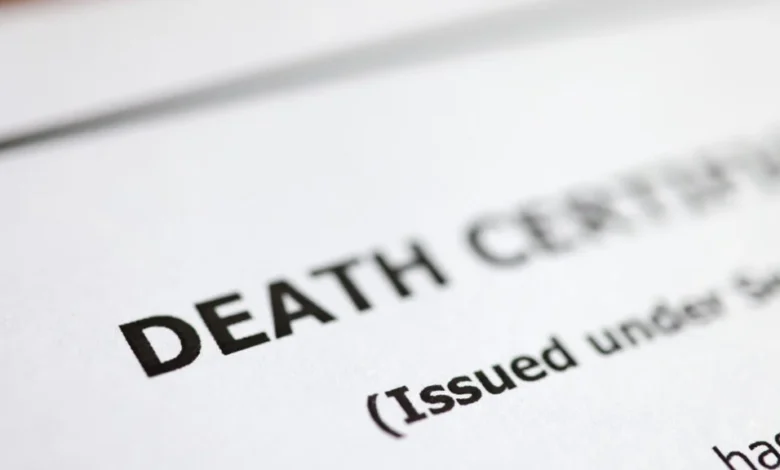
To understand the friction in these statistics, one must look at the standardized U.S. death certificate. The document is not merely a record of a fatality; it is a clinical instrument designed to trace the "chain of events" leading to death.
Medical certifiers—physicians and coroners—are trained to avoid listing terminal events, such as cardiac or respiratory arrest, as the primary cause of death. Because every human death eventually involves the cessation of the heart, listing cardiac arrest as a cause of death is considered diagnostically meaningless. Instead, the death certificate requires a reverse-chronological sequence: the immediate cause of death (the final complication), followed by the intermediate conditions, and finally, the underlying cause—the specific disease or injury that initiated the lethal cascade.
For instance, if a patient develops measles, which leads to pneumonia, and ultimately suffers respiratory failure, the underlying cause is measles. Even if the immediate cause is pneumonia, the measles infection is the "proximate cause" that set the chain in motion. This logic is well-established in legal and medical fields, mirroring how homicide law treats a victim who dies months later from complications resulting from a gunshot wound.
Examining the "Bus Story" and Pandemic Data Corrections
The skepticism surrounding death counts traces back to early 2020, when rapid surveillance reports—preliminary data sent to the CDC before final death certificates were processed—occasionally captured deaths that were later corrected.
One high-profile instance involved a Florida motorcyclist who was initially included in a local county’s preliminary tally of COVID-19 deaths. After a review by the medical examiner, the death was removed because it was determined the fatality was the result of a traumatic injury, not the infection. While critics frequently point to this as evidence of widespread "overcounting," experts in mortality statistics describe such corrections as the system functioning exactly as intended. Preliminary data, by its nature, is a "fast" signal, while death certificate data, which provides the final, verified count, is a "slow" signal.
Data from the CDC confirms that for the vast majority of cases during the pandemic, COVID-19 was accurately cited as the underlying cause. From 2020 through mid-2022, 88% of death certificates that mentioned COVID-19 listed it as the underlying cause. By 2022, as the virus became more endemic and testing protocols shifted, that figure dropped to 76%. Excess mortality studies—which look at the total number of deaths compared to historical averages—have further validated these figures, showing that the surge in total U.S. deaths far exceeded what could be explained by potential coding errors.
Implications for Measles Surveillance and Public Trust
The current debate over measles deaths represents a critical juncture for public health communication. Measles is a highly contagious disease known for causing severe complications, including pneumonia and subacute sclerosing panencephalitis (SSPE), a rare but fatal brain disorder.
If the CDC continues to hold measles deaths out of official tallies while awaiting final death certificates—a process that can take months—it risks creating a perception gap. Outbreak surveillance has historically relied on the faster, state-reported data. By reverting to a system that requires the absolute finality of a death certificate before a death is acknowledged as "measles-related," the agency may be inadvertently downplaying the urgency of the current outbreak.
The challenge for Director Schwartz and the broader medical community is to reconcile the need for scientific precision with the need for transparent communication. The "with vs. from" debate often ignores the reality that infectious diseases are systemic catalysts. Whether it is COVID-19 or measles, the disease often serves as the trigger that leads to the ultimate biological failure.
As the agency works with the Council of State and Territorial Epidemiologists to finalize a formal definition for a "measles death," the goal remains to rebuild public confidence. Transparency regarding which deaths are currently under review, the specific standards being applied, and the clear distinction between the "underlying cause" and the "immediate cause" will be essential.
Ultimately, the argument over whether an individual died "with" or "from" a virus obscures the more vital public health question: did the disease initiate the cascade of events that led to the end of life? For public health officials, the answer to that question is not just a matter of clinical taxonomy; it is the basis for vaccination strategies, resource allocation, and the maintenance of trust in the nation’s medical infrastructure. Without a consistent and clear framework, the public is left to grapple with inconsistent numbers, fueling the very confusion that health agencies are tasked with preventing.