The Airport Roomba: How Remote-Controlled Electric Tugs Are Transforming Aircraft Ground Operations

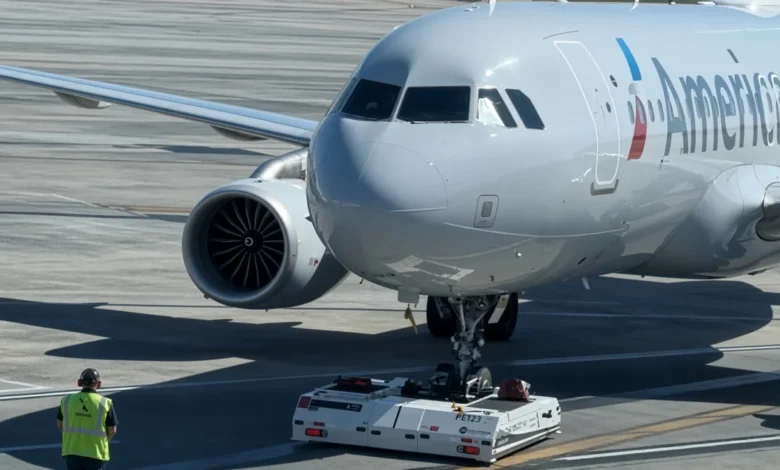
A viral video circulating across social media platforms has captured the attention of aviation enthusiasts and industry analysts alike, featuring an American Airlines aircraft being maneuvered around the tarmac at Charlotte Douglas International Airport by a compact, low-profile machine. To the casual observer, the device—resembling an oversized robotic vacuum cleaner—appears to be a piece of autonomous technology replacing a human operator. In reality, the machine, identified as a Mototok Spacer 8600 NG, is a sophisticated, remote-controlled electric tug that represents a significant shift in how ground handling crews manage aircraft pushbacks and gate positioning.
While social media commentary has been rife with speculation regarding the automation of airport jobs, the reality is far more nuanced. The device, operated by a ramp agent standing nearby with a wireless radio remote, is designed to enhance safety, visibility, and operational efficiency, rather than eliminate the essential human oversight required for complex ground maneuvers.
The Evolution of Pushback Technology
For decades, the standard procedure for moving a commercial aircraft from a terminal gate to the taxiway—or from a hangar to a maintenance bay—has involved a heavy-duty tractor. These traditional tugs connect to the aircraft’s nose landing gear using a heavy, cumbersome steel towbar. This process is not only physically demanding but also carries inherent safety risks. The connection of the towbar is a manual task that puts personnel in close proximity to moving machinery and aircraft wheels, and the long profile of the tug-and-towbar assembly creates a significant turning radius that requires a high degree of spatial awareness from the driver.
The Mototok Spacer 8600 NG departs from this traditional model by eliminating the towbar entirely. Instead, the unit drives underneath the aircraft’s nose gear, where a hydraulic cradle rises to capture the wheels and lift them slightly off the ground. By suspending the nose gear, the tug gains the necessary traction to move the aircraft, while the main landing gear remains in contact with the tarmac. This configuration drastically reduces the footprint of the ground equipment and allows for a much tighter turning radius, which is particularly beneficial in congested ramp areas where space is at a premium.
A Global Adoption Timeline
Although the sight of a "robotic" tug may seem novel to travelers at American airports, the technology has been established in international aviation hubs for several years. The adoption curve began in earnest in the late 2010s, as airlines sought ways to streamline operations and reduce the frequency of ground-related incidents.

British Airways was an early adopter of the Mototok system, introducing the technology at London Heathrow Airport in 2017. The transition was part of a broader strategy to optimize terminal operations at Terminal 5. By August 2019, the airline reported a significant milestone: 100,000 successful pushbacks using their fleet of 25 units. This deployment demonstrated that the technology was not merely an experimental prototype but a robust solution capable of handling high-volume, short-haul flight schedules with consistent reliability.
Following suit, All Nippon Airways (ANA) integrated the technology into its Japanese hubs in 2019. By the spring of 2024, the airline had scaled its deployment to eight units across four different airports, with a notable presence at Osaka Itami Airport. Today, the Mototok system is operational in major global hubs including Madrid, Barcelona, Hong Kong, Singapore, and Kuala Lumpur, reflecting a global trend toward modernizing ground support equipment (GSE).
Technical Specifications and Operational Benefits
The Mototok Spacer 8600 NG is engineered for heavy-duty performance despite its compact appearance. With a towing capacity of 105 metric tons—approximately 231,000 pounds—the device is capable of handling a wide range of narrow-body commercial jets.
The primary advantage for the ramp worker is the ability to maintain a superior line of sight. By using an industrial radio remote, the operator is not confined to a cockpit or a cab. They can position themselves at any point around the aircraft that offers the best view of obstacles, ground personnel, and the taxiway path. This enhanced situational awareness is a critical safety feature.
History has shown that accidents involving traditional tugs can be severe. Notable incidents, such as an American Airlines tug becoming lodged beneath a Boeing 737 at LaGuardia Airport or a JetBlue Airbus A320 overrunning its tow vehicle at LAX, highlight the risks inherent in traditional pushback operations. In the LaGuardia incident, the complexities of the towbar connection and the limited field of vision from the tractor’s cab were contributing factors to the disruption. By placing the operator on the ground with a wireless interface, the Mototok system removes the driver from the "crush zone" between the tug and the aircraft, significantly mitigating the risk of workplace injuries during the pushback sequence.
Debunking the Automation Myth
The discourse surrounding the Charlotte video has frequently centered on the fear of job displacement. However, industry experts point out that the role of the ramp agent remains vital. The remote control unit does not "think" for itself; it is a tool controlled by a human who must verify the aircraft’s path, communicate with the flight deck, and monitor the safety of the surrounding ramp environment.

Furthermore, many airports maintain strict safety protocols that require wing walkers—personnel who monitor the wingtips to ensure they remain clear of other aircraft or ground structures—regardless of the tug technology being used. The Mototok system simplifies the towing motion but does not replace the human-to-human communication loop between the ground crew and the pilots in the cockpit.
The "airport Roomba" label, while catchy, belies the complexity of the job. Critics who argue that the operator is "training his replacement" ignore the fact that the technology is currently in a semi-autonomous phase. True autonomy would require the tug to navigate the ramp, avoid obstacles, and communicate with ground control without human intervention—a level of integration that does not yet exist in mainstream commercial aviation.
The Future of Ground Support Operations
The shift toward electric, remote-controlled equipment is also driven by sustainability goals. As airlines strive to reduce their carbon footprint, replacing diesel-powered tractors with electric units like the Mototok Spacer contributes to lower emissions and reduced noise pollution at the gate.
While the initial capital expenditure for such equipment is higher than that of traditional tractors, the long-term savings in maintenance, fuel efficiency, and the reduction of ground-handling delays offer a compelling business case. As airports continue to experience record passenger volumes, the ability to turn aircraft around quickly and safely becomes a critical competitive advantage.
For now, the sight of a lone ramp agent walking alongside a moving Airbus or Boeing, remote control in hand, remains a glimpse into the future of airport logistics. It is a transition defined by the marriage of human expertise and precision engineering, ensuring that as aviation technology advances, the safety and efficiency of the ground operation keep pace with the aircraft themselves. Whether the industry moves toward full automation in the coming decades remains to be seen, but for the immediate future, these "airport Roombas" serve as a testament to the ongoing evolution of the modern flight line.