Navigating Shifting Tides: Tourism Ireland Balances Transatlantic Growth, AI Discovery, and Economic Headwinds

The landscape of international travel is undergoing a profound structural evolution, and destination marketing organizations worldwide are being forced to adapt to a complex matrix of shifting economic realities, technological disruptions, and changing consumer behaviors. North America has historically served as one of the most resilient and lucrative visitor markets for the island of Ireland, pumping billions of euros into the domestic economy and sustaining thousands of hospitality, transportation, and cultural jobs. However, as the travel sector moves further into the mid-2020s, the outlook for this vital corridor is becoming increasingly intricate.
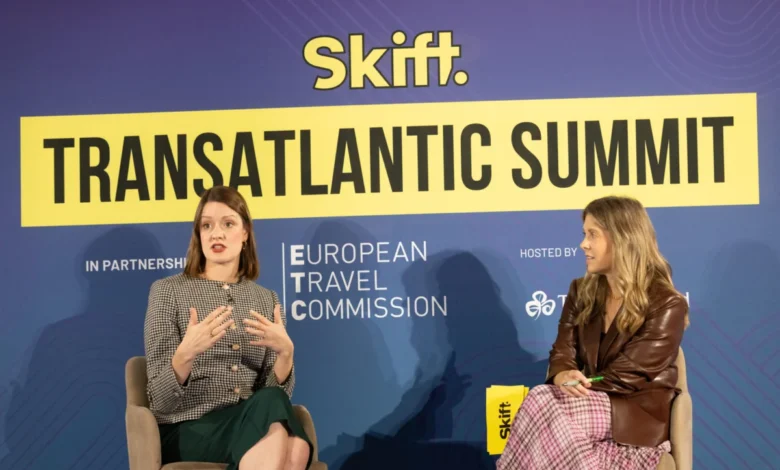
At the Skift Transatlantic Summit, Tourism Ireland Chief Executive Alice Mansergh offered a comprehensive assessment of the current tourism climate, highlighting a dual reality of continued volume growth set against clear signals of softening consumer demand. While high-level metrics initially suggest robust health, a closer examination of booking windows and macroeconomic indicators reveals an industry bracing for potential volatility. Travelers across North America and Europe are contending with persistently high living costs, stubborn inflation, and broader economic uncertainty, forcing them to reevaluate discretionary spending and adopt more cautious planning habits.
For Tourism Ireland, the immediate task is twofold: protecting the vital infrastructure that physically transports visitors across the Atlantic, and cutting through the digital noise to remain at the absolute top of the global consumer wishlist. This requires a sophisticated, multifaceted strategy that blends traditional destination marketing with cutting-edge digital adaptation, strategic airline partnerships, and an unwavering commitment to showcasing the authentic, localized cultural heritage that sets the destination apart in a crowded global marketplace.
The 2026 Performance: Early Gains Masking Emerging Cautiousness
The financial and volume metrics for the early portion of 2026 present a paradox that tourism officials are watching closely. On paper, Ireland has enjoyed a positive start to the year, welcoming a 5% increase in visitors originating from North America compared to the same period in previous years. Furthermore, total visitor spending associated with these travelers has climbed by an impressive 10%, indicating that those who do make the journey are staying longer, engaging in more premium experiences, or absorbing higher local price points.
Despite these encouraging headline figures, Mansergh noted a distinct softening in booking momentum over the preceding months. Travelers are exhibiting heightened financial prudence, shifting away from rigid, early-bird commitments in favor of flexible itineraries, last-minute reservations, and refundable booking options. This shift in consumer psychology means that the traditional lead times destination marketers rely on are compressing, requiring tourism boards to maintain continuous, high-impact visibility rather than relying on seasonal campaign surges.
This behavioral pivot has directly informed Tourism Ireland’s core creative and promotional blueprint. The organization rolled out its new global marketing initiative, titled "Ireland Goes Beyond," explicitly designed to transcend standard scenic tropes. The campaign deliberately targets the rich tapestry of local culture, heritage, and immersive scenery that makes the island worth choosing, even as households tighten their discretionary budgets and become hyper-selective about their travel investments. In an environment where every vacation dollar is heavily scrutinized, simply existing on a consumer’s radar is no longer sufficient; a destination must provide an indisputable value proposition rooted in unique emotional and cultural resonance.
Preserving Critical Transatlantic Air Connectivity
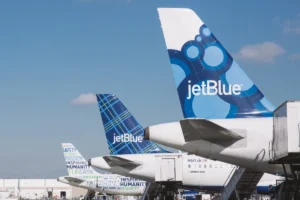
Sustaining consumer interest is ultimately futile if the physical infrastructure required to move millions of passengers breaks down. Consequently, a paramount operational priority for Tourism Ireland involves the safeguarding and expansion of transatlantic air routes. The post-pandemic aviation landscape remains hyper-sensitive to external shocks, and recent pressures—most notably sharp surges in jet fuel costs and a concurrent softening of European travel demand toward the United States—have forced international carriers to rigorously audit the profitability of every flight in their schedules.
Mansergh encapsulated the immediate operational challenge with a pragmatic industry maxim: "fill the planes to keep the planes." Because transatlantic routes often rely on balanced, two-way traffic to remain economically viable for commercial airlines, a slump in outbound European passengers traveling to North America can place indirect pressure on the westbound legs that bring American and Canadian tourists to Irish soil. If an airline deems a particular corridor unprofitable due to asymmetrical demand, the resulting reduction or cancellation of direct flight paths can have immediate, cascading consequences for regional tourism economies.
To counter these vulnerabilities, Tourism Ireland works in close coordination with commercial airline partners to promote high-impact strategic routes, incentivize off-season travel, and stimulate inbound demand through targeted cooperative marketing campaigns. These efforts are further supported by a broader philosophy of market diversification. While North America traditionally accounts for slightly more than a third of Ireland’s overseas tourism revenue, and continental Europe contributes another substantial third, adjacent markets like Great Britain provide crucial baseline volume. Data indicates that British visitors—hailing from Ireland’s nearest neighbor—demonstrate a repeat-visit rate twice that of long-haul markets, making them an indispensable shock absorber against transatlantic fluctuations. "Now is not the time to be wholly dependent on just one market or another," Mansergh emphasized, underscoring the necessity of a balanced portfolio.

Adapting to the AI Search Revolution
Beyond physical infrastructure and traditional media advertising, Tourism Ireland is aggressively confronting a quiet revolution in how modern consumers discover and research travel destinations. Recent internal research conducted by the organization revealed a striking statistic: the volume of travelers citing generative artificial intelligence as their primary source of travel inspiration has doubled over the course of a single year.
Recognizing that modern trip-planning increasingly begins with conversational AI interfaces rather than traditional search engines or travel agency brochures, Tourism Ireland has undertaken a comprehensive digital optimization initiative. The organization has systematically refined and structured its digital assets so that official destination data successfully populates the backend parameters of major AI tools, including OpenAI’s ChatGPT, Anthropic’s Claude, and Google’s Gemini. According to recent internal metrics, Tourism Ireland’s verified data now directly contributes to answers for approximately 19% of all destination-specific queries across these platforms.
The strategic objective behind this technological integration goes far beyond basic visibility. By influencing the algorithmic outputs of generative AI, Tourism Ireland aims to steer prospective visitors toward lesser-known regional attractions, hidden cultural gems, and independent local businesses that might otherwise be eclipsed by major urban tourist hubs. However, Mansergh stressed that algorithmic success is inextricably linked to broader digital sentiment. Because AI models aggregate information and public discourse from across the entire internet to formulate their recommendations, a destination’s digital reputation is determined by the collective conversation happening online.
"Choose what you want to be famous for," Mansergh noted, illustrating how the organization has applied this proactive narrative control to cultural assets like Halloween. By actively amplifying the historical origins of the holiday within ancient Celtic traditions of Samhain, and championing this narrative across high-engagement platforms such as Reddit, YouTube, and Tripadvisor, Tourism Ireland creates what it describes as a "surround sound" effect—ensuring that algorithms and human travelers alike associate the island with deep-rooted, authentic cultural traditions.
The Undiminished Power of Authentic Human Experiences
Even as artificial intelligence and digital algorithms fundamentally reshape the discovery phase of the consumer journey, the actual experiences that draw travelers to Ireland remain profoundly analog. In an era defined by screen fatigue and hyper-connectivity, the psychological pull of tangible, human-scale interactions has arguably never been stronger.
"For me, I always want AI to stand for, yes, artificial intelligence, but also authentic Ireland," Mansergh remarked, capturing the paradoxical relationship between modern travel technology and traditional tourism products.
To satisfy this growing psychological craving for reality, Tourism Ireland continues to champion hyper-local, community-based tourism initiatives. Traditional activities—such as interactive sheepdog demonstrations on working farms, artisan cider-making tours in rural orchards, and the preservation of ancient currach-building crafts—offer visitors an unfiltered connection to local heritage. Crucially, these grassroots attractions serve a dual economic purpose: they enrich the visitor experience while naturally dispersing tourism footfall away from congested urban centers and out into rural, less-traveled counties.
"The more digital we are, the more we crave those authentic touch and feel real moments," Mansergh observed, encapsulating the psychological driver behind modern experiential travel.
Strategic Horizon: Resilience, Sustainability, and Future Growth
Looking ahead toward 2027 and beyond, Tourism Ireland’s overarching strategic roadmap is built upon three foundational pillars: safeguarding vital air and sea connectivity, driving year-round geographic dispersal to combat seasonal peaks, and capitalizing on emerging consumer trends such as "cool-cations"—the growing preference for temperate northern destinations amidst increasingly extreme summer temperatures across Southern Europe and the Mediterranean.
These strategic priorities collectively demonstrate a mature, pragmatic approach to navigating an increasingly unpredictable global travel market. By simultaneously protecting the structural lifelines that bring visitors to the island, pioneering new digital frontiers in AI search optimization, and doubling down on the preservation of authentic cultural and natural assets, Tourism Ireland is positioning the destination to withstand near-term economic turbulence while securing long-term, sustainable growth for its tourism ecosystem.
Related posts: